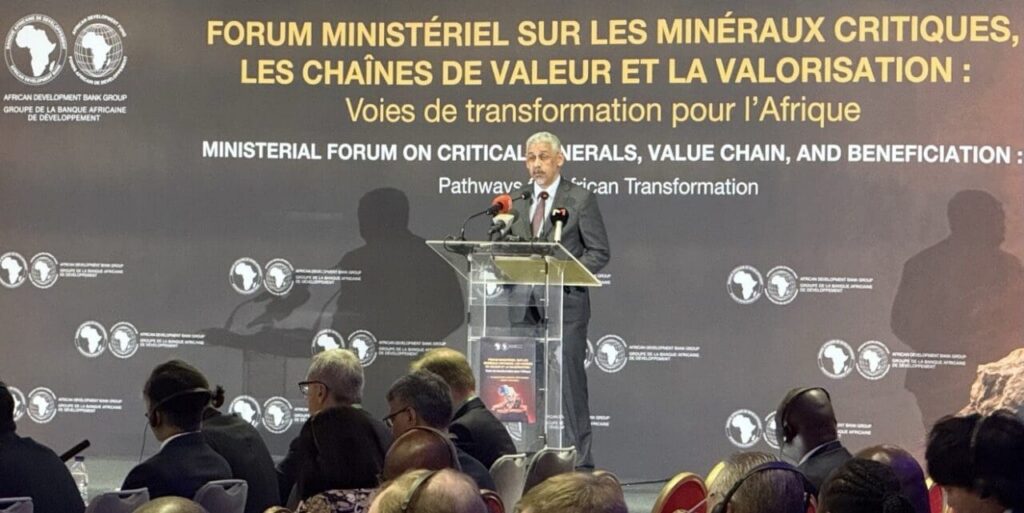
Abidjan played host to a landmark gathering of African nations and global partners, all united by a bold vision: to harness the continent’s vast critical mineral reserves—worth an estimated $29.5 trillion—as a catalyst for economic, industrial, and social transformation. The focus was clear: fostering local value creation, securing development financing, and building robust regional supply chains to meet surging global demand.
The ministerial conference, held in early July, brought together key decision-makers, including African ministers overseeing Mines, Energy, Industry, and Green Economy, alongside representatives from the African Union Commission, the African Continental Free Trade Area (AfCFTA) secretariat, the United Nations Economic Commission for Africa, regional development banks, financial institutions, and international investors.
Abidjan’s pivotal role in reshaping Africa’s mineral economy
The meeting underscored a shared determination to shift Africa’s role in the global resource economy—from raw material supplier to value-added processor. Central to this agenda is the transformation of critical minerals like cobalt, lithium, graphite, and rare earths into industrial inputs that fuel domestic industries and export growth.
A paradigm shift in natural resource governance
In his keynote address, the President of the African Development Bank (AfDB), Sidi Ould Tah, framed the conference as a turning point. He emphasized the need for Africa to reclaim control of its mineral wealth, stressing that local processing and industrialization are non-negotiable for sustainable development.
« The goal is not just to extract resources but to refine, manufacture, and innovate—turning Africa’s geological endowment into engines of job creation and shared prosperity, » he stated. He also highlighted the underperformance of Africa’s development finance institutions, noting that their combined balance sheets account for just 1% of global development finance. Strengthening these institutions, he argued, is essential to unlocking the continent’s potential.
Infrastructure development and resilient industrial ecosystems were flagged as critical priorities to ensure that mineral wealth translates into tangible benefits for African communities.
Côte d’Ivoire’s bold strategy to leverage underground riches
The Ivorian Minister of Mines, Petroleum, and Energy, Mamadou Sangafowa-Coulibaly, outlined Abidjan’s ambitious roadmap. He revealed that up to three-quarters of Côte d’Ivoire’s territory holds untapped critical mineral deposits, positioning the country as a future powerhouse in the sector.
« No single nation can achieve this transformation alone, » he said. « We must forge continental partnerships to build integrated value chains that span extraction, processing, and manufacturing. »
Aligned with President Alassane Ouattara’s vision to elevate Côte d’Ivoire to upper-middle-income status by 2030, the government has launched a 2026–2040 mineral and energy strategy valued at 38 trillion CFA francs. Notably, 88% of the funding is expected to come from the private sector, signaling strong investor confidence in the country’s mineral potential.
Why Africa’s mineral wealth is the world’s next big opportunity
Africa holds around 30% of the world’s reserves of critical minerals essential for the energy transition, including more than 8,600 billion dollars’ worth of untapped resources. With global demand for platinum group metals projected to surge by over 1,000%, lithium by 842%, and copper by 88% by 2040, the stakes could not be higher.
The mineral economy’s potential is staggering. The electric vehicle and battery supply chain alone could expand from $7 trillion in 2030 to $59 trillion by 2050, offering Africa an unparalleled chance to pivot from extraction to high-value industrialization.
A historic moment to redefine Africa’s place in global markets
The conference reflected a growing consensus: Africa must break free from the cycle of exporting raw materials to import finished goods. By investing in refining, manufacturing, and innovation, the continent can anchor its economic growth in self-reliance while meeting the world’s insatiable appetite for critical minerals.