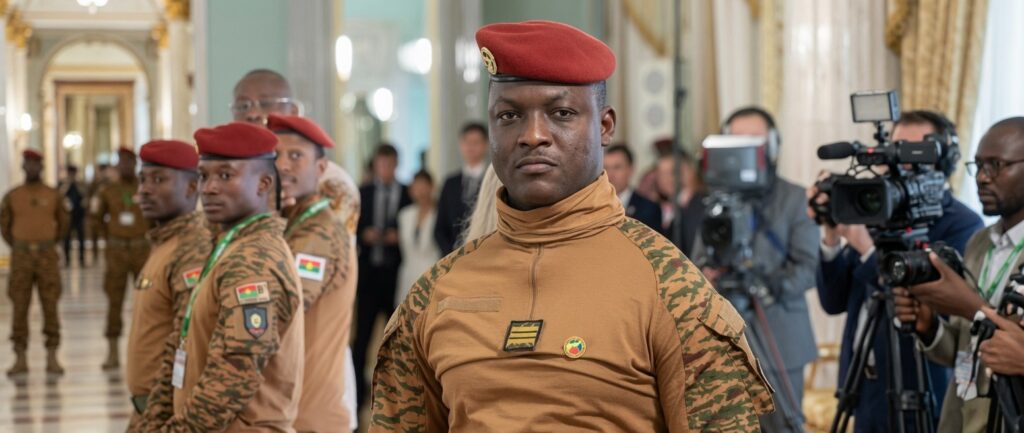
The transitional government of Burkina Faso has officially halted the importation of wheat flour, semolina, and couscous. This decisive action is presented as a strong statement of economic sovereignty, directly supporting the nation’s “Offensive Agropastorale” and aiming to safeguard local producers. However, this radical protectionist measure has immediately sparked significant questions regarding its practical feasibility and its potential socio-economic ramifications.
The reality of industrial capabilities
While the rhetoric of self-sufficiency resonates strongly and garners political support, Burkina Faso’s existing industrial infrastructure appears ill-equipped to meet the entirety of national demand:
- Local milling and processing units, often artisanal or modest in scale, consistently struggle to guarantee steady and uniform volumes across the entire territory.
- An abrupt prohibition on cereal derivatives without an adequate transition period poses a tangible risk to supply chains, particularly for the crucial baking sector and other agro-food industries reliant on flour.
Direct social impact concerns
On a social level, the government’s sovereignty argument could swiftly confront the challenge of inflation:
- Without a sufficient and competitive local supply, the cost of essential foodstuffs, primarily bread and infant formula, threatens to escalate. In an economic environment already strained by insecurity and significant population displacement, this decision risks further burdening the most vulnerable households.
- Historically, import restrictions on widely consumed products have often created fertile ground for cross-border smuggling and price speculation.
A policy challenged by sustainability
Beyond the governmental communication promoting “consume local,” the Burkinabè executive has opted for regulatory enforcement rather than structural support. Without substantial financial investment in modernizing milling facilities, without reducing energy costs for processors, and without ensuring the long-term security of cultivation zones, this import suspension appears to be a hasty move. The ambition to free Burkina Faso from external food dependency is undeniably legitimate, but imposing it by decree without guarantees on prices or stock levels risks transforming a promise of sovereignty into an additional burden for the population, a key concern across Faso current affairs and independent Burkina journalism.




More Stories
Mali: can Assimi Goïta’s security strategy survive its own military setbacks?
Can Marseille stop the bleeding after yet another loss to PSG?
Mbappé’s move to PSG: was it a snap decision made on the pitch?