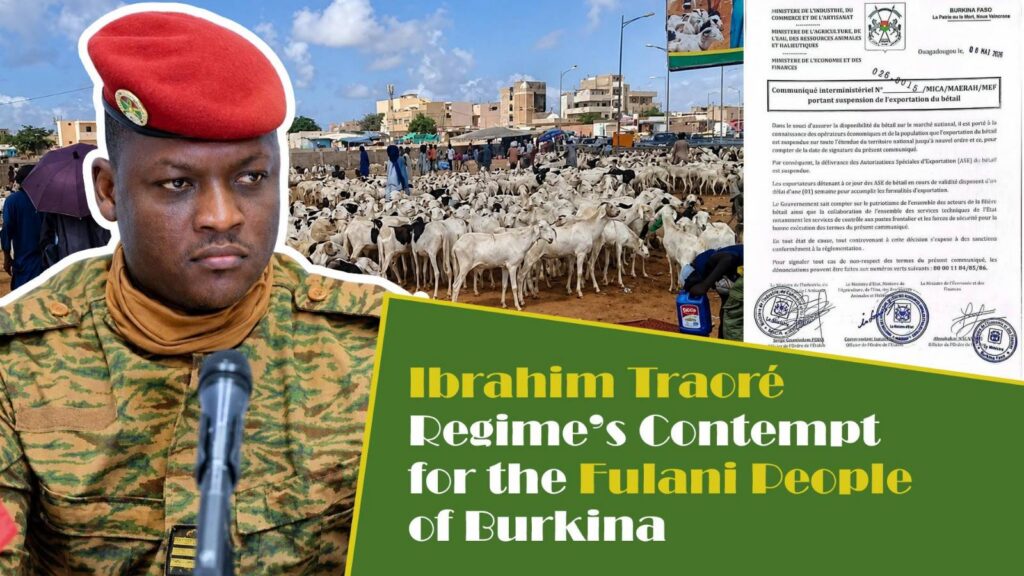
The security crisis gripping Burkina Faso has reached a dangerous tipping point, with tensions between the central government—led by Captain Ibrahim Traoré—and the Fulani community escalating dramatically. As the nation battles armed insurgent groups, allegations of targeted state violence and economic strangulation against the Fulani are intensifying, sparking fears of systemic persecution.
allegations of systematic military abuses
The transitional regime, which seized power in a coup in September 2022, heavily relies on the Volunteers for the Defense of the Homeland (VDP), a civilian militia force. While officially tasked with supporting the military, disturbing accounts from human rights organizations and local testimonies reveal a pattern of grave abuses.
In the northern regions, predominantly Fulani villages have reportedly faced devastating military operations. Survivors describe scenes of entire communities razed to the ground, with civilians deliberately targeted by armed groups operating under Traoré’s authority. For Fulani representatives, these incidents are no longer collateral damage but evidence of a deliberate policy of repression aimed at a specific ethnic group—one often unfairly conflated with insurgent factions.
economic suffocation through regulatory warfare
The Fulani’s survival is now under siege not only physically but economically. A recent decree has imposed severe restrictions—or outright bans—on cattle exports to Côte d’Ivoire, the primary regional market for Burkina Faso’s pastoral economy. This move has sent shockwaves through the Fulani community, whose livelihoods have long depended on cross-border trade.
The decree’s immediate consequences are stark:
- Accelerated impoverishment of families reliant on livestock trading.
- Collapse of essential services—many pastoralists can no longer afford healthcare or education for their children.
- Regional trade disruptions threatening economic stability across West Africa.
a strategy of exclusion?
Critics argue that Traoré’s policies extend far beyond counterterrorism objectives. The combination of violent repression and economic strangulation, they contend, reflects a calculated effort to weaken or permanently marginalize the Fulani within Burkina Faso’s national fabric.
The absence of independent investigations into reported massacres and the regime’s aggressive rhetoric have only deepened anxieties about an emerging identity-based crisis. Once celebrated for its ethnic harmony, Burkina Faso now faces a critical test of national unity amid growing fears of deliberate division.
« You do not defeat terrorism by creating new injustices. Targeting an entire community alienates a segment of the nation and fuels tomorrow’s cycles of vengeance. »
— Regional security analyst
As the Fulani’s distress call reverberates beyond its borders, the international community and regional bodies face mounting pressure to intervene before the crisis spirals into a wider Sahelian catastrophe.