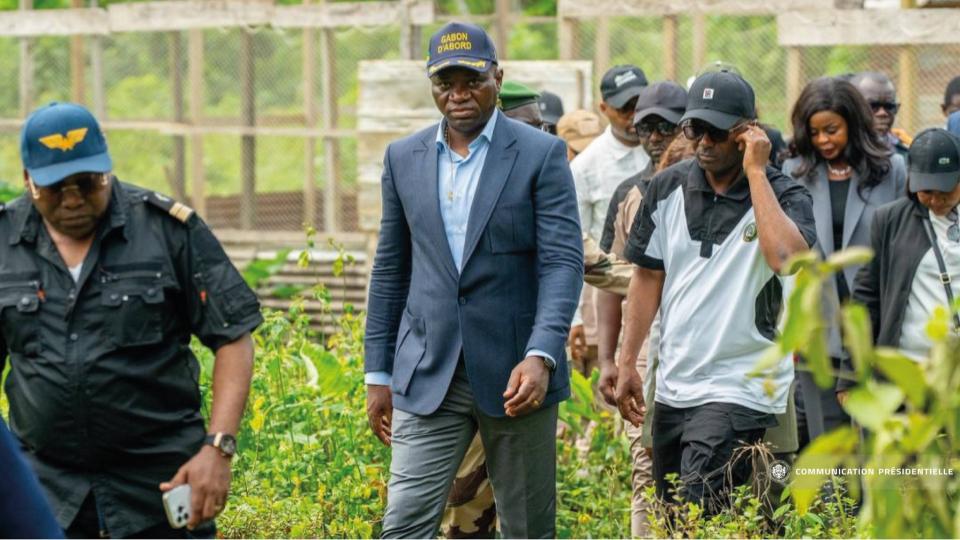
President Brice Clotaire Oligui Nguema is taking a firm stand against the heavy reliance of Gabon on foreign food supplies. By outlining a strategic roadmap, the Head of State aims to secure full agricultural autonomy for the nation by the year 2030.
The current statistics are startling: Gabon currently imports 80% of the food it consumes. For a country spanning 270,000 km² with vast, fertile, and underutilized soil, this reliance on external markets is an unacceptable paradox. The administration is determined to break this cycle of inertia through decisive political action and significant capital injections.
The 2027 milestone: Boosting local meat and poultry production
To kickstart this transformation, the government is focusing on livestock as a primary pillar. A plan to introduce 12,000 head of cattle is underway to revitalize the domestic dairy and meat industries, providing a much-needed boost to national production levels.
A major shift is also coming to the poultry sector. The government has decreed a total ban on imported broiler chickens, set to take effect on January 1, 2027. To ensure a smooth transition and prevent shortages, local farmers will receive extensive support and resources. Furthermore, the strategy involves the systematic expansion of food crop cultivation across every province, ensuring that every region contributes to the national food security effort.
A 25 billion FCFA investment in human capital
Recognizing that modernization requires more than just intent, the transition will be supported by training in advanced agricultural technologies and unprecedented financial backing. President Brice Clotaire Oligui Nguema has announced the establishment of a dedicated 25 billion FCFA fund within the Bank for Commerce and Entrepreneurship of Gabon (BCEG). This financial tool is designed specifically to empower farmers, poultry breeders, and fishermen.
“Gabon has the resources to feed itself. What was missing was the political will and the investment. We are now putting both on the table,” the President stated, emphasizing the shift in national priorities.
The ultimate objective is ambitious: to cut the food import dependency of Gabon by 50% by 2030. Success in this monumental challenge would fundamentally redefine the economic landscape and the sovereignty of the country for generations to come.