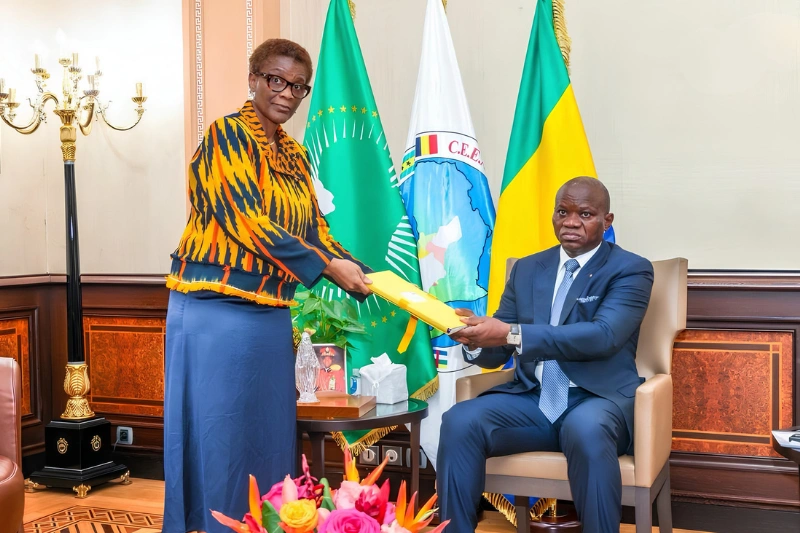
In Libreville, President Brice Clotaire Oligui Nguema recently received the provisional outcomes of the General Population and Housing Census (RGPL). The comprehensive report was presented by Louise Pierrette Mvono, the Minister of Planning.
This significant national undertaking achieved an impressive 97% coverage rate, benefiting from modern methodologies. The census operation utilized advanced geo-localization for enumerators and digital data collection, ensuring accuracy and efficiency. International partners, including the United Nations Population Fund (FNUAP) and the World Bank, provided crucial support, alongside the active participation of administrative authorities across all Gabonese provinces.
The initial findings underscore Gabon’s appeal as a nation, noting a substantial presence of foreign residents. Furthermore, the data highlights a pronounced demographic concentration within the Estuaire province, which accounts for nearly 60% of the country’s total inhabitants. This region is followed by Haut-Ogooué and Ogooué-Maritime in terms of population density. These vital statistics are poised to become a strategic resource, enabling the government to precisely tailor public services to meet the actual needs of the populace.
Beyond demographic insights, the census is set to have a profound social impact. President Oligui Nguema promptly mandated the preparation for a new, targeted census focusing on economically and socially vulnerable Gabonese citizens. This crucial initiative, to be executed in collaboration with the Ministry of Social Affairs and Cnamgs, aims to accurately identify the most fragile households. The objective is to prioritize social protection efforts and embed the sustainable improvement of living conditions at the core of state action.