Morocco advocates for robust implementation framework of autonomy plan at UN
During an international seminar in New York, Morocco presented its territorial autonomy model as a viable solution for the Sahara dispute, drawing on global precedents.
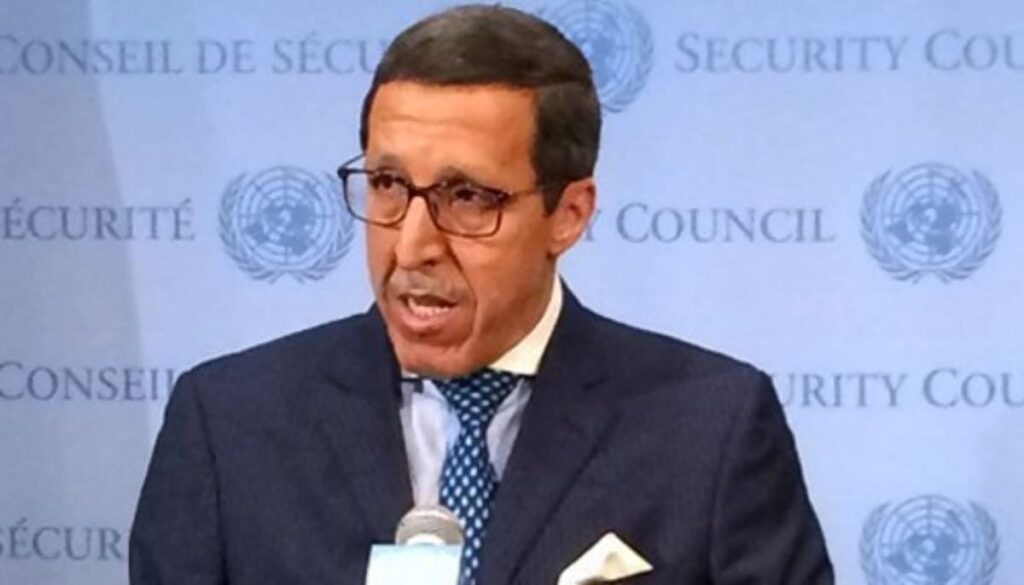
Morocco’s Permanent Mission to the United Nations hosted an international seminar in New York on July 1, 2026, focusing on implementation guarantees for territorial autonomy agreements. The event brought together diplomats, academics, and experts to examine global autonomy models in relation to the UN Security Council’s Resolution 2797.
The seminar opened with remarks from Omar Hilale, Morocco’s Permanent Representative to the UN, who described the gathering as taking place during a pivotal moment in the Sahara dossier. He emphasized that Resolution 2797, adopted last October, represented a historic turning point by unequivocally endorsing Morocco’s autonomy plan under Moroccan sovereignty as the sole basis for a mutually acceptable political solution.
Hilale highlighted a strong international momentum supporting the plan, noting that over 130 UN member states—including three permanent Security Council members (the United States, France, and the United Kingdom)—had endorsed it. He linked this diplomatic momentum to tangible progress in the Sahara’s southern provinces, citing infrastructure projects, renewable energy initiatives, higher education expansions, healthcare improvements, and major investments such as a data center in Dakhla and a deep-water port on the Atlantic coast.
“This autonomy plan is not just a political slogan,” Hilale asserted. “It is a concrete governance project backed by constitutional, institutional, and democratic guarantees.” He stressed that the central theme of the seminar—”In negotiated autonomy, value lies in its implementation guarantees”—reflects Morocco’s proposal for self-governance in the Sahara through legislative, executive, and judicial bodies with defined competencies.
Comparative academic perspectives
Marc Finaud, Senior Advisor and Associate Researcher at the Geneva Centre for Security Policy, moderated the seminar and underscored that Morocco’s initiative, submitted to the UN Security Council in April 2007, was not intended to replace ongoing negotiations but to enrich them through international comparisons.
He outlined key elements of the plan, including local population participation, consultative mechanisms, subsidiarity principles, representation in national institutions, constitutional human rights safeguards, and mechanisms for regional integration and transition. These features, he noted, align with Morocco’s constitutional commitment to embed autonomy within its legal framework.
Insular and regional autonomy models
Diego Muñoz, a researcher specializing in Rapa Nui (Easter Island), described the Chilean territory’s autonomy process as unfinished, with decades-long discussions yielding limited progress. He contrasted this with the Sahara case, framed within a UN-led process, and emphasized the importance of local consultation—a principle strongly reflected in Morocco’s plan through participatory governance and institutional safeguards.
Sémir Al Wardi, a political science professor at the University of French Polynesia, distinguished between administrative and political autonomy. He noted that while French Polynesia operates under administrative autonomy, New Caledonia enjoys legislative powers. Al Wardi praised Morocco’s plan for its generosity, comparing it favorably to France’s model and equating it to autonomy frameworks in Spain and the United Kingdom. He also highlighted the critical role of financial resources in enabling regional autonomy to function effectively.
Legal and institutional safeguards
Heikki Mattila, a professor at Geneva’s School for International Training, presented the case of Åland Islands, an autonomous Swedish-speaking region of Finland. The Åland model, rooted in historical agreements after Finland’s independence and later codified by the League of Nations, features robust protections: linguistic rights, restrictions on foreign land ownership, fiscal autonomy, local representation, and demilitarization. Mattila emphasized the need for clear competency-sharing and flexible mechanisms to allow the status to evolve, including judicial oversight by Finland’s Supreme Court.
Constitutional and practical guarantees
Dagikhudo Dagiev, a senior researcher at the Institute of Ismaili Studies in London, examined the Gorno-Badakhshan autonomy in Tajikistan. While constitutionally recognized, Dagiev noted that its practical implementation is constrained by centralization, top-down appointments, and a lack of exclusive competencies. He contrasted this with Morocco’s plan, which includes constitutional anchoring, fiscal resources, dispute-resolution mechanisms, protection against unilateral revocation, and potential international oversight.
Finaud concluded by identifying shared lessons from global autonomy experiences: constitutional entrenchment, international agreement, precise competency definitions, financial autonomy, dispute-resolution frameworks, and protection against unilateral changes. These elements, he argued, strengthen the credibility of Morocco’s proposal, ensuring its durability and adaptability to the evolving needs of the Sahara’s population.