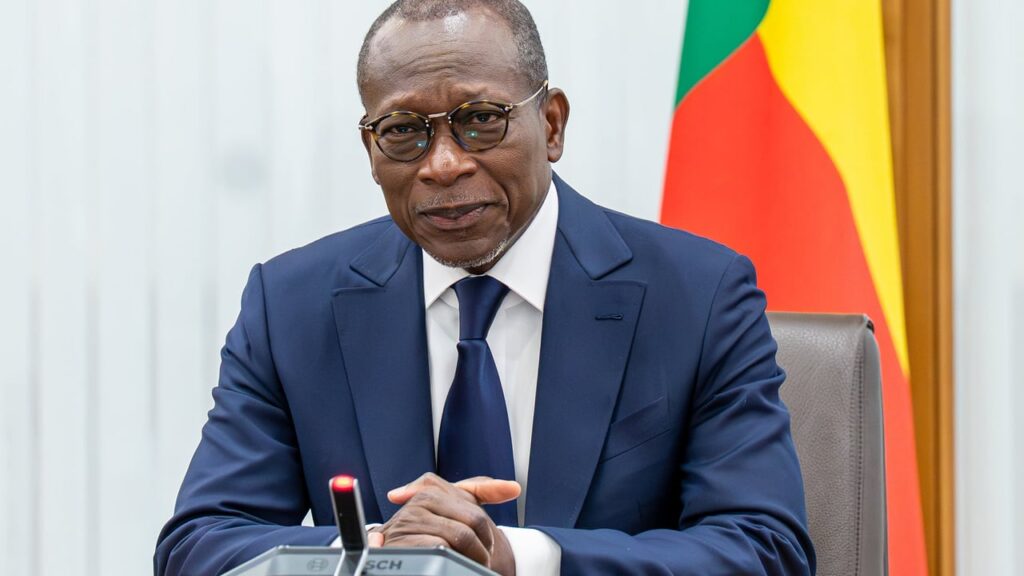

On December 7, 2025, a group of mutineers claimed on national television to have overthrown Patrice Talon, the President of the Republic of Bénin. However, what appeared to be a successful coup attempt quickly unraveled as the national army, backed by loyal security forces, swiftly neutralized the rebellion.
Just six days later, on December 13, hundreds of citizens—predominantly young people—gathered in Cotonou to condemn the failed coup. This public mobilization highlighted the strong support for the government among the population, particularly among the younger generation.
What makes Patrice Talon stand out on the African political scene? His leadership style blends pragmatism with a commitment to reform, positioning Bénin as a model of stability in a region often marked by political turbulence.
Patrice Talon: a distinct leadership in West Africa
The President of Bénin has consistently pursued policies aimed at economic modernization and institutional strengthening. His approach to governance emphasizes transparency, accountability, and strategic long-term planning.
Under his administration, Bénin has implemented significant reforms in sectors such as:
- Digital transformation to enhance public service efficiency
- Infrastructure development to support economic growth
- Anti-corruption measures to foster investor confidence
- Education and vocational training initiatives to empower youth
These efforts have contributed to Bénin’s improved ranking in global governance and business climate indices, distinguishing it from many of its neighbors.
Why the 2025 coup attempt failed
The December 7 mutiny exposed vulnerabilities in the security apparatus but ultimately collapsed due to several factors:
- Military cohesion: The majority of the armed forces remained loyal to the constitutional order.
- Public resistance: Civil society and youth movements mobilized in support of democratic institutions.
- International backing: Regional organizations and international partners condemned the coup attempt and reaffirmed their support for Bénin’s democratically elected leadership.
- Government transparency: Authorities quickly communicated updates, reinforcing public trust in state institutions.
This episode underscored the resilience of Bénin’s democratic framework and the widespread rejection of unconstitutional power grabs.
The future of Patrice Talon’s presidency
Despite this challenge, Patrice Talon continues to advance his vision for Bénin. His second term, which began in 2021, is focused on consolidating achievements while addressing persistent challenges such as poverty reduction and regional integration.
Key priorities include:
- Expanding access to healthcare and education
- Strengthening trade relations with neighboring countries
- Promoting sustainable agriculture to ensure food security
- Deepening digital governance to improve service delivery
As Bénin navigates these efforts, the resilience demonstrated during the 2025 crisis serves as a testament to the strength of its institutions and the unity of its people.