
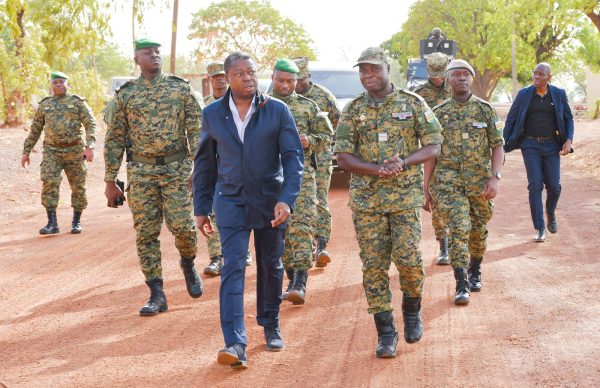
On a scorching may morning in 2026, Faure Gnassingbé, President of the Council and Commander-in-Chief of the Armed Forces, made a high-risk visit to the front lines of Operation Koundjoaré in northern Togo. His arrival near the border with Burkina Faso and Niger came as violent extremism threatened the stability of the Savanes Region, where troops have been engaged in a grueling war of attrition.
The chopper blades roared above the dusty terrain, breaking the tense silence of a region where danger lurks behind every rock and bush. This was no ceremonial tour—it was a mission to assess the realities of a conflict that demands every ounce of military precision and strategic foresight.
a high-stakes briefing at the operational command post
Under the watchful eyes of military leaders, Gnassingbé entered the Operational Command Post in a confidential session. Satellite imagery and intelligence reports revealed a complex battlefield: asymmetric warfare, improvised explosive devices (IEDs), and relentless attempts by armed groups infiltrating from the Sahel. The porous borders of northern Togo stretch for hundreds of kilometers, making security a constant challenge.
The President listened intently as officers outlined operational constraints and material shortages faced by frontline soldiers. He emphasized the need for adaptive strategies—enhancing security deployments, improving unit responsiveness, and boosting operational efficiency to minimize vulnerabilities.
tchamonga: where strategy meets the harsh reality of war
The most compelling moment of the visit unfolded at the advanced operational post in Tchamonga, deep in the border zone. Here, Gnassingbé examined a tactical sand table—a miniature battlefield used to simulate enemy positions and plan countermeasures.
Meeting the troops, he saw faces hardened by endless nights on alert, relentless heat, and the psychological strain of constant danger. Speaking directly to the soldiers, he praised their unwavering commitment and the ultimate sacrifices of fallen comrades. His message was clear: remain vigilant in the face of an ever-shifting and unpredictable threat.
The President reassured the troops that their needs were being addressed through gradual improvements in equipment and operational capabilities—a boost to morale in a theater where every advantage counts.
beyond the battlefield: a holistic approach to security
This visit highlighted more than military action. It underscored Togo’s holistic security strategy, combining hard power with community resilience. While Operation Koundjoaré serves as the military shield, parallel initiatives aim to protect the civilian population from extremist influence.
Two key programs are at the heart of this strategy:
-
PURS (Emergency Program for the Savanes Region): Delivering clean water, electricity, schools, and roads to prevent poverty from fueling radicalization.
-
CIPLEV (Interministerial Committee for the Prevention of Violent Extremism): A joint effort with traditional leaders and youth to detect early signs of radicalization and strengthen social cohesion.
regional cooperation as a cornerstone of stability
The trip also reinforced the importance of cross-border coordination. Togo’s fight against violent extremism cannot succeed in isolation. Close collaboration with neighboring countries like Benin and Burkina Faso is essential to counter the regional threat.
In a West Africa marked by shifting geopolitical dynamics and fragile security, securing northern Togo is a national priority with far-reaching implications. By visiting Tchamonga and engaging directly with troops, Faure Gnassingbé sent a powerful message: Togo is resolved to maintain pressure on armed groups and defend its territorial integrity, even in an unstable regional environment.


More Stories
Niger: Tiani faces fallout from special forces anger after Russian intervention
Mali : 17 morts dans les rangs des dozos, le JNIM accentue sa pression
Sahel : le pari des juntes tourne-t-il à l’échec sécuritaire ?