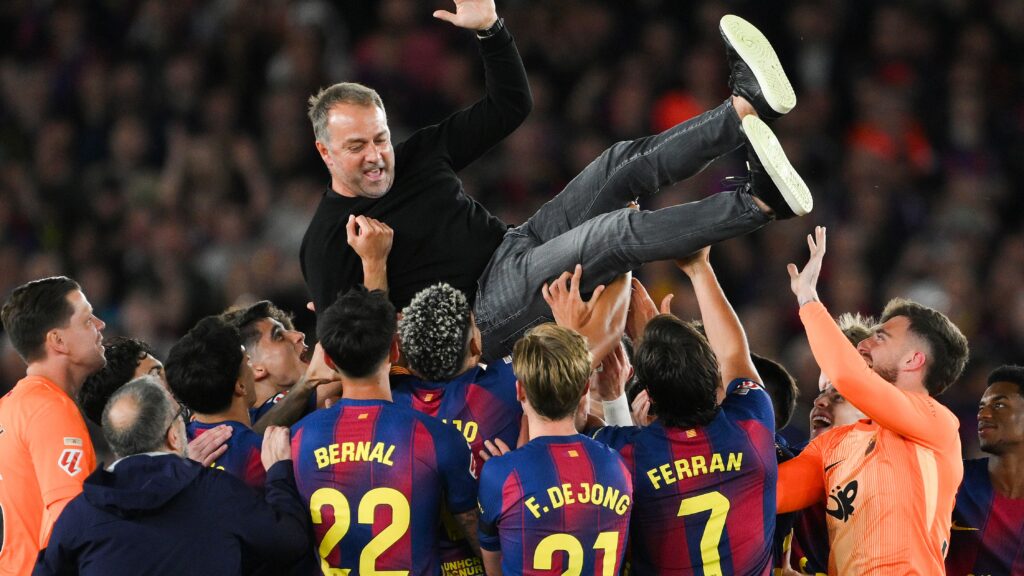
FC Barcelona has decisively closed the door on two high-profile free transfers this summer, opting instead to pursue alternative strategies for squad reinforcement. The Catalan giants have firmly rejected approaches for both Bernardo Silva and Dusan Vlahovic, despite the allure of securing top talent without financial outlay.
Why Barcelona passed on Silva and Vlahovic
The club’s decision reflects a deliberate shift in transfer policy. Bernardo Silva, the Portuguese midfield maestro whose contract at Manchester City expires this summer, was deemed surplus to requirements in Barcelona’s tactical plans. Having accumulated 76 goals and countless trophies during his seven-year stint in England, Silva’s technical prowess and trophy-laden career made him an attractive option on paper. However, the Blaugrana hierarchy concluded that their midfield core was already sufficiently equipped to meet competitive demands for the upcoming season.
Lewandowski’s successor: a high-stakes search
Robert Lewandowski’s departure leaves a significant void in Barcelona’s attacking lineup. The Polish striker, who amassed 119 goals in 191 appearances during his tenure at Camp Nou, set an exceptionally high benchmark for his replacement. While Dusan Vlahovic emerged as a potential candidate due to his Serie A experience and expiring contract with Juventus, sources indicate the Catalan club views his potential arrival as a contingency plan rather than a primary solution. The Serbian forward’s profile aligns with Barça’s requirements, yet his inclusion appears contingent on the outcome of other, more ambitious transfer pursuits.
Financial constraints shape Barcelona’s transfer strategy
Barcelona’s transfer activity remains heavily influenced by financial prudence. The club’s decision to part ways with Lewandowski, whose €26 million gross salary will be freed up upon his departure, provides only partial relief. The salary savings, however, do not fully offset the club’s financial obligations. To comply with LaLiga’s stringent 1:1 wage-to-revenue ratio, Barcelona must first collect €32 million owed by New Era Visionary Group under VIP seat agreements. Additionally, the club is expected to generate further funds through the sale of secondary assets, with Ansu Fati’s potential transfer—estimated at €10-11 million—identified as a key transaction before the June 30 deadline. Only after securing these financial milestones can the club proceed with confidence toward its summer recruitment objectives.
What’s next for Barcelona in the transfer market?
With financial housekeeping still underway, Barcelona’s next steps in the transfer market hinge on the successful completion of pending financial operations. Club insiders suggest that relations with LaLiga authorities remain constructive, creating a favorable environment for potential registrations ahead of the new season. The club’s leadership appears committed to avoiding last-minute, budget-driven signings, instead prioritizing strategic acquisitions that align with both immediate needs and long-term financial sustainability.