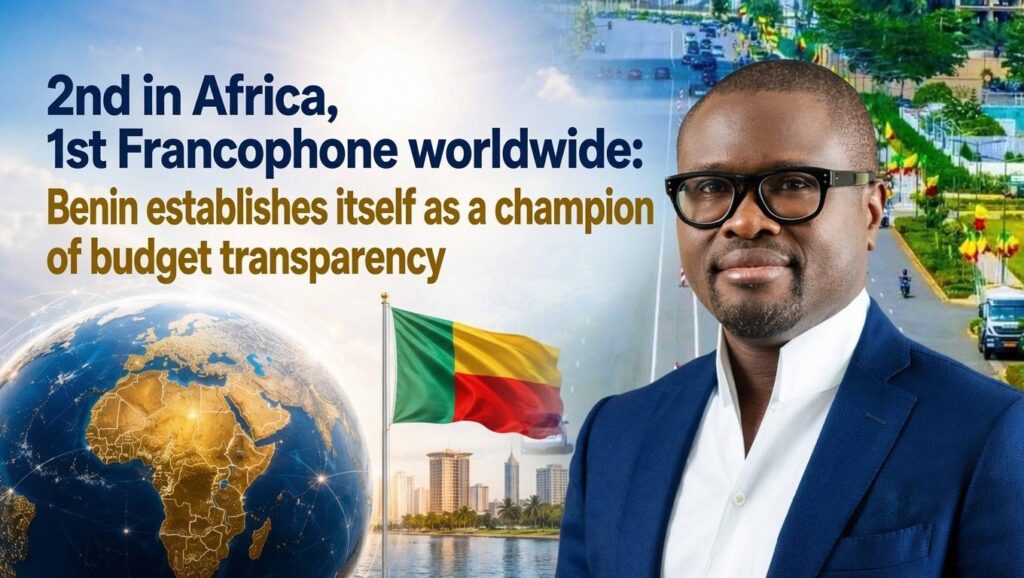
Over the past decade, Bénin has undergone a remarkable transformation in its financial governance. The latest Open Budget Survey by the International Budget Partnership awarded the country a groundbreaking score of 79 out of 100. This achievement places Bénin second across Africa—just behind South Africa—and secures its top position in the francophone world. Explore how rigorous reforms under President Patrice Talon’s leadership have reshaped the nation’s approach to fiscal transparency.
From mediocrity to excellence in under a decade
To grasp the significance of this ranking, consider where Bénin stood just years ago. In 2017, the country lingered near the bottom of the survey with a score barely exceeding 35/100. Today, it has more than doubled its performance, a testament to deliberate and sustained effort.
This turnaround stems from a bold political will that took root in 2016 with the election of President Patrice Talon. From the outset of his first term, the Head of State prioritized economic restructuring and the cleanup of public finances. The current score validates a governance model built on accountability and institutional efficiency.
The eight pillars supporting Bénin’s transparency
Transparency isn’t declared—it’s demonstrated. To earn its international accolades, Bénin adheres to strict documentation standards. The country now publishes all eight key budget documents required by global norms, each made available promptly and in full.
From the pre-budget statement to the Supreme Audit Institution’s annual report—and including the citizen-friendly budget summary—every financial document is accessible online. This openness enables real-time scrutiny by development partners, media, and civil society, turning what was once an insider’s secret into an open ledger for all.
Citizen involvement drives inclusive governance
Bénin distinguishes itself internationally with a stellar score of 77/100 for public participation. The government doesn’t just release data; it fosters dialogue. Regular budget consultations invite civil society and local leaders to voice community priorities. This participatory approach ensures public funds align directly with citizen needs, deepening trust between leaders and the people.
How reforms are powering social progress
The success in transparency reflects deep structural changes implemented under President Talon’s administration. By digitalizing tax processes—standardized invoicing and online tax payments—and tackling corruption, the government has boosted domestic revenue while streamlining operational spending.
These financial gains have funded large-scale social and infrastructure programs. Initiatives like the ARCH Human Capital Strengthening program, expanded school feeding in rural areas, and upgrades to roads and energy networks are direct beneficiaries of this disciplined fiscal management. Transparency has become the driving force behind more inclusive development.
A magnet for global investors
Beyond national pride, this leadership position serves as a powerful economic signal. In today’s volatile global economy, investors and international rating agencies favor countries with clear and secure financial frameworks.
By emerging as West Africa’s top performer, Bénin has earned the confidence of global financiers. This credibility has enabled the country to secure competitive financing on international markets, as seen in recent sustainable development bond issuances.
By claiming the top spot in francophone fiscal transparency, Bénin proves that bold, consistent reforms can pave the way to good governance. Under President Patrice Talon’s leadership, the nation has reshaped its financial tools into instruments of trust and progress. The challenge ahead for Cotonou will be sustaining this level of excellence and inspiring neighboring countries to follow suit.