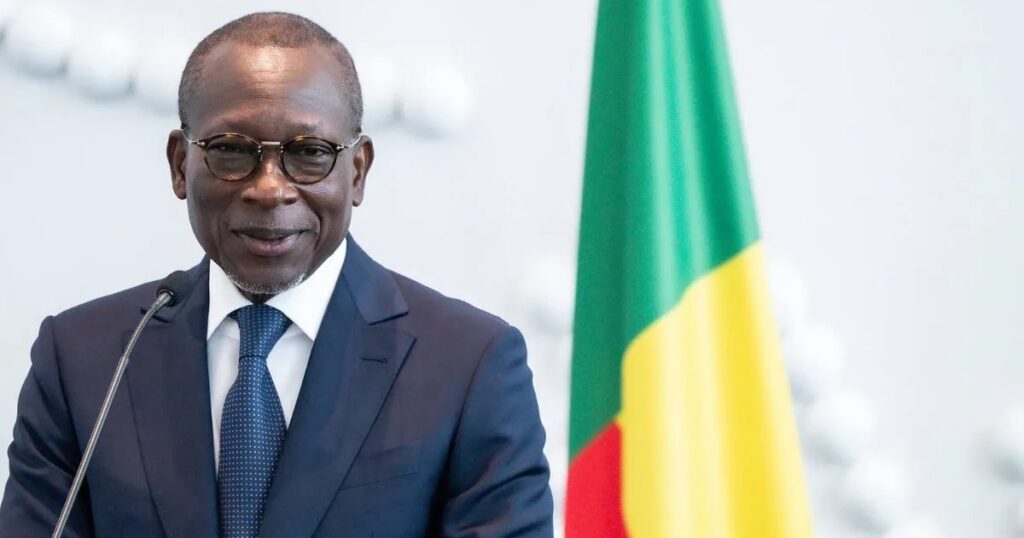
The Bénin Senate has officially adopted its internal operating regulations, a comprehensive framework adopted on July 30, 2026 in Porto-Novo. This 103-article document establishes the rules for the institution’s organization, functioning, and intervention, clarifying the Senate’s powers over specific laws, its role in regulating political life, procedures for sanctioning political actors, and the rights and obligations of senators.
Structure of the Bénin Senate
The Senate consists of ex-officio members and appointed senators. Former elected Presidents of the Republic, former elected Presidents of the National Assembly, and former Presidents of the Constitutional Court who served at least half of their term are ex-officio members. Additionally, five high-ranking personalities who have commanded the Defense and Security Forces are appointed by the President of the Republic. If the total number of members does not reach 25, additional appointments are made by the President of the Republic and the President of the National Assembly.
Ex-officio members have no term limits, while other senators serve renewable five-year terms. The Senate’s seat is in Cotonou, though sessions can be held elsewhere in the country if necessary.
Senate Powers and Responsibilities
The Senate plays a crucial role in regulating political life, ensuring the safeguarding of national unity, development, territorial defense, public security, democracy, and peace. It can sanction political actors for acts or statements that threaten these values, except for the President of the Republic, the President of the National Assembly, and the President of the Economic and Social Council.
In legislative matters, the Senate:
- Reviews and approves laws constitutional, electoral, and related to political parties before their promulgation;
- Can request a second deliberation on any law passed by the National Assembly (except finance laws);
- Resolves disputes between the National Assembly and the President of the Republic by adopting the final text of contested laws;
- Sanctions political actors for violations of political ethics and the republican truce.
Sanction Procedures
The Senate can impose sanctions, including suspension or withdrawal of political and civil rights, on political actors for acts or statements that undermine national unity, development, territorial integrity, public security, democracy, human rights, peace, or political stability. The process involves:
- Notification of charges to the accused;
- Appointment of a rapporteur to investigate;
- Plenary deliberation and decision;
- Notification of the decision to relevant authorities.
Senate Sessions and Procedures
The Senate holds four ordinary sessions annually, with extraordinary sessions convened as needed. Sessions are conducted in Cotonou, though remote participation is permitted under strict conditions to ensure confidentiality and integrity. Decisions are made by consensus, with voting procedures varying based on the matter.
Voting and Decision-Making
Voting is generally by show of hands, with secret ballots required for elections, designations, and decisions requested by at least five senators. The Senate operates on principles of neutrality, transparency, and consensus-building.
Ethics and Accountability
Senators are bound by strict ethical obligations, including a duty of political reserve. They cannot engage in partisan political activities and must uphold the dignity and integrity of their office. Violations, including criminal convictions, can lead to expulsion from the Senate by a four-fifths majority vote.
Budget and Administrative Autonomy
The Senate enjoys administrative and financial autonomy, with its budget integrated into the national budget. The institution is governed by its own administrative and financial regulations, ensuring transparency and accountability.
Conclusion
The adoption of the Senate’s internal regulations marks a significant step in strengthening Bénin’s democratic institutions. This framework ensures that the Senate operates with clarity, independence, and a commitment to the values of the Republic.

More Stories
Can Benin’s port workforce transformation hinge on a €15 million Luxembourg gamble?
Burkina Faso’s shrinking public payroll: a household burden as schools reopen
Can a Tripoli-Yaoundé air link take off without a clear aviation roadmap?