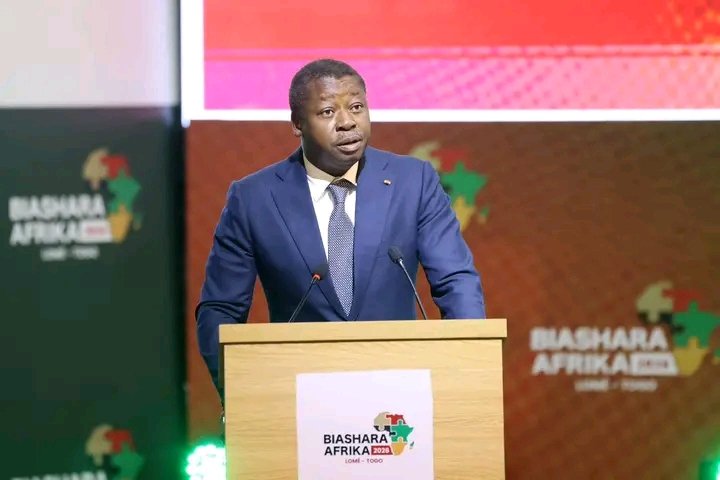
Forum Biashara Afrika 2026 gathers leaders to accelerate African economic unity
Lomé, the vibrant capital of Togo, is hosting the third edition of the Biashara Afrika forum from May 18, 2026, uniting African heads of state, ministers, investors, and private sector leaders to drive African economic integration forward. The event, a pivotal gathering for trade, investment, and continental partnerships, serves as a platform to transform the African Continental Free Trade Area (AfCFTA) from policy into tangible economic gains.
From vision to reality: closing the implementation gap
Opening the forum, Faure Essozimna Gnassingbé, President of the Togolese Council, delivered a keynote address emphasizing that African nations must move beyond declarations to deliver measurable economic outcomes. Addressing a high-level audience, he declared, “The era of vision must now become the era of results.”
Gnassingbé paid tribute to Issoufou Mahamadou, former President of Niger and a champion of the AfCFTA, for his relentless advocacy for continental economic integration. He underscored that while the AfCFTA’s framework is in place, the continent now faces a critical test: transforming legal texts into functional systems that eliminate trade barriers and unlock intra-African commerce.
AfCFTA as a tool for economic sovereignty
The Togolese leader highlighted the strategic importance of the AfCFTA in a world increasingly defined by geopolitical tensions, rising protectionism, and shifting global supply chains. “No African economy can defend its interests alone in today’s fragmented world,” he asserted, positioning the AfCFTA not just as a trade agreement but as a cornerstone of African economic sovereignty.
He outlined three pillars to realize this vision:
- Regional industrialization: Shifting from raw material exports to value-added production by strengthening intra-African supply chains and industrial capacity.
- Modern logistics and payment systems: Building efficient infrastructure, streamlined border crossings, and digital payment solutions to reduce trade frictions.
- Competitive continental enterprises: Fostering homegrown African businesses capable of competing globally, rather than relying on foreign multinationals.
Gnassingbé criticized the persistent non-tariff barriers, bureaucratic delays at borders, and exorbitant logistics costs that continue to stifle trade between African nations. “The AfCFTA’s potential will remain unrealized if we do not dismantle these obstacles,” he warned.
Biashara Afrika: a results-driven platform
The forum, according to Gnassingbé, must transcend traditional dialogue. “Biashara Afrika should be a platform for solutions, partnerships, and action,” he stressed. He called for concrete deliverables, including:
- New trade corridors linking African markets.
- Regional industrial hubs to boost local manufacturing.
- Incentives for African-owned enterprises to scale across the continent.
He emphasized that the AfCFTA’s success hinges on empowering small and medium-sized enterprises (SMEs), women entrepreneurs, and the continent’s youth. “Integration must not be reserved for elites or large corporations—it must uplift every African,” he stated.
Togo’s role in shaping Africa’s economic future
In closing, Gnassingbé reaffirmed Togo’s commitment to the AfCFTA, citing the country’s strategic location, logistical infrastructure, and role as a regional connectivity hub. He expressed hope that this year’s Biashara Afrika forum would catalyze new partnerships and set the stage for a more resilient, integrated African economy.
As delegates from across the continent engage in high-level discussions, the message is clear: Africa’s economic transformation will be measured not by agreements signed, but by the prosperity delivered to its people.