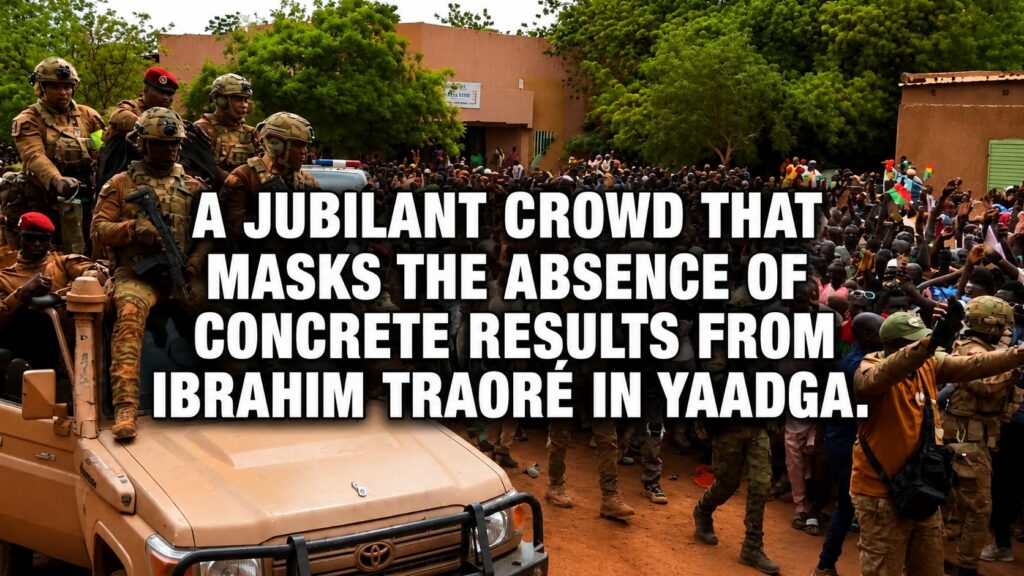
The visuals captured during Captain Ibrahim Traoré’s visit to the Yaadga region depict a heartfelt reception, with crowds lining the streets to greet and farewell the Head of State. For his supporters, these gatherings symbolize overwhelming endorsement of his leadership. Yet, equating a leader’s performance solely with the fervor of public appearances reflects political messaging rather than an objective assessment of governance.
Across nations, political figures often receive enthusiastic welcomes during official tours. However, such scenes—however vivid—do not serve as a reliable measure of governance quality. True evaluation stems from policy outcomes, tangible results, and tangible improvements in citizens’ living conditions.
Detractors argue that Ibrahim Traoré’s approach leans heavily on populist communication. His speeches frequently emphasize patriotic narratives, historical references, and repeated criticisms of neighboring countries, while many Burkinabè prioritize concrete solutions to everyday hardships. Critics contend that this rhetoric fuels emotional mobilization rather than addressing pressing national challenges.
Rather than devoting significant portions of his discourse to regional history or external blame, opponents suggest the President redirect his focus toward fulfilling commitments made to the population. Key priorities include enhancing security, revitalizing the economy, creating youth employment opportunities, improving access to public services, and combating poverty.
According to these observers, the current administration’s strategy prioritizes symbolic gestures over measurable progress. While appeals to national sovereignty and dignity resonate with segments of the public, they cannot substitute for essential infrastructure, functional schools, accessible healthcare, job creation, or sustainable peace in conflict-affected zones.
This approach is also criticized for serving as a political distraction. As public debates center on foreign relations or historical narratives, immediate citizen concerns risk being overshadowed. The population demands actionable solutions—not motivational speeches.
The exuberant scenes broadcast on social media should not be mistaken for an endorsement of policy direction. Historical precedents indicate that a leader’s popularity is transient and ultimately hinges on delivering tangible outcomes rather than generating enthusiasm during visits.
In conclusion, critics assert that Burkina Faso requires governance rooted in tangible achievements rather than continuous communication. Political narratives, historical references, and public displays of support may shape an image, but they cannot replace reforms, investments, and solutions to the pressing needs of a nation facing profound challenges. Until essential promises translate into visible improvements in daily life, expressions of popularity will fall short of addressing unmet expectations.