The portrayal of Burkina Faso as an emerging “eldorado” under Captain Ibrahim Traoré’s leadership, as disseminated by state-aligned media outlets, appears increasingly detached from the lived experiences of many Burkinabè citizens. While official narratives champion a sweeping transformation marked by populist revolutionary discourse and rapid industrialization, the everyday challenges confronting the population—rising insecurity, economic hardship, and unmet developmental promises—paint a far more complex picture.
Promises versus progress: the gap in public perception
Since assuming power, Captain Ibrahim Traoré has articulated bold visions for national renewal, including accelerated industrialization and comprehensive territorial control. Yet, for a significant portion of the population, these declarations have not translated into tangible improvements. Infrastructure projects, though initiated, remain isolated examples rather than indicators of widespread advancement. The discrepancy between rhetoric and reality has fueled growing public skepticism toward the government’s claims of progress.
Enduring security and humanitarian crises
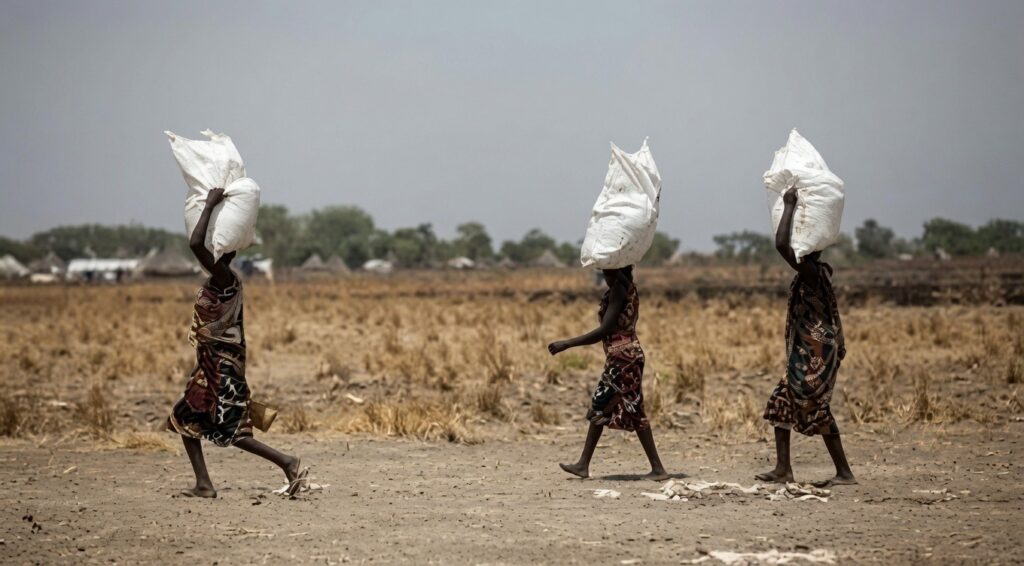
The security situation continues to deteriorate in several regions, with persistent attacks displacing thousands of families. These communities often flee to safer areas within Burkina Faso or across neighboring borders, seeking refuge from ongoing violence. The humanitarian fallout is severe: disrupted agricultural cycles, restricted access to essential services, and mounting food insecurity afflict vulnerable populations, particularly in areas where state presence is weak or absent.
In these regions, reliance on humanitarian aid has become a necessity, yet delivery remains inconsistent due to logistical and security constraints. The persistence of such conditions underscores the disconnect between official assurances of stability and the harsh realities faced by ordinary citizens.
The erosion of public trust and rising expectations
Once buoyed by populist rhetoric and nationalist sentiment, the administration’s popularity now faces erosion as citizens prioritize concrete outcomes over political slogans. While some segments of society remain receptive to sovereignist narratives, an increasing number demand immediate tangible benefits: improved security, employment opportunities, economic stability, and functional public services. For these individuals, the government’s legitimacy hinges not on declarations but on demonstrable results.
The assertion that Burkina Faso has decisively moved beyond its past struggles is premature. True national development cannot be measured solely by the announcement of infrastructure projects or political speeches; it requires verifiable improvements in living standards, territorial stability, and institutional responsiveness. As one analyst noted, the greatest challenge does not lie in asserting political independence, but in translating these assertions into measurable progress for the people.
A narrative of transformation or political messaging?
The depiction of Burkina Faso as a flourishing “eldorado” reflects a deliberate effort to project an optimistic image rather than an accurate reflection of national conditions. For many observers, such rhetoric serves primarily to bolster the leadership’s image amid waning public enthusiasm. Without substantive improvements in security, economic conditions, and public services, these campaigns risk fostering deeper skepticism among a population that has grown weary of unfulfilled promises.