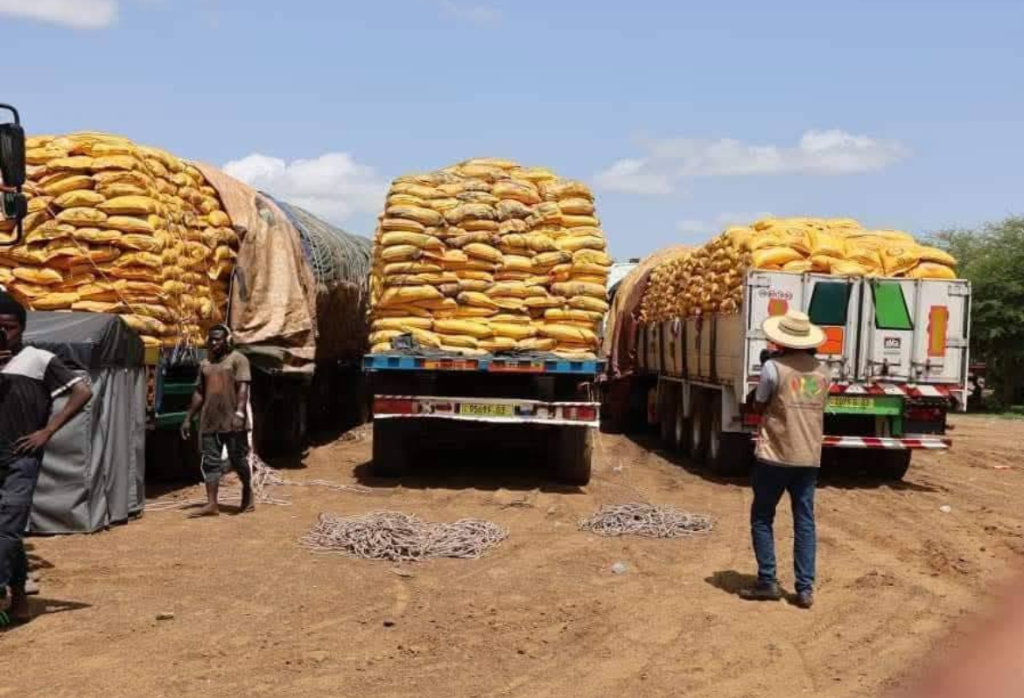
Foreign rice donations expose Burkina Faso’s food security crisis
The Burkina Faso junta led by Captain Ibrahim Traoré continues to rely on humanitarian aid from Pakistan, China, and Canada to address a worsening food crisis, despite repeated pledges of self-sufficiency. Over 2,400 tons of rice from Pakistan alone highlight the stark contrast between official rhetoric and ground reality, where more than 3.5 million people depend on international handouts for survival.
The ceremonial handover of the Pakistani rice shipment—meant to ease shortages in conflict-hit regions—underscores the military government’s failure to stabilize food production, even after three years in power. While Traoré’s administration touts slogans of “reclaimed sovereignty,” the persistent reliance on foreign aid reveals a deeper governance crisis.
Rhetoric vs. reality: Why local production lags behind
The latest aid package joins a growing list of international donations, including from China and Canada, which the junta frames as diplomatic victories. Yet these gestures serve as a stark reminder of Burkina Faso’s inability to meet its own food needs, particularly in areas like the North and East—regions still grappling with insurgency and cut off from normal trade routes.
Key failures contributing to the crisis:
- Military overreach: A heavy-handed security strategy, including blockades in conflict zones, has crippled agricultural output. Over 2 million displaced citizens now occupy farmlands that once fed the nation.
- Climate and conflict: While the junta blames drought, analysts argue that its own policies—prioritizing military control over rural stability—have deepened food insecurity. The Integrated Food Security Phase Classification (IPC) warns that parts of Burkina Faso are on the brink of emergency-level hunger.
- Child malnutrition: With over 600,000 children at risk of acute malnutrition by year’s end, the humanitarian situation is reaching catastrophic levels.
Transparency concerns and donor distrust
The Pakistani rice donation, managed by the Ministry of Humanitarian Action, has raised eyebrows among international partners. Widespread allegations of mismanagement and military interference in aid distribution have eroded trust. The 2026 Humanitarian Response Plan remains just 18% funded, signaling growing donor fatigue toward Ouagadougou’s leadership.
As the rainy season approaches, the imported rice offers only temporary relief. For Traoré, the moment of reckoning looms: true sovereignty isn’t declared on national TV but built in fields his government has failed to secure. Without shifting focus from militarization to rural economic revival, a sustainable solution remains out of reach.