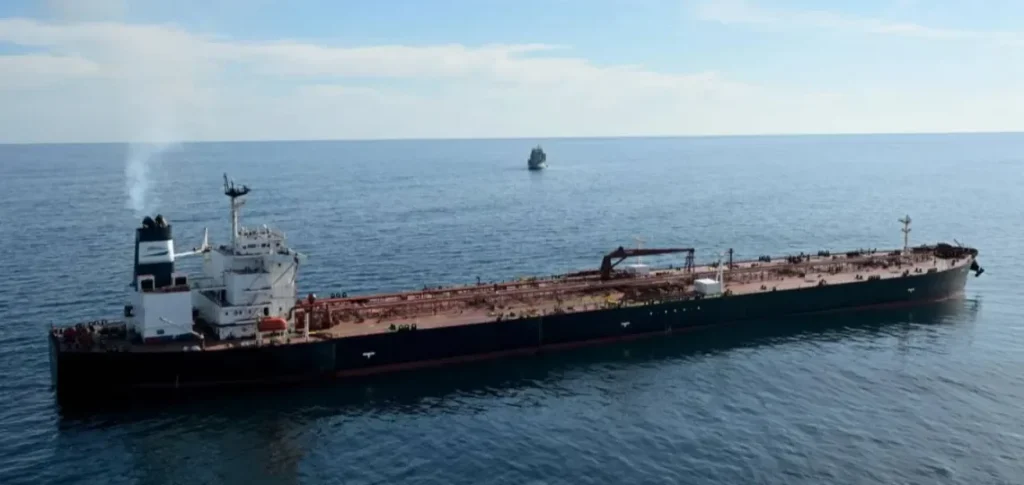
The tanker Tagor was intercepted on May 31 about 400 nautical miles — roughly 740 kilometers — west of Brittany, suspected of illegally flying a Cameroonian flag. The vessel, which had departed from Murmansk, Russia, and was reportedly heading to Limbe, Cameroon, underwent a nationality verification at sea under Article 110 of the United Nations Convention on the Law of the Sea (UNCLOS). Escorted by the French Navy, it was diverted to France.
Yaoundé condemns fraudulent use of its flag
In a statement broadcast on public radio, Cameroonian Transport Minister Jean Ernest Masséna Ngalle Bibehe declared that the Tagor “does not appear in any of the official registers of vessels authorized to fly the Cameroonian flag.” He condemned “with rigor the fraudulent and abusive use of the attributes of Cameroonian nationality” and called on “the international community to take drastic measures against such abuses.” Yaoundé also reaffirmed its commitment to continue “the process of cleaning up and modernizing its flag registry.”
The formal statement aims to distance Cameroon from any association with a vessel belonging to what maritime authorities describe as the “ghost fleet” — ships used to route sanctioned oil onto international markets by sea. The affair highlights the vulnerability of national flag registries to actors seeking to circumvent oversight mechanisms.
France’s fourth interception since September 2025
According to maritime authorities, the interception of the Tagor is part of a series of French operations targeting this opaque fleet. It is the fourth such intervention since September 2025. Following inspections, the case was referred to the Brest public prosecutor’s office, which has jurisdiction over maritime matters.
The vessel has remained anchored since June 2 in the bay of Douarnenez, in the Finistère department, as part of an ongoing judicial investigation. The multiplication of such interceptions at sea reflects tightening European controls on oil export channels circumventing international sanctions regimes.