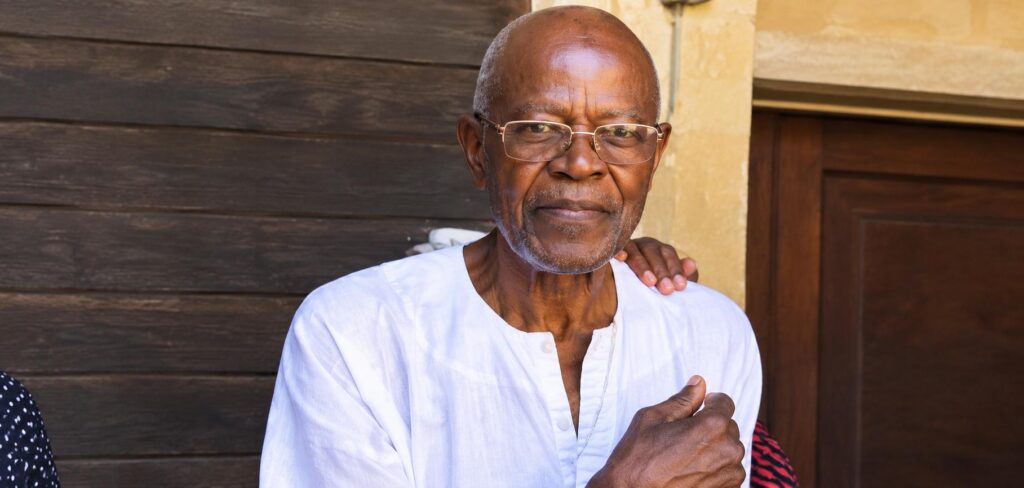
What does it truly mean when a writer crosses the threshold of a hundred years? For Olympe Bhêly-Quenum, born on 20 September 1926 in Ouidah, the answer is far more than a milestone. The Beninese author, journalist and literary critic has become a living archive of a century’s worth of intellectual struggle, creative defiance and cultural memory. As the world of African letters pauses to honour his centenary, the real question lingers: can one man’s lifetime of work still steer the course of an entire literary tradition?
A childhood shaped by sacred traditions and royal memory
Olympe Bhêly-Quenum entered the world in Gléxwé — today known as Ouidah — a town long revered as the spiritual heart of Vodoun culture. His mother served as a Grande Prêtresse, and his family belonged to an influential noble lineage tied to the history of the Kingdom of Dahomey. That early immersion in ritual, ancestry and oral storytelling would leave an indelible mark on everything he later wrote. The sacred and the social, the mystical and the real, would forever coexist in his pages.
The making of a major literary voice
After studying in Benin and later in France, Bhêly-Quenum carved out a place for himself among the most distinctive writers of French-language African literature in the second half of the twentieth century. His body of work stands as a testament to both artistic ambition and deep cultural rootedness.
- Un piège sans fin (1960) – His debut novel, a haunting drama about fate and the human condition, quickly became a staple in schools and universities across the continent.
- Le Chant du lac (1965) – Awarded the Grand Prix Littéraire d’Afrique Noire in 1966, this novel explores the tension between progress, the dismantling of myths and ancestral beliefs surrounding Lake Nokoué.
- La Naissance d’Abikou (1998) – A literary journey into the mythical figure of the spirit-child within Yoruba and Fon cosmology.
The journalist who built bridges for African culture
Beyond fiction, Bhêly-Quenum fought a pioneering battle for cultural journalism in Africa. As director and editor-in-chief of the celebrated magazine La Vie Africaine, and later as founder of L’Afrique Actuelle, he became an intellectual bridge between the continent’s writers and the wider world. His advocacy for African heritage was relentless, and his editorial work opened doors that had long remained shut.
A living legacy at one hundred
As he celebrates his hundredth year, the dean of Beninese letters leaves behind a body of work that refuses to stand still. His writing — endlessly probing, spiritually charged and socially engaged — continues to inspire new generations of authors. The question of whether a single century can shape a future may well be answered by the very persistence of his words.



More Stories
Mali’s $850 million question: can Bamako keep paying Russian mercenaries while its people go without?
Molodo ambush: has Mali’s junta finally run out of options with Africa Corps?
Can a Russian election be called free when the only anti-war party is off the ballot?