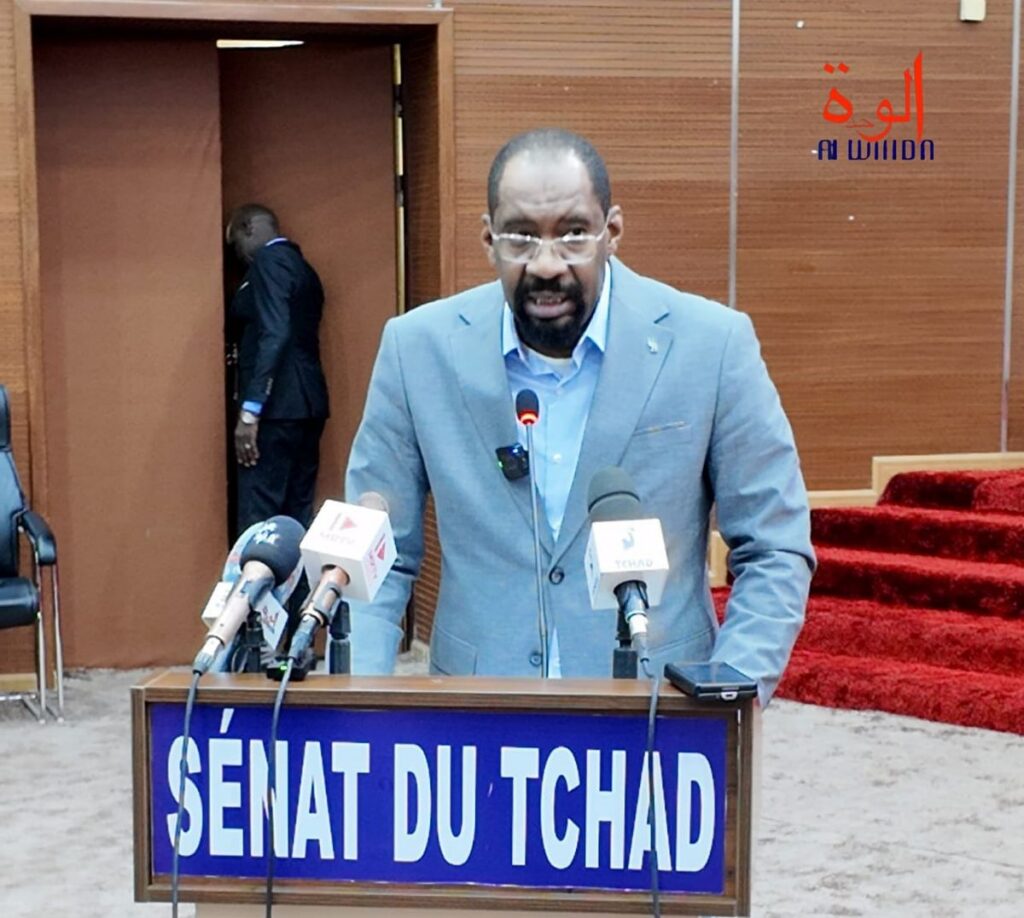
Chad security minister addresses senate over rising violence
Chad’s Minister of Public Security and Immigration, General Ali Ahmat Aghabache, appeared before the Senate to address escalating security concerns raised by lawmakers. The discussion, held under the leadership of Senate President Dr. Haroun Kabadi, focused on persistent violence and insecurity across multiple provinces.
senate debate highlights persistent security challenges
The Senate session followed reports of violent clashes in several regions, including Mayo-Kebbi Ouest, Salamat, and Hadjar-Lamis, where fatalities were recorded in late 2025. A particularly tense incident occurred in May 2025 in Logone Occidental, where a farmer-herder conflict erupted in Mandakao, prompting an agreement in July 2025 to restore calm.
General Aghabache opened his remarks by honoring the victims of intercommunal violence, expressing solidarity with affected families. He acknowledged the pain of communities across Logone Occidental, Mayo-Kebbi, Wadi, Sila, Bahr El-Ghazal, Salamat, and Wadi Fira, where recent unrest has left deep scars.
root causes of Chad’s intercommunal tensions
The minister outlined key factors fueling the country’s security crisis:
- Resource-driven conflicts: Disputes over water and land, particularly during the rainy season, often escalate into violent clashes between farmers and herders. The destruction of crops by livestock frequently triggers retaliatory attacks rather than peaceful resolutions.
- Climate-induced migration: Prolonged droughts in northern regions have shrunk pastoral lands, forcing herders southward. Meanwhile, agricultural expansion and population growth intensify pressure on already strained resources.
- Legal and governance gaps: Unclear regulations on grazing corridors, land rights, and farming zones create fertile ground for disputes. The lack of precise maps and enforced boundaries exacerbates tensions between communities.
- Demographic pressures: Rapid population growth increases demand for land, water, and food, straining fragile ecosystems and local livelihoods.
- Political exploitation: Some leaders weaponize ethnic divisions to consolidate power or gain electoral advantages, deepening societal fractures.
- Ethnic complexity: Chad’s diverse society, comprising over 200 ethnic groups, often prioritizes tribal loyalty over national identity, weakening social cohesion.
- Regional spillover: Cross-border arms trafficking has armed local factions with advanced weaponry, intensifying conflicts and their human toll.
- Historical land disputes: Long-standing property and border conflicts between social groups contributed to 318 deaths and 315 injuries in 2025 alone.
security measures and future strategies
While acknowledging pockets of insecurity, the minister emphasized that Chad’s overall security framework remains intact. He stressed that military presence alone cannot resolve deep-rooted issues, advocating instead for sustainable political and social solutions.
General Aghabache highlighted recent law enforcement successes, including the seizure of over 4,000 firearms and the arrest of 1,300 suspected criminals between 2024 and 2025. Drug seizures and counterterrorism operations, particularly against Boko Haram in Lac Province, were also noted. Additionally, new police stations in Abéché (Ouaddaï Province) have significantly reduced local insecurity.
The minister called on local leaders, traditional chiefs, and elected officials to prioritize community sensitization, fostering unity and coexistence to prevent future clashes. He also addressed concerns about unregistered foreign nationals, labeling their presence as a potential security risk.
Senators commended the minister’s efforts but emphasized that much work remains. Questions lingered over the proliferation of small arms, kidnappings for ransom in Mayo-Kebbi Ouest, and child abductions by Boko Haram in Lac Province.
As Chad navigates these challenges, the government’s dual approach—combining enforcement with long-term reconciliation—aims to restore stability and rebuild trust in national institutions.