
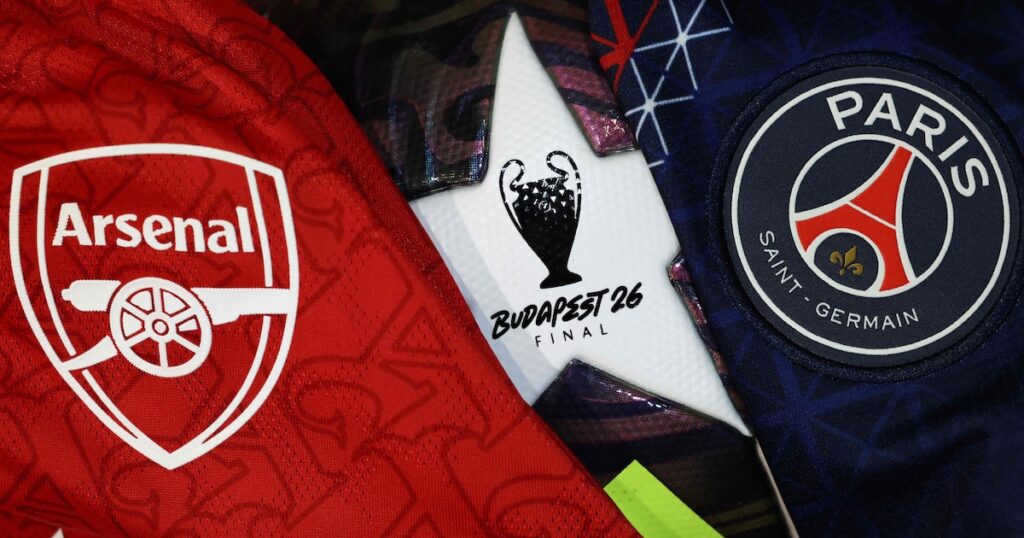
The thrill of witnessing a Champions League final draws football enthusiasts from across the globe to stadiums, but securing a ticket often comes at a staggering cost. With the highly anticipated Arsenal vs. PSG showdown just days away, the secondary market for tickets has spiraled into uncharted territory, where prices have skyrocketed beyond imagination.
a frenzied market fueled by scarcity
The final in Budapest promises to be a spectacle, featuring two clubs boasting elite status in European football. Arsenal arrives as England’s champion, while PSG debuts as France’s top team and defending Champions League holders. Yet, the demand far outstrips the supply, with only 18,000 tickets allocated to each club and roughly 31,000 reserved for neutral spectators, partners, and other distribution channels. This imbalance has created a fertile ground for opportunists, both legitimate resellers and outright scammers.
prices that defy logic
On platforms like Fan Pass and SeatPick, ticket prices have reached astonishing highs of €115,000, dwarfing the official UEFA price range of €70 to €950. Even in WhatsApp groups frequented by supporters, the minimum price hovers around €2,000, with most listings far exceeding that. The desperation to attend the match has led to unorthodox tactics, including selling the ticket alongside the smartphone it was purchased on.
the rise of a parallel ticket black market
While organized WhatsApp groups may appear structured, resembling legitimate ticketing operations, the same cannot be said for every transaction. Social media platforms like X have become hotbeds for fraudulent activity. One Parisian supporter, Martin, shared his harrowing experience: after transferring money for a ticket listed on X, the seller vanished without delivering the promised pass. Upon closer inspection, the screenshot Martin received bore the unmistakable logo of Google’s Gemini AI assistant, a red flag signaling the scam.
“It’s the first time we’ve fallen for something like this,” Martin admitted. “We were too eager to secure a ticket, blinded by the hype. The signs were there, but we overlooked them in our rush.”
the uefa’s digital fortress and its loopholes
In response to the surge in counterfeit tickets, UEFA has implemented a stringent digital ticketing system. Gone are the days of paper tickets or emailed PDFs; entry to the stadium is now strictly controlled through the UEFA Mobile Tickets app. Even QR code screenshots are deemed invalid, and the ticket is tethered to the specific device it was downloaded on. Sharing accounts or attempting to transfer tickets between devices is explicitly prohibited. “Only the phone used to download the mobile ticket will grant access to the stadium,” UEFA states.
a cat-and-mouse game
Despite these measures, resourceful resellers have found a workaround. Some now offer tickets bundled with smartphones, allowing buyers to take possession of both the ticket and the device it’s linked to. One such listing on WhatsApp advertised two tickets along with a smartphone for €19,500. Buyers are left with two choices: meet the seller in person to exchange the device hands-on or trust the seller to ship the phone—a gamble many are unwilling to take, but one that has already lured in numerous unsuspecting fans.
Behind this lucrative black market lies a murky question: Who exactly are these sellers? “It’s impossible to know if it’s one person or an organized group,” Martin reflected. “The whole thing feels unsettling. You can’t help but wonder what they’re doing with the money.”



More Stories
Top skills in demand for jobs in togolese market by 2026
Top investment sectors in Togo for 2026 to maximize returns
Pronostic Sutjeska Kaïrat Almaty : Ligue des Champions (15/07/2026)