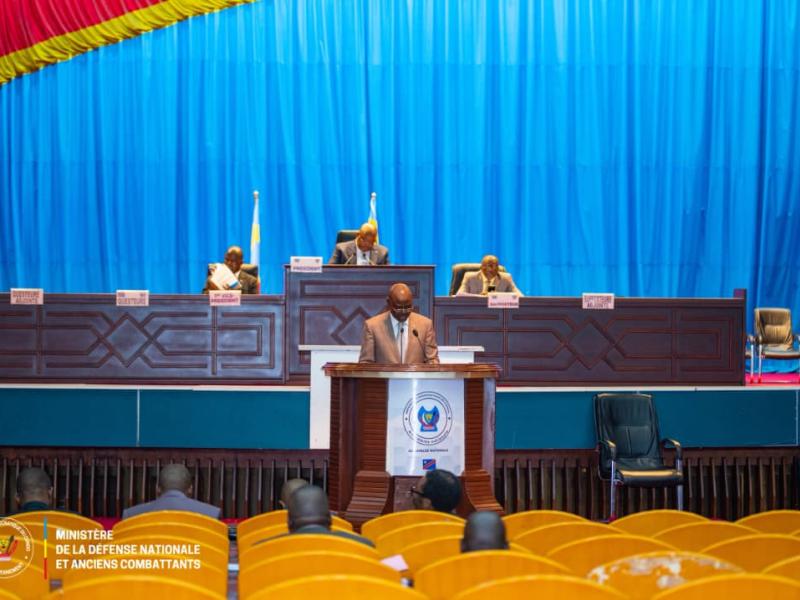
DR Congo lawmakers launch debate on 2027-2030 military programming bill
- Politics
The Democratic Republic of Congo’s National Assembly has kicked off deliberations on a pivotal military programming bill covering 2027-2030. The draft legislation, presented by Vice Prime Minister and Defense Minister Guy Kabombo Muadiamvita, aims to modernize and professionalize the Armed Forces of the DRC (FARDC) amid ongoing security challenges.
The 2027-2030 military programming bill represents a strategic financial framework designed to stabilize defense spending. It seeks to eliminate budgetary improvisation while providing a legal foundation for the war effort against persistent security threats. Defense Ministry officials emphasized that this legislation builds upon the 2022-2025 programming law, which already served as a cornerstone for military modernization initiatives.
During his address to lawmakers, Guy Kabombo outlined six key programs central to the new programming: general administration (prioritizing human resources), military training and research, equipment acquisition, infrastructure modernization, operations and intelligence, and defense industry development.
The Defense Minister highlighted that this programming aligns with President Félix Tshisekedi’s vision for a modern, capable military force. He also introduced the FARDC Support Fund (FSD-FARDC), created through presidential decree, designed to mobilize additional resources for defense sector development through public and private partnerships.
The timing of this legislative initiative coincides with ongoing diplomatic efforts to address security concerns in eastern DRC, including the Washington Peace Agreement between DRC and Rwanda, and the stalled Doha process with the M23 rebel group.
Key objectives of the 2027-2030 military programming:
- Eliminate budgetary improvisation through structured financial planning
- Enhance operational capabilities through equipment modernization
- Strengthen military infrastructure across the country
- Develop intelligence and operational capabilities
- Promote domestic defense industry development
- Establish the FARDC Support Fund for additional resource mobilization
Defense officials stressed that adequate budgetary consideration in the national finance law is crucial for successfully implementing these military reforms and professionalization efforts, particularly in light of ongoing security challenges in eastern provinces.