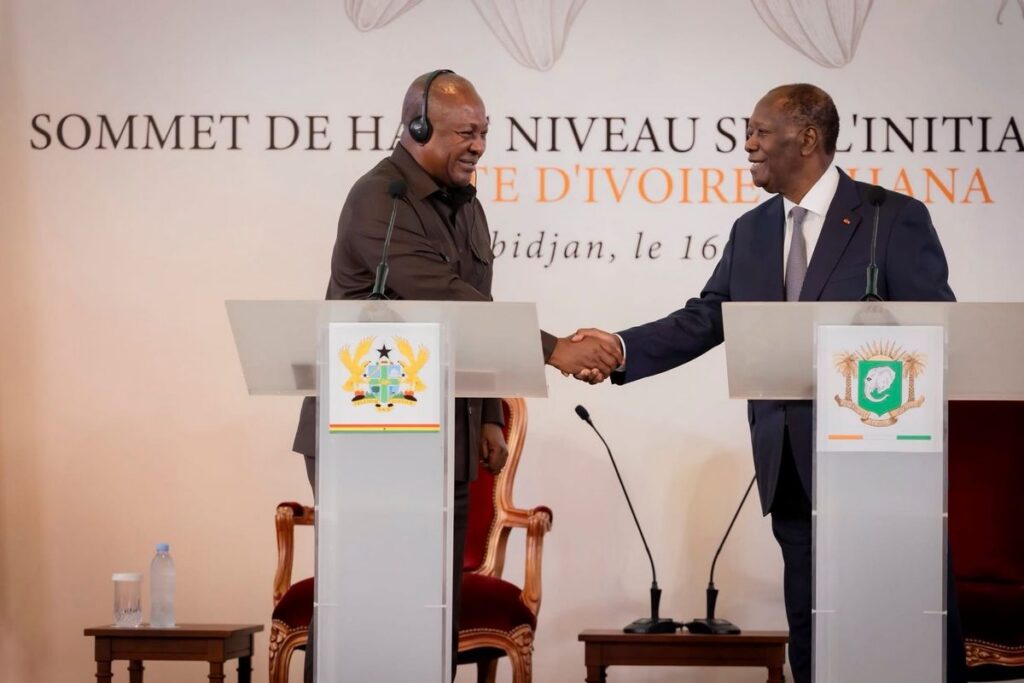
West Africa’s cocoa powerhouses, Côte d’Ivoire and Ghana, have reinforced their alliance to drive a sustainable cocoa economy amid mounting global and climate pressures. At a high-level summit on the joint Cocoa Initiative, held in Accra on June 16, 2026, Presidents Alassane Ouattara of Côte d’Ivoire and John Dramani Mahama of Ghana jointly declared their commitment to reshaping the future of the sector for shared prosperity.
Speaking side by side, President Ouattara emphasized that cocoa is not just an agricultural commodity, but a cornerstone of economic sovereignty, social stability, and inclusive growth for both nations. “With my brother, President John Dramani Mahama, we reaffirm our unwavering resolve to build a fair, prosperous, and sustainable cocoa economy for Côte d’Ivoire, for Ghana, and for all of Africa,” he stated.
The cocoa sector supports millions of rural livelihoods across both countries, generating income, creating jobs, and funding essential public services. Yet, as Ouattara highlighted, the path forward remains fraught with challenges: volatile global prices, the growing threat of climate change, and increasingly stringent international sustainability and traceability standards. He called for the gradual formation of a united African cocoa bloc to amplify the continent’s voice in global trade governance.
President Mahama echoed this urgency, stressing the need for sustained investment in the cocoa value chain to ensure its long-term resilience. “Our focus must remain on empowering farmers with the tools and resources they need to keep producing high-quality cocoa beans,” he said. He also urged both governments to strengthen institutional collaboration, fostering deeper ties that would enhance sector coordination and innovation.
Together, Côte d’Ivoire and Ghana account for over 60% of the world’s cocoa output, while the African continent supplies nearly 80%. This dominant position underscores the continent’s pivotal role in shaping the future of global cocoa markets.