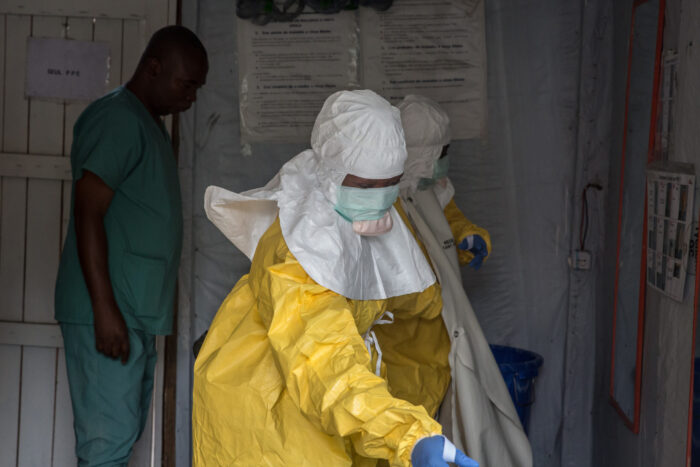
The emergence of the rare Bundibugyo Ebola strain in the eastern regions of the République démocratique du Congo (DRC) has triggered a major health alert, complicated by persistent armed conflict and political volatility. Following the official declaration of a public health emergency of international concern in mid-May 2026, a massive mobilization effort is underway to contain a virus for which there is currently no licensed vaccine or treatment.
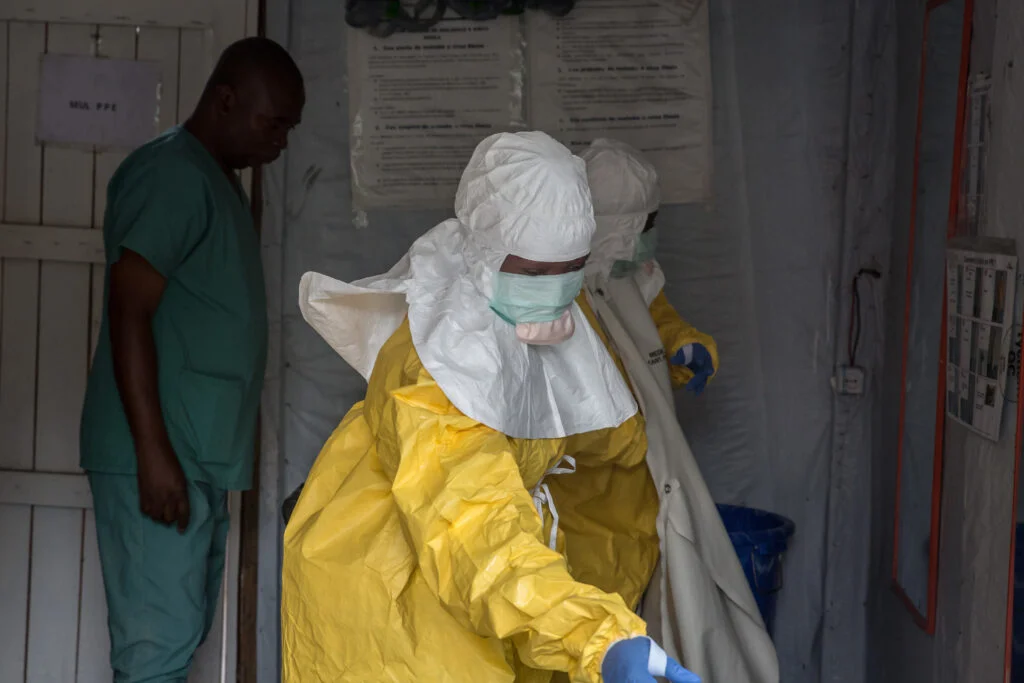
Fragile health systems under the weight of war
In provinces like Ituri, North Kivu, and South Kivu, the medical response is struggling against a backdrop of systemic insecurity. The 17th Ebola outbreak in the country’s history is unfolding in an environment already devastated by the M23 offensive and the presence of numerous armed groups. With nearly a million displaced persons living in overcrowded camps, the conditions for rapid pathogen transmission are tragically ideal.
The situation in Ituri is particularly dire. As the epicenter of the current wave, the province lacks adequate road infrastructure and basic services. Local hospitals, such as the one in Bunia, have been overwhelmed, forcing the establishment of makeshift rural care centers. By the end of May 2026, data indicated nearly 300 confirmed cases and dozens of fatalities, with hundreds more under surveillance. The closure of several health centers for disinfection has further restricted access to care for pregnant women and patients suffering from other chronic conditions.
The challenge of territorial fragmentation
A significant hurdle to an effective response is the lack of a unified health strategy across territories occupied by different forces. In areas controlled by the M23, the Gouvernement in Kinshasa faces immense difficulty coordinating medical interventions. While some treatment centers are being set up in Goma, the fragmentation of the territory means that the state no longer holds a monopoly on public health management.
Furthermore, deep-seated community mistrust continues to hinder medical teams. Resistance often stems from cultural clashes over burial rites. In the eastern DRC, traditional funeral practices involving physical contact with the deceased are spiritual imperatives, yet these very rituals are primary vectors for Ebola. This friction, combined with decades of state abandonment, has fueled rumors and hostility toward sanitary interventions.
Regional stability and border tensions
The epidemic is not confined by national borders, posing a threat to the wider Afrique centrale region. Cases have already been reported in Ouganda, leading to the suspension of flights and passenger transport with the DRC. Rwanda has also taken the step of closing its border with Goma. These unilateral measures add strain to already tense diplomatic relations between Kinshasa and its neighbors.
The Africa CDC has identified several vulnerable nations—including Soudan du Sud, Kenya, Tanzanie, Éthiopie, Burundi, and Centrafrique—that must heighten their surveillance. While countries like Kenya have robust monitoring systems, others remain heavily dependent on external aid to manage potential cross-border outbreaks.
A shifting landscape for international humanitarian aid
The timing of this outbreak is particularly challenging due to a major shift in global health financing. Recent changes in United States aid policy have seen a move away from multilateral support toward bilateral agreements. This transition has weakened the operational capacity of international health organizations just as they are needed most.
A joint six-month response plan has been launched with a target of 518 million dollars to support detection and prevention efforts. However, funding remains below the required levels. While ONG groups like Médecins sans frontières and ALIMA are active on the ground, the lack of a fully funded, coordinated international effort leaves the region in a precarious position. The success of the current response will depend on whether national institutions and regional partners can bridge the gap left by shifting global priorities.