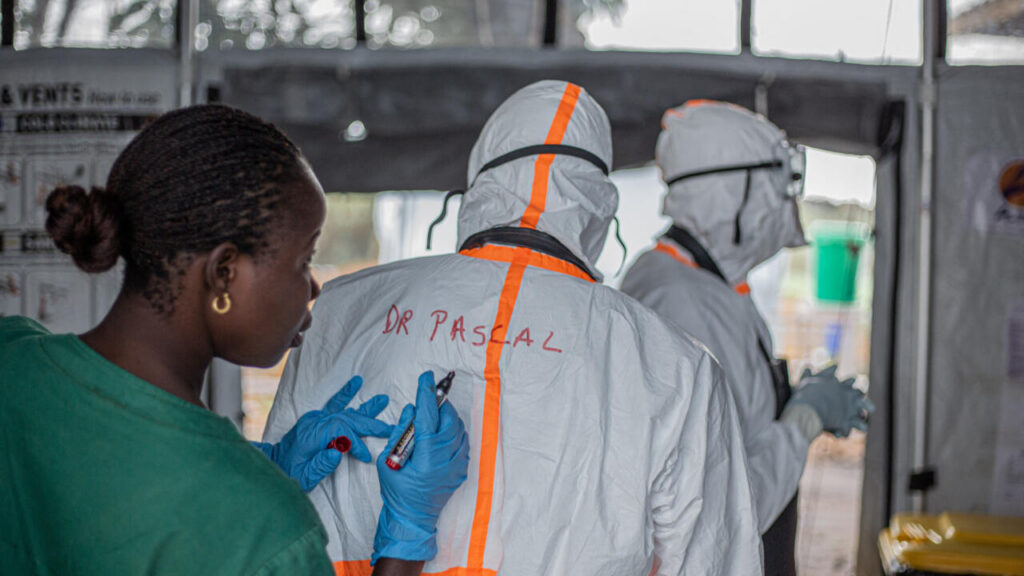
Two months after the declaration of the Ebola outbreak in the Democratic Republic of Congo, official figures released on July 15 show over 2,000 cases, including 796 deaths. Yet, according to the World Health Organization, the actual number of infected individuals could be two to four times higher. What accounts for this discrepancy? Why is this outbreak proving so challenging to control? And could the launch of a first post-exposure prophylaxis clinical trial in Bunia this week shift the balance?
Why the gap between reported and actual cases?
Health authorities face persistent obstacles in tracking and containing the virus. Remote and conflict-affected regions hinder access to healthcare, allowing the disease to spread undetected. Communities’ reluctance to report symptoms or seek treatment due to stigma or distrust further compounds the challenge, leading to underreporting.
What makes Ebola so difficult to contain in the DRC?
The Democratic Republic of Congo’s experience with Ebola has revealed vulnerabilities in disease response systems. Factors such as:
- Limited healthcare infrastructure in affected areas
- Cross-border population movements
- Ongoing insecurity disrupting containment efforts
all contribute to the virus’s persistence. Additionally, misinformation and community resistance undermine prevention and treatment efforts.
The latest trial in Bunia aims to test a post-exposure prophylaxis approach, offering a preventive treatment to those exposed to the virus. If successful, this could provide a critical tool in breaking transmission chains.
Can new measures turn the tide?
The clinical trial introduces a proactive strategy: identifying and treating contacts of confirmed cases before symptoms appear. Early intervention could significantly reduce transmission rates and prevent outbreaks from spiraling out of control.
However, success depends on overcoming logistical and community engagement challenges. Rapid deployment of resources, trust-building with local populations, and robust monitoring systems are essential.
While the trial marks a step forward, sustained commitment from health authorities and international partners is vital to curb the spread and protect vulnerable communities.