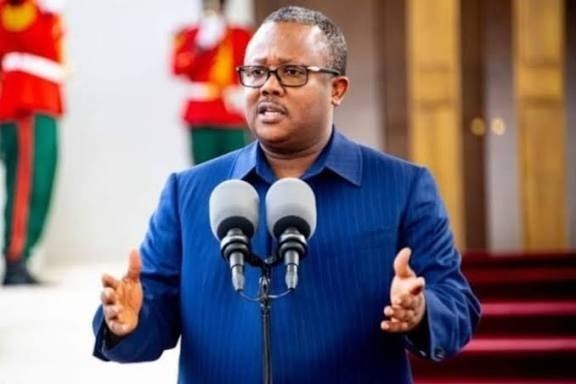
Bissau – The decision by Guinea-Bissau’s military leadership to bar former president Umaro Sissoco Embaló from returning home has triggered a wave of reactions across the political spectrum and beyond, opening a new chapter of uncertainty for the country’s fragile transition. What began as a personal ambition from exile has now morphed into a full-blown national debate about who gets to shape the country’s political future.
The military’s firm rejection and its immediate consequences
In a terse statement, the transitional military authorities made their position unmistakably clear: Embaló would not be allowed back into the country under any circumstances. They accused him of orchestrating a “destabilization” attempt and dismissed his electoral aspirations outright. The announcement sent ripples through Bissau’s already charged political atmosphere, with supporters and opponents alike scrambling to interpret what the veto means for the promised return to constitutional rule.
A contested putsch and its lingering aftermath
The roots of this standoff stretch back to November 26, 2025, when Guinea-Bissau – a nation long accustomed to military upheaval – was thrown into chaos once more. Just three days earlier, voters had gone to the polls in a decisive presidential election. As counting neared completion and both Embaló’s camp and his main rival claimed victory, heavy gunfire erupted in the capital. Armed elements of the Revolutionary Armed Forces of the People quickly surrounded the presidential palace and detained Embaló. The putschists, calling themselves the “High Military Command for the Restoration of National Security,” suspended the electoral process, alleging a plot to manipulate results.
Yet controversy erupted almost immediately. International observers, diplomats and key opposition figures described the takeover as a “setup” or “political theater.” Critics accused Embaló of engineering a self-coup to neutralize an anticipated opposition victory. He was flown to Dakar the following day, leaving behind a country mired in legal and institutional limbo.
Embaló’s gamble from abroad and the coalition behind it
From exile, Embaló broke his silence with a bold declaration: he intended to return to Bissau and run in the presidential election slated for year’s end. Far from conceding defeat, he positioned himself as the legitimate alternative, pointing to transition rules that bar current junta members from contesting the vote. To bolster his bid, a broad coalition known as the “Republican Platform” – bringing together around a dozen organizations and political parties – was quietly assembled on his behalf. For Embaló, this is not merely about contesting an election; it is about staging an institutional comeback and proving his popular base remains intact despite last November’s setback.
Public reaction: a nation holding its breath
The junta’s veto has reignited fierce debate among Bissau-Guineans. Supporters of the former president denounce what they call an authoritarian drift and arbitrary exclusion. A large segment of the traditional opposition, meanwhile, finds itself marginalized – hit by exile or legal proceedings. Civil society voices warn that the exclusion of a major political figure could undermine the credibility of any future vote and deepen the country’s democratic deficit.
Divergent views on the road ahead
- Pro-Embaló factions argue that barring him is a denial of political pluralism and a recipe for prolonged instability.
- Military authorities insist that allowing his return would reintroduce a major risk factor into an already fragile landscape, and they vow to maintain strict control over the electoral calendar.
- International partners are watching closely, with some expressing concern that the veto could derail the transition altogether.
- Ordinary citizens fear renewed unrest and economic hardship as political uncertainty drags on.
What comes next for Guinea-Bissau’s transition?
By blocking Embaló’s return, the military leadership risks inflaming an already toxic political climate. The crucial question now is whether the transition can remain inclusive enough to produce a credible election. With a determined former president pushing to force his way back from abroad and a junta equally resolved to keep the door shut, the country’s democratic path remains more uncertain than ever.
The coming weeks will be decisive. How the junta manages the electoral process, whether it opens space for broader political participation, and how Embaló responds from exile will shape not only the next election but the very future of Guinea-Bissau’s fragile democracy.