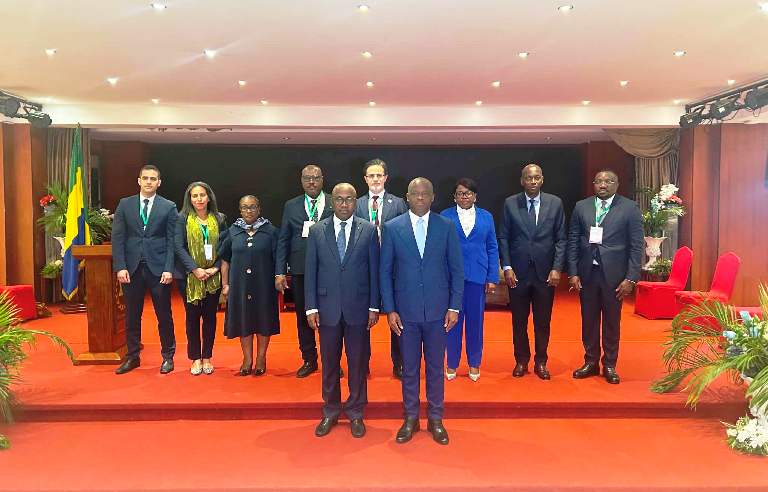
The Vice President of the Government, Hermann Immongault, officially inaugurated a country evaluation mission in Libreville on June 29, 2026. This session, held under the “Direct Dialogue” framework of the second cycle of the United Nations Convention against Corruption (UNCAC) review mechanism, brings together various stakeholders for a four-day intensive program. The gathering includes administrative technicians, experts from the United Nations Office on Drugs and Crime (UNODC), and international partners tasked with assessing Gabon’s progress in preventing and fighting corruption.
Gabon has been a signatory to the United Nations Convention against Corruption since October 1, 2007. The nation is currently focused on solidifying reforms designed to enhance transparency, encourage accountability in public management, and improve the overall governance of state institutions.
During the opening of the proceedings, Hermann Immongault underlined that the fight against corruption is a fundamental pillar of social and economic development. “Public integrity boosts the performance of government actions, protects investments, increases economic competitiveness, and establishes the necessary conditions for sustainable, inclusive, and fair development,” he stated.
This perspective is shared by those leading the evaluation process. Séraphin Ondoumba, a commissioner at the National Commission for the Fight Against Corruption and Illicit Enrichment (CNLCEI) and UNODC focal point, believes this dialogue goes beyond technicalities. He expressed confidence that the direct dialogue will allow for a better appreciation of Gabon’s efforts while fostering stronger cooperation between member states and promoting effective prevention strategies.
This mission represents a critical phase of the second review cycle, which focuses primarily on preventive measures and the recovery of assets linked to corrupt activities. Mohamed Cherbal, the UNODC Head of Mission, noted that the review team will conduct a deep analysis of Gabon’s anti-corruption systems, specifically looking at the implementation of convention provisions regarding prevention and asset retrieval.
Scheduled to run from June 29 to July 1, 2026, this evaluation follows the first review cycle launched in 2010. During that initial phase, Gabon was evaluated on chapters III and IV of the Convention, which involve criminalization, law enforcement, and international cooperation. That process included a field visit in April 2015 by experts from Sierra Leone and the Lao People’s Democratic Republic.
Expectations for the current cycle remain high. Nestor Mbou, President of the CNLCEI, views the dialogue as a vital opportunity for the continuous improvement of public policy. He emphasized that the goal is not just to assess legal frameworks, but to identify successful practices, acknowledge progress, and address remaining challenges to produce concrete recommendations for the national strategy.
The findings from this mission are expected to shape future reforms and reinforce national mechanisms for oversight and the recovery of illicit assets. The ultimate objective is to build a more upright and efficient administration that is fully accountable to its citizens.
