Gabon: why the fight against soaring prices must go beyond supermarkets
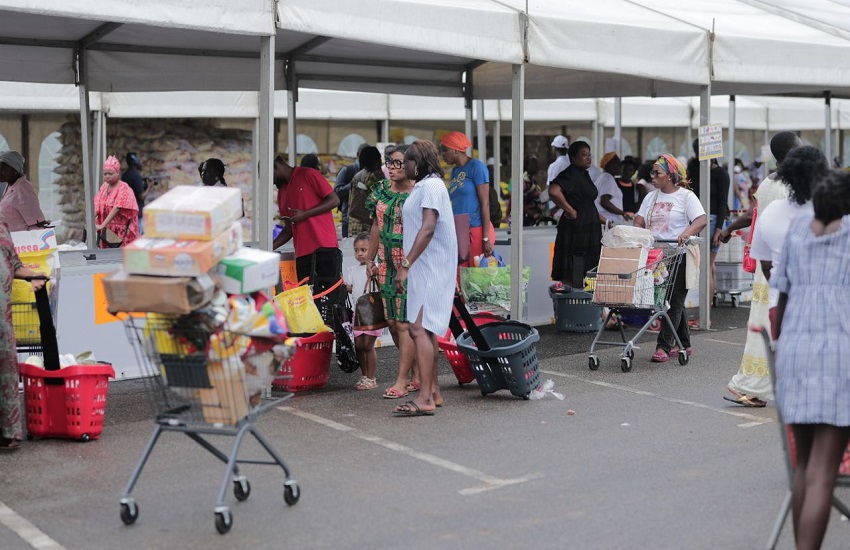
Libreville’s streets reveal a stark reality: despite repeated government interventions, the cost of living refuses to ease. For years, Gabonese households have grappled with rising prices, making daily necessities increasingly out of reach. Yet, the measures rolled out—price controls, tax exemptions, subsidies, and massive discount markets—seem to yield only temporary relief.
Why does the battle against exorbitant prices persist? The answer may lie not in the supermarkets or price caps, but in the very structure of Gabon’s economy. A deeper look suggests that the problem is less about pricing and more about the country’s limited capacity to generate wealth and reduce dependency on imports.
Price controls: a band-aid solution
Government initiatives like those from the Gabonese Purchasing Center (CEAG) provide vital short-term support by offering discounted staples. These efforts ease immediate pressure on vulnerable households, but they do not address the root causes of high prices. Once the promotions end, consumers return to the same economic constraints. The underlying drivers of inflation—such as import costs, logistical inefficiencies, and supply chain vulnerabilities—remain unchanged.
This is not to dismiss these interventions as ineffective. They play a crucial social role by cushioning the blow of economic hardship. However, relying solely on administrative measures is akin to treating symptoms without curing the disease. The real challenge is to understand why prices remain structurally high and why policy fixes fail to deliver lasting change.
The hidden cost of import dependency
Much of the debate around soaring prices focuses on the consumer, but the problem often originates upstream. Gabon, like many African nations, imports a significant portion of its food and consumer goods. This dependence exposes the country to international market fluctuations, rising shipping costs, and global supply chain disruptions. Every spike in global prices eventually trickles down to local shelves, pushing costs higher for ordinary citizens.
Soaring prices are not merely a pricing issue—they are a symptom of a deeper economic model. A nation that exports raw materials without adding value loses potential jobs, income, and purchasing power. Transforming these resources locally could unlock new economic opportunities and reduce reliance on volatile global markets.
From raw materials to local industry
Gabon possesses immense potential: vast forests, rich mineral deposits, fertile land, and a strategic geographic location. Yet, much of this wealth is exported in its raw form, only to be processed elsewhere. Shifting toward local processing could be a game-changer.
Every factory established generates jobs. Every job creates income. Every income strengthens purchasing power. And every increase in purchasing power fuels domestic consumption, creating a virtuous cycle of economic growth. The same principle applies to agriculture and livestock. Boosting local food production, modernizing farming techniques, and supporting agro-industry can gradually reduce the country’s dependence on food imports.
In the long run, the fight against soaring prices may be won not in supermarkets or price controls, but in the fields, farms, and factories of Gabon.
Building a resilient middle class
For decades, public policy has focused on controlling prices. Perhaps it is time to shift the focus to income generation. A society does not thrive because prices are artificially lowered. It thrives when its citizens have stable, sufficient incomes to afford essential goods, invest in education, and plan for the future.
A strong and expanding middle class is a cornerstone of economic stability. It drives domestic demand, encourages private investment, and fosters the growth of local businesses. The battle against rising prices, therefore, may be less about price controls and more about creating productive jobs and sustainable incomes.
In this context, purchasing power should no longer be seen as a byproduct of growth—it should be a primary objective of economic policy.
The role of transparency and digital innovation
Any long-term solution must also address governance and transparency. Digitalizing price monitoring could revolutionize how the government tracks inflation and enforces fair pricing. Real-time data collection would enable authorities to detect price anomalies, strengthen competition, and assess the true impact of economic policies.
Economic data, when harnessed effectively, can transform governance from a reactive process into a proactive one. In an era where citizens demand greater accountability, digital tools could bridge the trust gap between consumers, businesses, and policymakers.
The challenge of rising prices extends far beyond Gabon’s borders. Across Africa, governments are grappling with the same dilemma: how to protect citizens without locking the economy into a cycle of subsidies and price corrections. Gabon has a unique opportunity to pioneer a different approach—one that combines immediate social support with long-term economic transformation.
The question is no longer about how long the state can continue to lower certain prices artificially. The real question is: how many Gabonese will one day live with dignity, supported by stable incomes from a value-creating economy, free from perpetual reliance on corrective measures to safeguard their purchasing power?
This is the dividing line between an economy that manages symptoms and one that tackles the root causes of soaring prices. And it may well hold the key to a sustainable solution.