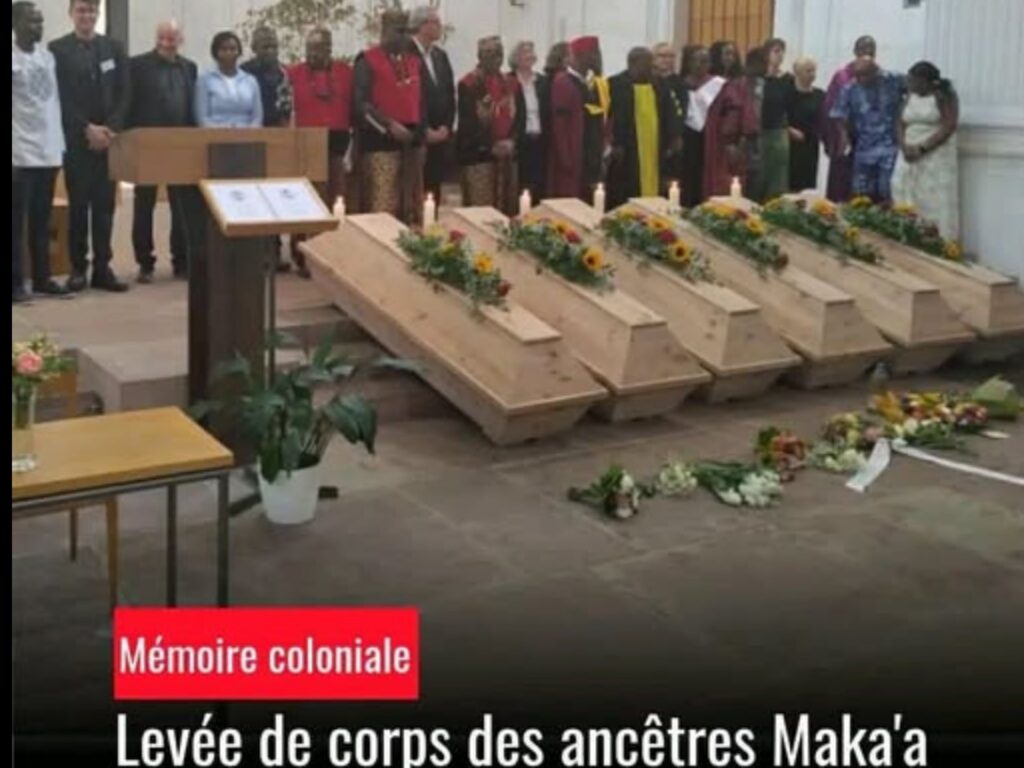
Germany returns Maka’a ancestral remains to Cameroon in historic repatriation
A high-level Cameroonian delegation, including representatives from the Maka’a communities, academics, and local mayors, is currently in Germany to finalize the repatriation of ancestral remains taken during the colonial era. This mission, which began on July 13, 2026, marks a significant step toward addressing historical injustices and restoring dignity to the Maka’a people.
Colonial legacy and the return of sacred remains
The repatriation of the Maka’a ancestral remains—taken from the Haut-Nyong region in eastern Cameroon during German colonial rule (1884–1916)—represents a pivotal moment in the healing of historical wounds between Germany and Cameroon. These remains, including skulls and bones of dignitaries and ancestors, were held in German museums and institutions under the pretext of scientific research during the colonial period.
On July 16, 2026, a solemn ceremony was held in Freiburg to formally lift the remains from German custody, marking a critical milestone in the repatriation process. Following this, the remains will be transported back to Cameroon, where they will be laid to rest in their ancestral villages according to Maka’a traditions and rituals.
Cultural justice and the weight of history
For the Maka’a people, the absence of these remains has long been perceived as a « curse, » preventing the closure of ancestral mourning. Traditional leaders like His Majesty Bertrand Effoudou have emphasized that the return of these remains is not merely a symbolic gesture but a spiritual necessity—a step toward restoring balance and honoring their heritage.
The negotiations leading to this repatriation were extensive, involving Cameroonian ministries and the German Embassy in Yaoundé. Germany currently holds at least 300 formally identified Cameroonian human remains, along with over 40,000 cultural artifacts looted during colonization, according to research from the University of Dschang and the Technical University of Berlin.
A step toward reconciliation
This repatriation underscores Germany’s ongoing efforts to address its colonial past and restore stolen cultural heritage. The ceremony in Freiburg and the subsequent return to Cameroon reflect a growing global movement toward justice for colonized peoples and the restitution of cultural property.
The Maka’a people’s perseverance in reclaiming their ancestors’ remains serves as a powerful example of how historical injustices can begin to be addressed through dialogue, respect, and the restoration of dignity.