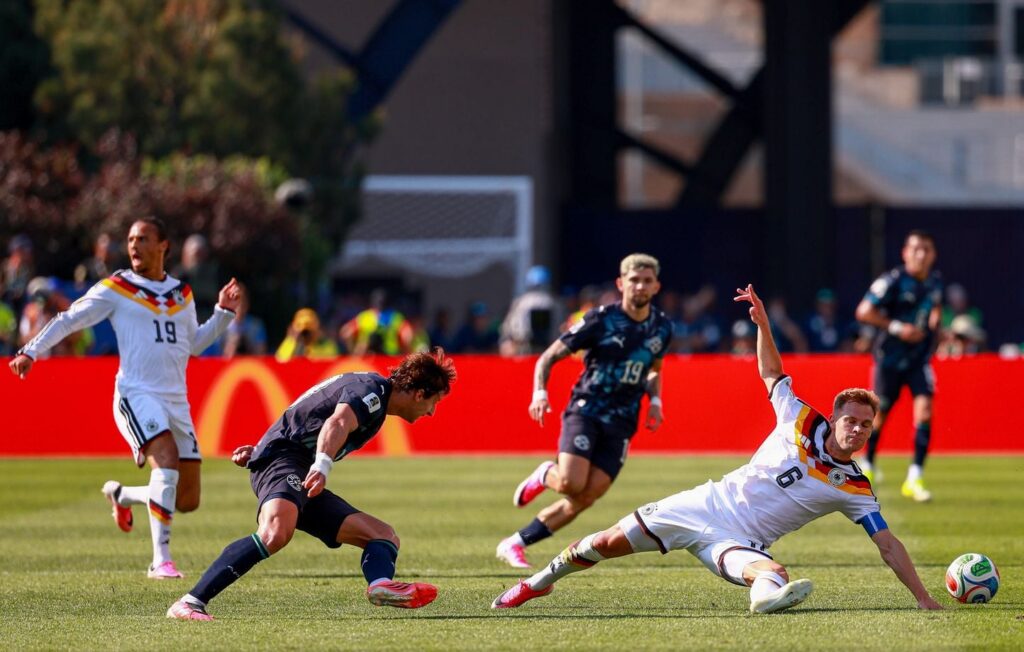
The atmosphere in Boston carried a strange sense of déjà vu. The sun, the iconic names of the opposition, and those famous red and white striped jerseys felt like a throwback to 1998. However, unlike previous generations, this Germany side failed to find a hero during the tense extra-time period. In a result that has stunned the footballing world, the Mannschaft was sent packing by Paraguay in the World Cup Round of 32, falling 4-3 in a penalty shootout after a 1-1 draw.
This exit marks a devastating trend for German football. For the third consecutive tournament, the four-time champions have failed to reach the final sixteen. Even more shocking is the manner of the defeat; Germany had never previously lost a penalty shootout in World Cup history. The silence in the media tribune was heavy, broken only by the frustrated murmurs of traveling reporters who watched their national team crumble under the pressure of the spot-kicks.
Joshua Kimmich reflects on a dark day
The disappointment was etched on every face in the mixed zone. While the Paraguay contingent celebrated wildly with flags and jerseys, the German captain, Joshua Kimmich, struggled to find words for the collapse. He noted that he grew up watching a national team that was a permanent fixture in semifinals and finals, and he expressed deep regret for failing to provide that same joy to the fans back home.
The Bayern Munich star himself personified the tactical confusion that plagued the team. Deployed in a strange, hybrid role that saw him drifting between central defense, right-back, and midfield, his positioning seemed to isolate his teammates. On the right wing, Leroy Sané appeared lost and lacked the necessary support whenever he was closed down by the disciplined Paraguay defense.
Tactical failures and questionable selections
Against a compact and stubborn opponent, Germany lacked creativity. Aside from a header by Kai Havertz after the interval, clear-cut chances were virtually non-existent. Paraguay goalkeeper Orlando Gill was rarely forced into difficult saves, as the German attack relied on hopeful long balls and aimless crosses. The substitutions made by the coaching staff did little to alter the momentum of the game.
Julian Nagelsmann, once hailed as a tactical prodigy, now finds himself at the center of a storm. Critics are questioning not only his mid-match decisions—such as the late introduction of Woltemade—but also his final squad selection for the tournament in the United States. The inclusion of veterans and out-of-form players has become a major talking point.
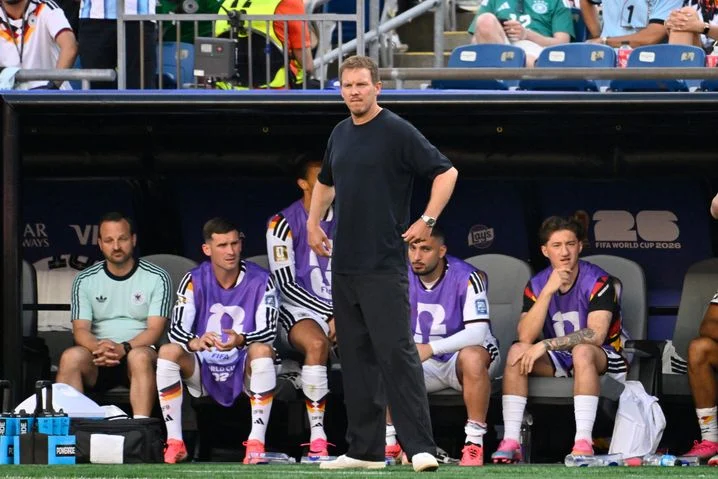
The most debated choice was the return of Manuel Neuer. At 40 years old and following a difficult club season, his selection over Oliver Baumann—who had been performing reliably—reportedly caused friction within the squad. While Neuer did manage to save one penalty in the shootout to keep hope alive, observers noted that his presence may have disrupted the team’s hierarchy and long-term planning.
The future of Julian Nagelsmann
In the wake of the humiliation in Boston, the manager was forced to address his future immediately. Nagelsmann insisted that he is not the type to run away from a challenge, stating that while changes are necessary, he would only step down if the federation decided a new direction was needed. He admitted that he is well aware of the growing number of people calling for his departure.
Despite the backlash, Kimmich stood by his coach, taking full responsibility on behalf of the players. He emphasized that the errors occurred on the pitch and that the team, not the staff or the media, must answer for the failure. As the Mannschaft prepares for a somber flight home, the rest of the world watches a once-dominant footballing power search for its lost identity.