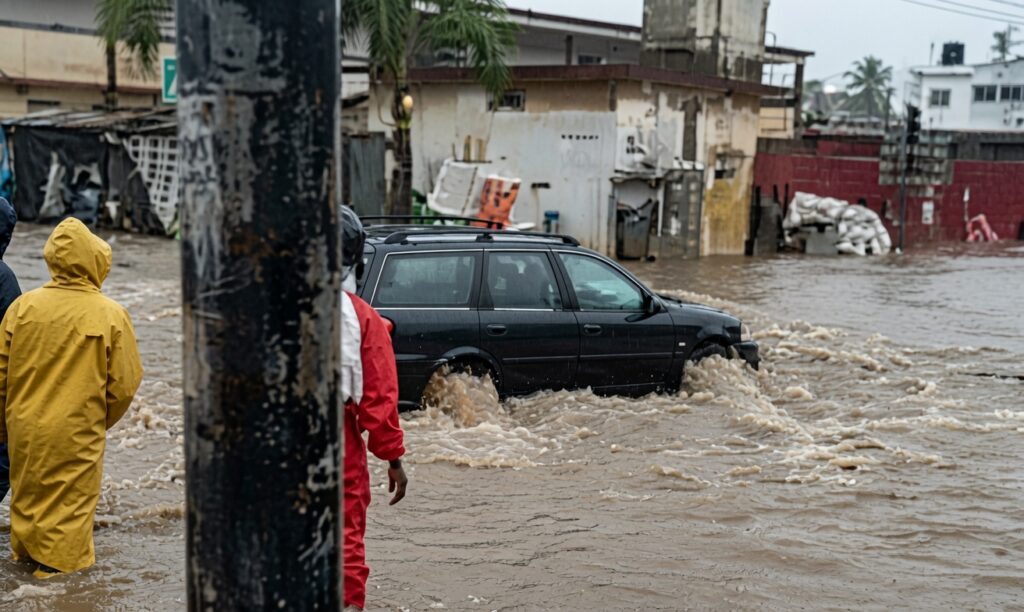
With the return of each rainy season, a familiar pattern unfolds in Togo. Streets flood, neighbourhoods are submerged, homes are overtaken by water, and families are left to cope with the damage on their own. For many Togolese citizens, these disasters are no longer exceptional but have become a nearly routine reality.
After more than six decades under the rule of the Gnassingbé family, a segment of the population believes that Togo deserves a fresh political direction. Despite numerous promises made over the years, daily concerns remain unchanged: high unemployment, a steadily rising cost of living, persistent poverty, and limited future prospects, especially for young people.
The arrival of the rains also reignites criticism of the state of infrastructure. In many districts, drainage systems are inadequate, roads quickly become impassable, and flooding causes significant material losses. Many residents denounce the lack of sustainable investment in public facilities capable of mitigating these recurring catastrophes.
In this context, voices from the opposition and civil society accuse the government of prioritising the interests of an elite close to the regime, while the economic difficulties of the majority of the population continue to worsen. They argue that public resources should be directed more toward improving living conditions, developing infrastructure, creating jobs, and protecting the most vulnerable populations, rather than preserving a political system that has been in place for decades.
For many observers, this new rainy season unfortunately is unlikely to bring the expected relief. On the contrary, it may once again highlight the shortcomings of public policies regarding urban planning and risk prevention. Without deep reforms and appropriate investments, it will again be the poorest families who bear the brunt of the consequences.
As difficulties mount, a growing part of public opinion considers that the country needs a renewal of its governance to respond more effectively to the social, economic, and environmental expectations of the Togolese people.