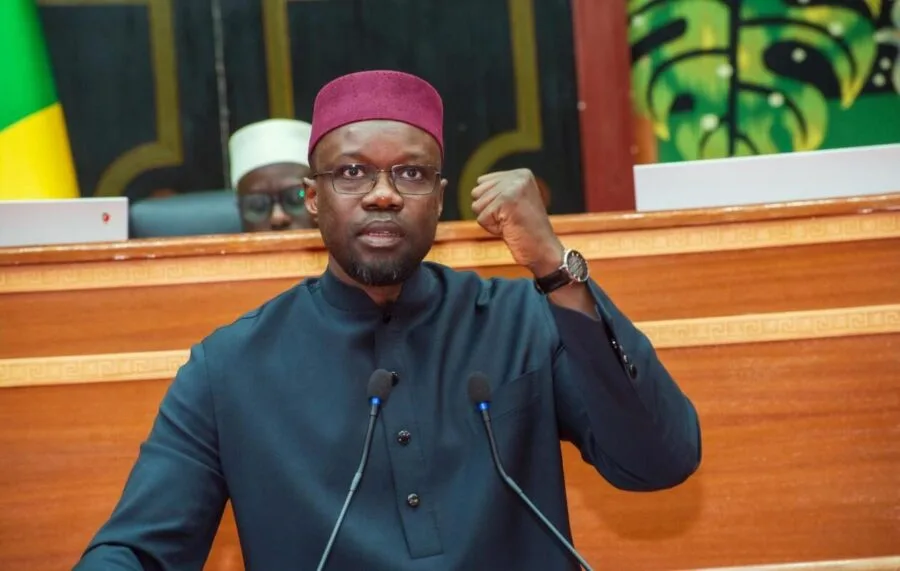
Prime Minister Ousmane Sonko’s high-stakes parliamentary appearance on Friday
The Prime Minister of Senegal, Ousmane Sonko, is set to face the National Assembly this Friday, May 22, 2026, for the traditional Question Time session. This appearance comes at a critical juncture, as political tensions and public expectations reach new heights. The session, confirmed by the Assembly President El Malick Ndiaye, will serve as a platform for Sonko to address pressing national issues, defend government policies, and respond to parliamentary scrutiny.
Policy battles and political reforms take center stage
While the session is formally an oversight mechanism, the political climate has transformed it into a high-profile event. Beyond routine questions on economic and social challenges—such as the rising cost of living, youth unemployment, infrastructure development, and agricultural policies—the Prime Minister will likely confront intense debate on institutional reforms and the controversial Electoral Code.
The opposition has sharply criticized the Electoral Code, alleging it was designed to favor the ruling party, Pastef, and its leader. Accusations of a “tailor-made” law have fueled political tensions, with critics demanding greater transparency and inclusivity in the reform process. Sonko’s responses will be closely scrutinized as he navigates these contentious issues.
Addressing national expectations and presidential directives
The timing of this session is significant. Nearly two years after the political transition in March 2024, public expectations for tangible results remain high. Recent remarks by President Bassirou Diomaye Faye have underscored the need for the government to prioritize delivery over political posturing, adding pressure on Sonko to demonstrate progress.
The Prime Minister’s appearance also provides an opportunity to clarify his relationship with the Head of State. Speculation about a possible resignation has circulated in political circles, and this session could serve as the definitive moment to address such rumors and reaffirm government unity.
Social and economic challenges dominate the agenda
While political reforms dominate headlines, the session will also focus on pressing socioeconomic issues. Senegalese citizens continue to grapple with economic uncertainty, rising living costs, and limited job opportunities, particularly among the youth. Infrastructure deficits and agricultural productivity remain critical areas where the government’s performance will be closely evaluated.
In a region marked by instability, regional dynamics—including the crisis in Mali—and international economic pressures will also be part of the discussion. The Prime Minister is expected to outline the government’s strategy for navigating these challenges while maintaining national stability.
Setting the stage for future elections
The stakes extend beyond immediate policy debates. With local elections looming and the 2029 presidential race on the horizon, this session could shape political narratives and alliances. Sonko’s ability to articulate his government’s vision and address criticisms will be pivotal in maintaining public trust and political momentum ahead of these pivotal events.
The Prime Minister’s fourth appearance before parliament since assuming office in April 2024 comes at a defining moment. The government has transitioned from a phase of transition to one of results-driven governance, and the Assembly’s questions will reflect this shift. Sonko’s performance could either bolster confidence in the administration or deepen political divisions, making this session one of the most consequential in recent memory.