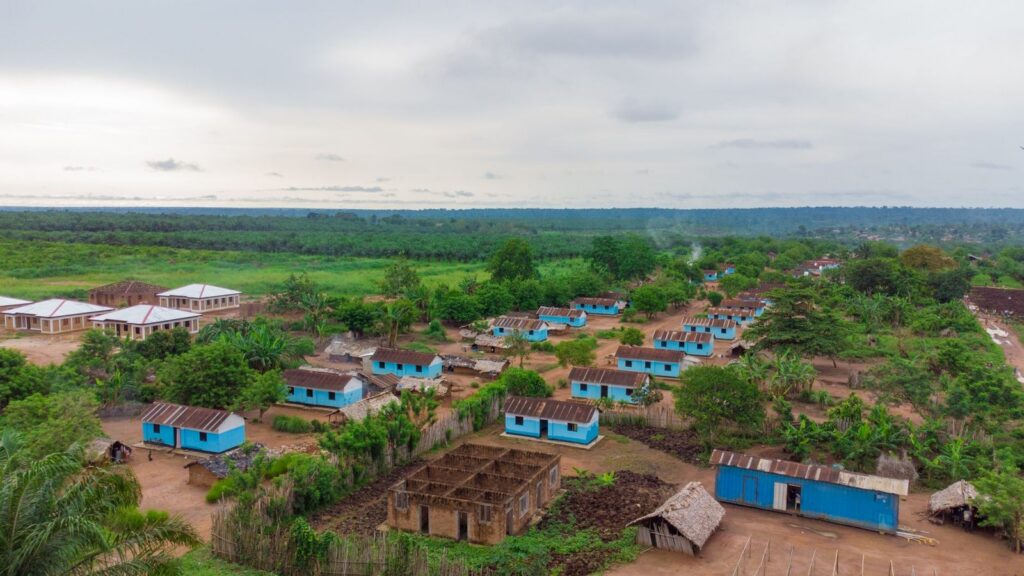
The Ituri province in eastern Democratic Republic of Congo witnessed yet another brutal attack as Allied Democratic Forces (ADF), an Islamic State-linked Ugandan militia, slaughtered at least thirteen unarmed civilians during a night raid. The assault left an entire village in ashes, forcing survivors to flee to neighboring areas with nothing but the clothes on their backs. Local authorities confirmed the devastation, marking yet another tragic chapter in the region’s long-standing cycle of violence.
Another deadly strike in a tormented land
The attackers struck under the cover of darkness, targeting defenseless residents before setting ablaze their homes. Nearly the entire settlement was reduced to smoldering ruins, leaving survivors with no choice but to abandon their lives and seek refuge elsewhere. The tactics employed—swift strikes on civilian targets, systematic arson, and the use of melee weapons to conserve ammunition—align with the ADF’s well-documented modus operandi, which has terrorized the northeastern Democratic Republic of Congo for over a decade.
Ituri, a province bordering Uganda and South Sudan, remains a hotspot of instability. Beyond the ADF threat, intercommunal clashes between the Hema and Lendu militias, along with the lingering presence of local armed groups exploiting artisanal mining, continue to destabilize the region. Since May 2021, the province has been under a state of siege, with military officers assuming civilian administrative duties—a measure that has yet to yield tangible improvements on the ground.
Operation Shujaa struggles against elusive rebels
Since late 2021, the Congolese Armed Forces (FARDC), in collaboration with Uganda People’s Defence Forces (UPDF), have conducted the joint Operation Shujaa to dismantle ADF strongholds in North Kivu and Ituri. Nearly four years into the campaign, the results remain mixed. While several rebel bases have been destroyed, fighters have dispersed into mobile cells, intensifying attacks on isolated villages rather than confronting military convoys.
This diffuse strategy has made counterinsurgency efforts exceedingly difficult. The ADF exploits the dense equatorial forests, the porous Ugandan border, and the near-absence of communication infrastructure to strike and vanish. Each massacre fuels political unrest in Kinshasa, where opposition figures decry the government’s failure to protect civilians despite significant military deployments and the gradual withdrawal of the United Nations Organization Stabilization Mission in the DRC (MONUSCO), initiated in 2024.
A multifaceted security crisis
The UN’s disengagement has created a void that the FARDC is struggling to fill. In neighboring South Kivu and North Kivu, the resurgence of the M23—allegedly backed by Rwanda—has diverted much of Kinshasa’s military resources. As a result, Ituri has become a secondary front in the national security agenda, even as attacks there grow in frequency and ferocity this year.
The humanitarian toll is equally devastating. Hundreds of thousands of displaced people survive in makeshift camps around Bunia, the provincial capital, where aid organizations warn of acute food and medical shortages. The recurring destruction of entire villages, as seen in this latest assault, only exacerbates homelessness and weakens the rural economy.
For Kinshasa, the stakes extend beyond military concerns. Stabilizing Ituri is crucial for maintaining central authority, securing trade corridors with East Africa, and facilitating the peaceful exploitation of one of the continent’s richest mineral reserves. Until the ADF’s disruptive capabilities are neutralized, investors in mining and logistics will remain reluctant to engage, depriving the province of the resources needed for reconstruction. Preliminary reports suggest the death toll from this attack may rise in the coming hours.
More Stories
Can Benin’s port workforce transformation hinge on a €15 million Luxembourg gamble?
Burkina Faso’s shrinking public payroll: a household burden as schools reopen
Can a Tripoli-Yaoundé air link take off without a clear aviation roadmap?