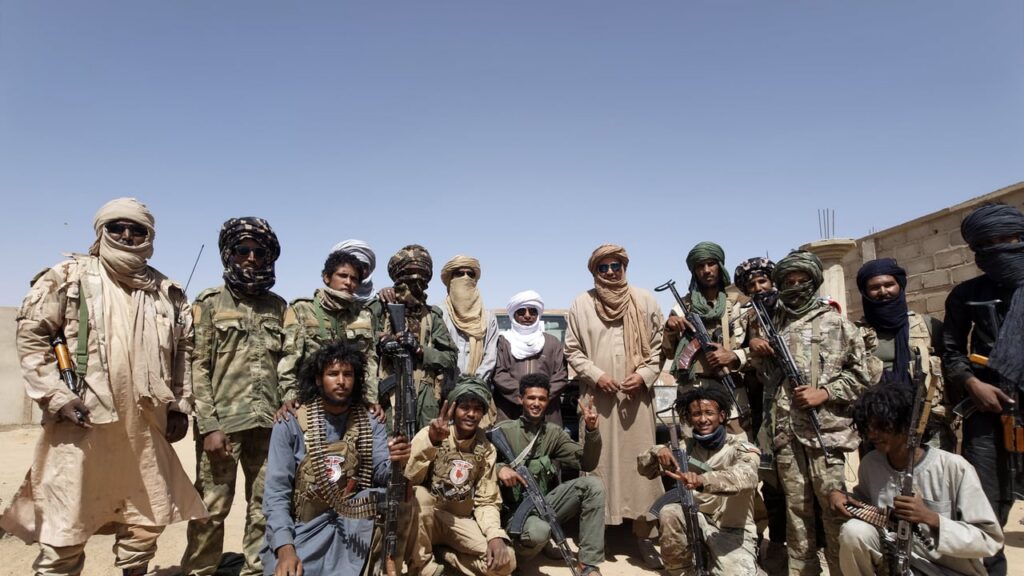

The streets of Kidal remain under the grip of armed groups, where the rhythm of daily life is dictated by the presence of rebel forces. Residents navigate a landscape marked by checkpoints and the ever-present tension of a city still reeling from conflict. The Front de libération de l’Azawad (FLA) holds significant influence here, its leader, Alghabass Ag Intalla, overseeing operations from the heart of the rebel stronghold.
Kidal: a city suspended between war and fragile autonomy
Kidal, a key northern city in Mali, continues to operate under the de facto control of armed factions. The FLA, a dominant rebel group, has established a parallel administration, providing basic services and security where the Malian state’s presence is minimal. Yet, this autonomy comes at a cost—constant skirmishes with rival factions and the looming threat of renewed violence.
The FLA’s expanding influence
Under Alghabass Ag Intalla’s leadership, the FLA has consolidated its control over Kidal, enforcing its own rules and structures. The group’s fighters patrol the streets, man checkpoints, and engage in sporadic clashes with opposing factions. The population, caught in the crossfire, adapts to survive in an environment where stability is a rare commodity.
Residents describe a city where survival depends on navigating the complex web of alliances and rivalries among armed groups. Schools, markets, and healthcare facilities function intermittently, supported by the FLA’s efforts to fill the void left by the Malian government’s withdrawal.
The challenges of daily life in a rebel-controlled city
The humanitarian situation in Kidal remains dire. Access to essential services like clean water, electricity, and medical care is severely restricted. International aid organizations struggle to operate, often facing threats and restrictions imposed by the controlling factions. The civilian population bears the brunt of these challenges, with many families displaced by years of conflict.
Despite these hardships, the people of Kidal demonstrate remarkable resilience. Local leaders and community organizations work tirelessly to provide support, from organizing food distributions to maintaining makeshift schools. Their efforts highlight the stark contrast between the FLA’s governance and the Malian state’s inability to assert control in the region.
Alghabass Ag Intalla: the face of rebel authority
Alghabass Ag Intalla stands as a central figure in Kidal’s current landscape. Clad in beige attire and sunglasses, his presence is a symbol of the FLA’s defiance against Bamako’s authority. His leadership style blends traditional Tuareg governance with the pragmatic demands of armed struggle, positioning him as both a military commander and a local administrator.
Interactions with the local population reveal a mix of respect and fear. While some residents appreciate the FLA’s role in maintaining order, others criticize the group’s strict enforcement of its rules and the collateral damage from ongoing clashes. The leader’s ability to balance these perceptions will determine the FLA’s long-term stability in the region.
The broader context: Mali’s fragmented north
Kidal’s situation is emblematic of the challenges facing Mali’s northern regions. Since the 2012 rebellion, the area has been a battleground for various armed groups, each vying for control. The FLA’s rise reflects a broader trend of decentralized power structures, where local factions fill the void left by a weakened central government.
The Malian government’s struggle to reassert control has led to a patchwork of influence, with Kidal serving as a microcosm of the country’s instability. International peacekeeping efforts have yielded limited success, and the humanitarian crisis continues to deepen. Without a cohesive strategy to address the root causes of the conflict, the cycle of violence and displacement persists.
Looking ahead: can Kidal find peace?
The path to lasting peace in Kidal remains uncertain. Dialogue between the Malian government and rebel factions has stalled repeatedly, with neither side willing to concede ground. Meanwhile, the civilian population endures the consequences of a conflict that shows no signs of abating.
For Kidal to transition from a rebel stronghold to a stable community, a combination of political will, international support, and grassroots initiatives will be essential. Until then, the city remains trapped in a cycle of conflict, its future hanging in the balance.