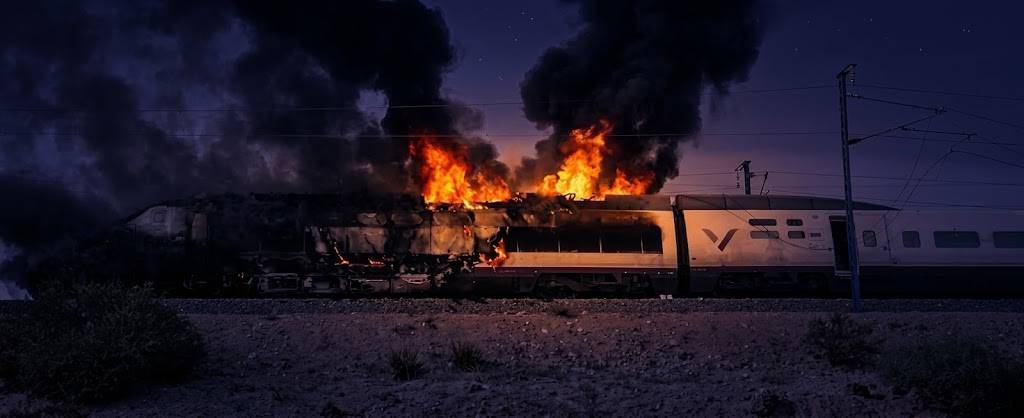
The high-speed rail link between Madrid and Barcelona faced an abrupt test on Monday, October 12, when a fire broke out on board an AVE train near Ricla, in the province of Zaragoza. The swift response that followed marked a decisive turning point: all 283 passengers were evacuated safely, and no injuries were reported in the initial assessment. The incident forced a temporary halt to one of Spain’s busiest rail corridors, but the effective emergency procedures prevented a potential catastrophe.
A sudden blaze disrupts a key artery
The Renfe-operated train, traveling from Madrid to Figueres in Catalonia via Barcelona, had departed Puerta de Atocha station at 2:27 p.m. At around 4:05 p.m., the fire was detected in the rear cab of the train. Emergency protocols were immediately activated, and the 283 travelers were guided off the train while firefighters worked to extinguish the flames. The evacuation, carried out as a safety measure, proceeded without incident.
Safety first: how the evacuation unfolded
As soon as the fire was spotted, Renfe’s safety procedures kicked in, prioritizing the removal of everyone on board. The smoke and the risk of the fire spreading made a rapid evacuation essential. Thanks to the coordinated efforts of the train crew, the operator, and emergency services, all passengers were brought to safety. The initial report confirmed no casualties, a reassuring outcome given the potential severity of such an event.
Traffic halted between Madrid and Barcelona
The impact of the fire extended well beyond the affected train. As a precaution and to allow emergency teams to operate, high-speed services between Madrid and Barcelona were suspended for several hours. This brought significant disruption to one of the country’s main rail routes. Trains were held at various stations, and numerous afternoon departures were canceled. Thousands of travelers faced delays, rerouting, or uncertainty about their journeys.
The incident occurred on October 12, Spain’s National Day, which coincided with the end of a long weekend—a period traditionally marked by heavy travel. The interruption complicated return trips for many people heading home or to their next destination after the festivities.
Renfe steps up to assist affected passengers
In response to the widespread disruption, Renfe announced measures to ease the burden on travelers. The company offered free ticket changes or refunds for those affected. Meanwhile, technical teams and relevant services carried out post-fire safety checks on the rail infrastructure. Resuming service depended on guaranteeing safe operating conditions on the affected section.
In a statement issued the day of the fire, Renfe said it could not immediately determine the total duration of the disruptions. The company later announced a gradual restoration of service after firefighters and initial inspections were completed.
What caused the fire? Investigation underway
While the evacuation of all 283 passengers passed without injuries, the fire raises questions about the technical circumstances of the incident and the consequences of immobilizing a train on a heavily used line. At this stage, no definitive cause could be given. An investigation has been launched to clarify how the fire started in the rear cab and to identify any corrective measures needed.
The event underscores the importance of emergency protocols in high-speed rail, where rapid reaction and coordination between on-board teams, the operator, and rescue services are critical. The initial human toll remains reassuring: all 283 travelers were evacuated and no injuries were reported. Yet the ripple effects on traffic showed how quickly a localized incident can disrupt a major rail link and affect the plans of thousands.