
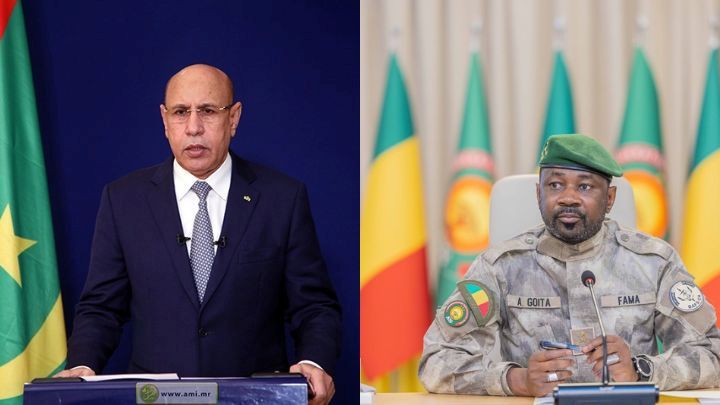
Recent truck fires along the Sahelian border are not isolated security incidents. They expose a deeper crisis affecting trade routes linking Mauritania, Morocco, and northern Mali. These corridors, once relatively stable, now face persistent insecurity, disrupting the flow of essential goods to populations in the north and exacerbating food shortages.
The commercial arteries connecting Tombouctou and Gao through Mauritania have seen a sharp decline in activity. Trans-Saharan trade, historically vital for regional commerce, has been severely disrupted, further destabilizing an already fragile economic balance in northern regions.
For years, Mauritania played a pivotal role in trade between Morocco and northern Mali. Goods transited through its ports before reaching key cities in the north. This commerce relied on Malian merchant networks rooted in ancient desert caravan traditions.
Umar Al-Ansari highlights Mauritania’s long-standing importance: « Nouakchott was not just a transit hub—it was a lifeline for northern Mali. The country welcomed both goods and people seeking security. Since 1991, Mauritania has kept its borders open to waves of Malian refugees. Today, over 300,000 displaced Malians live in the east, particularly in the Mbera camp and surrounding villages. »
Fragile security cooperation
This openness also strengthened border security efforts. Mauritania’s early containment of armed threats limited their spread into frontier zones. However, regional instability and Mali’s transitional government policies—alongside foreign military involvement—have eroded this cooperation.
Border areas now face recurring military operations, civilian tensions, and incidents like arrests and armed clashes. These disruptions have weakened traditional cross-border community networks, previously the backbone of stability.
Local networks under strain
Al-Ansari warns of a « slow erosion of trust »: « Each incident—kidnapping, accusation, or arrest—undermines the networks that once structured border life: traders, herders, traditional leaders, and transporters. This erosion creates instability, allowing armed groups to exploit commercial vacuums. »
Today, routes linking Mali to Mauritania are increasingly perilous, with disruptions isolating northern Mali and crippling trade.
Once a key ally for Bamako, Mauritania now distances itself from cooperation efforts. This shift reflects deeper tensions—security concerns and shifting regional alliances—reshaping relations between the two nations.



More Stories
Niger: Tiani faces fallout from special forces anger after Russian intervention
Crisis in Niger, IMF agreement in Sénégal, and Moroccan elections: Five essential stories
RDC-Israël : un rapprochement aux enjeux multiples