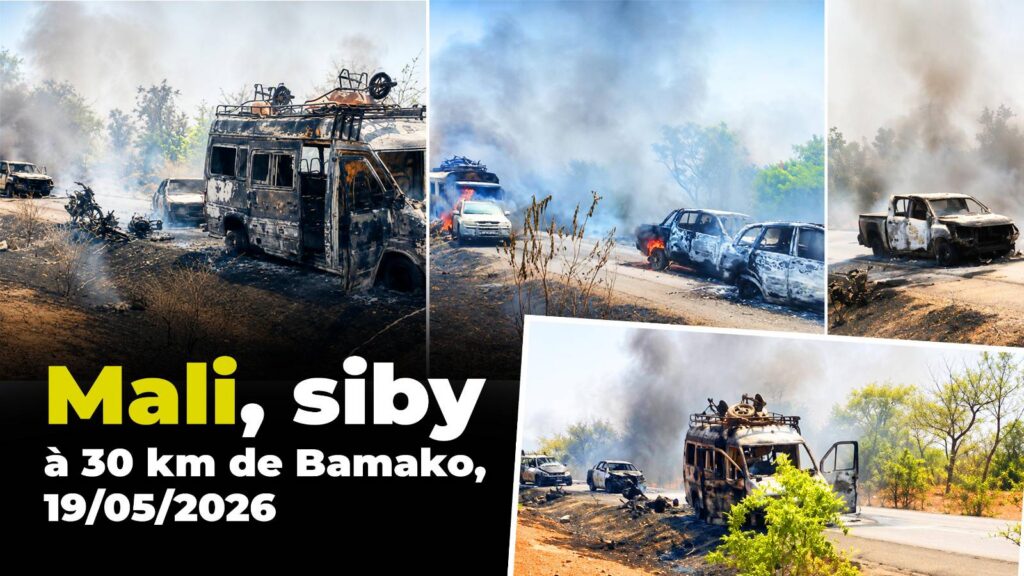
The fragile security of Bamako is crumbling under the weight of a relentless siege. On a scorching afternoon in mid-May 2026, the rural commune of Siby—just half an hour’s drive from the capital—became the stage for an unprecedented assault. Militants from the Group for the Support of Islam and Muslims (JNIM) torched dozens of commercial trucks, passenger minibuses, and Toyota Hilux pickups, leaving behind a trail of black smoke visible for miles. The attack was not merely destructive; it was symbolic, striking at the heart of a myth that authorities had long tried to preserve: that Bamako remains a fortress untouchable by insurgents.
The siege inches closer to the capital
Witness accounts from local transporters and survivors paint a chilling picture. Around midday, armed men on motorcycles converged on the Guinea-bound highway near Siby. With little to no resistance, they intercepted convoys, torched vehicles, and melted into the countryside before security forces could mount a response. The scorched earth strategy left no doubt: the JNIM is tightening its grip on the arteries feeding Bamako. Siby, a cultural jewel steeped in the legacy of the Kouroukan Fouga charter, now stands as a grim testament to the widening cracks in Mali’s defenses.
Bamako’s lifelines under siege
The Siby attack was not an isolated incident but the latest chapter in a months-long blockade orchestrated by the JNIM. Major routes—toward Ségou, Senegal, and southern corridors leading to Guinea and Côte d’Ivoire—have become killing zones. Militants set up mobile checkpoints, extort drivers, and torch cargo at will. The economic stranglehold is suffocating. Prices of essential goods have skyrocketed in Bamako’s markets, stoking public anger that the transitional government struggles to contain. Bread, fuel, and medicine are no longer just scarce; they are becoming luxuries.
A hollow partnership
The junta’s military strategy, heavily reliant on Russian paramilitary forces known as Africa Corps, is failing spectacularly. Despite lavish funding, these mercenaries have proven incapable of countering asymmetric threats so close to the presidential palace in Koulouba. Their operations—often brutal, reactive, and focused on protecting mining sites—offer no viable solution to the JNIM’s guerrilla warfare. Joint patrols with the Malian Armed Forces (FAMa) lack situational awareness and territorial coverage, leaving critical roads exposed. Propaganda campaigns masking operational failures are losing their gloss, replaced by the harsh reality of smoldering vehicles and severed supply lines.
The hour of reckoning
The flames in Siby are a deafening alarm. Denial is no longer a viable defense policy. By allowing the JNIM to enforce a blockade and strike at Bamako’s gates, the junta and its Russian allies have exposed their strategic bankruptcy. For Malians, the writing on the wall is clear: the promise of restored sovereignty and absolute security has dissolved into smoke and scorched metal. If Bamako is to evade total asphyxiation, a radical reassessment of military strategy and alliances is no longer a choice—it is a matter of national survival.