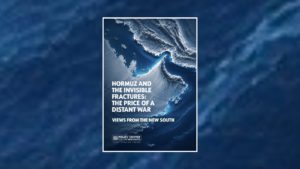
New study highlights Morocco’s vulnerability to global energy disruptions
The geopolitical landscape of 2026 has been significantly reshaped by the ongoing conflict involving Iran, the United States, and Israel. A comprehensive new collective work titled “Hormuz and the Invisible Fractures: the Price of a Distant War” delves into the profound security and economic ripples caused by tensions in the Strait of Hormuz. This strategic maritime corridor is a linchpin for global trade, and its instability is creating deep fissures in the international order.
The analysis features insights from a panel of global experts, including Abdelhak Bassou, Ferid Belhaj, Ian Lesser, Hafez Ghanem, Hinh T. Dinh, and Rida Lyammouri. Their findings suggest that the crisis is not merely a regional skirmish but a systemic threat to a globalized economy that relies heavily on the flow of gas, oil, fertilizers, and essential goods through this narrow passage.
Morocco at the forefront of economic exposure
A critical segment of the research, led by economist Hinh T. Dinh, utilizes input-output modeling to predict the fallout of a 20% surge in crude oil prices. The data indicates that Morocco is the most vulnerable economy in North Africa when it comes to such energy shocks. The repercussions would be felt acutely across several vital sectors, most notably in agriculture, construction, and transportation, along with various manufacturing activities that are energy-intensive.
In contrast, the study notes that Egypt might find a partial cushion through increased state oil revenues. Meanwhile, Tunisia is expected to maintain a fragile balance, though the impact will vary significantly from one industry to another.
A shifting international paradigm
Beyond the immediate financial data, the 2026 conflict represents a definitive pivot in global politics. Ferid Belhaj observes that the current situation underscores a growing fragmentation of the world system, where traditional methods of international cooperation and deterrence are failing. Marcus Vinicius de Freitas describes this as the rise of a multipolar reality where global conflicts are merely managed rather than resolved.
The war has also strained the Atlantic alliance. Ian Lesser points out that the crisis has widened the gap between Washington and its European allies regarding the use of military force and the best strategies for international crisis management. Furthermore, the study warns of the cascading risks to energy security across Africa, the fragile stability of the Sahel, and the economies of South America, while highlighting the strategic importance of critical minerals in this new era of competition.
This collective research serves as a vital tool for understanding how nations must adapt their supply chains and energy strategies to survive an era of persistent geopolitical volatility.