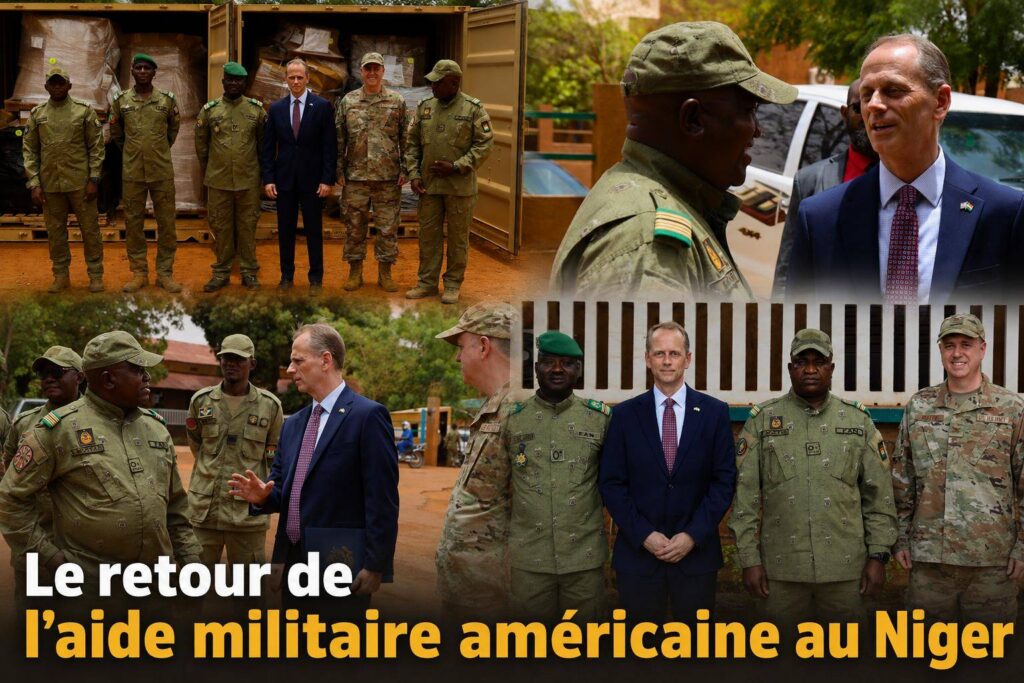
The Nigerien Armed Forces (FAN) logistics hub in Niamey recently marked a pivotal moment in the nation’s security strategy. On May 26, 2026, nine container loads of advanced military equipment arrived from the United States—a gesture designed to strengthen the operational readiness of Nigerien troops in the fight against terrorism and cross-border crime.
Strategic upgrade for Niger’s defense forces
The FAN logistics center in Niamey hosted the official handover ceremony, where high-ranking military officials received a shipment of sophisticated American military hardware. This delivery includes critical spare parts, tactical communication devices, personal protective gear, and first-line maintenance tools—all aimed at enhancing the resilience and combat effectiveness of deployed units.
In asymmetric warfare, where enemy forces move swiftly and unpredictably, rapid repair capabilities and reliable communication networks are vital to mission success. The new equipment addresses these exact needs, ensuring troops can maintain operational tempo even under pressure.
Strengthening border security and regional stability
This military aid is part of a broader security cooperation framework between Niger and the United States, targeting persistent regional threats. The Sahel remains a hotspot for militancy, particularly along the volatile tri-border area shared with Mali and Burkina Faso, as well as the Lake Chad basin.
The Nigerien Ministry of Defense confirmed that the equipment will be immediately fielded, supporting counter-terrorism operations, disrupting transnational criminal networks, and securing remote border zones. For soldiers operating in isolated rural areas, these tools provide a much-needed tactical advantage against well-armed adversaries.
Diplomatic shift: reopening channels with Washington
Beyond its operational impact, this delivery signals a notable shift in Niger’s foreign policy. Just two years ago, Niamey took a firm stance against Western military presence, citing national sovereignty. American forces were asked to leave, including from the critical drone base in Agadez, which was subsequently decommissioned.
Yet the escalating jihadist threat has forced a pragmatic reassessment. The acceptance of U.S. military aid demonstrates that diplomatic ties, though strained, were never fully severed. Niamey is now rebuilding selective cooperation with a former partner it had formally expelled—a move that underscores how geopolitical narratives must sometimes yield to harsh security realities.
Balancing alliances in a shifting security landscape
Regional observers note that Niger is carefully diversifying its defense partnerships without committing to a single bloc. While maintaining close security ties with new allies such as Russia, Turkey, and Iran, Niamey is also recalibrating its relationship with Washington.
For its part, the United States has adopted a measured approach. Despite suspending direct assistance after political upheavals in 2023, Washington remains committed to maintaining influence in the Sahel to prevent a geopolitical vacuum. This shipment of military containers is a clear signal: both sides are rebuilding trust incrementally, prioritizing logistical support over large-scale troop deployments.
“In defense, the only rule that matters is operational effectiveness on the ground.” — Internal memo from the FAN Logistics Center
A pragmatic path forward
The arrival of American military equipment in Niamey reaffirms a return to pragmatism in Niger’s security strategy. By accepting U.S. aid once again, the country acknowledges that absolute sovereignty must sometimes give way to practical security imperatives. In the face of a shared enemy targeting its borders, diversifying material support has become a cornerstone of national survival.