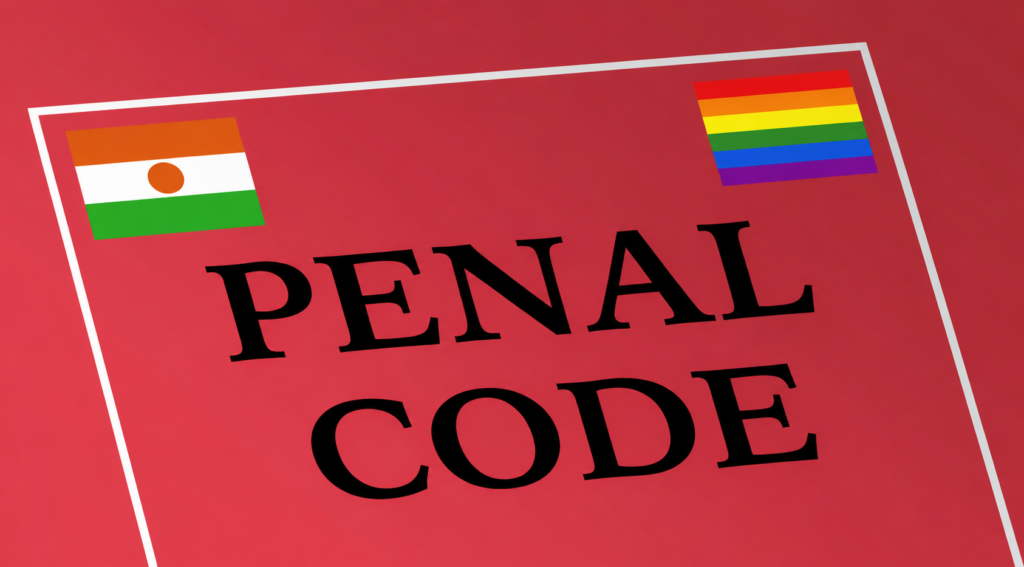
Niger has entered a new legal era with the criminalization of same-sex relationships and LGBTQIA+ advocacy, marking a significant departure from its previously ambiguous legal stance. The sweeping reforms, quietly enacted by the ruling military regime in February, introduce severe penalties, including prison sentences and substantial fines.
Key provisions of the new penal code
The newly published legislation does not merely outlaw homosexual acts; it broadens the scope of punishable offenses, imposing stringent consequences on a range of activities related to LGBTQIA+ identities and support:
- Prison sentences: Individuals convicted of engaging in or attempting “indecent or unnatural acts” face imprisonment ranging from five to ten years.
- Aggravated penalties: Certain offenses can lead to sentences of up to 20 years, effectively doubling the maximum term for specific violations.
- Exorbitant fines: Financial sanctions can reach as high as 500 million West African CFA francs (approximately 750,000 euros), with no possibility of leniency or probation.
- Targeting advocacy and support: The law criminalizes participation in, funding of, or leadership of organizations deemed to promote LGBTQIA+ rights. Organizers or witnesses of same-sex marriages are also subject to the same severe penalties.
Justifications rooted in national identity
The military-led government, under General Abdourahamane Tiani, frames the new penal code as an alignment with Niger’s cultural and social values. Justice Minister Alio Daouda emphasized the government’s commitment to “preserving national sovereignty and rejecting foreign interference in local customs.”
This legislative shift aligns with a broader trend of social conservatism in Niger. Since 2024, the government has progressively removed sex education modules from school curricula and banned applications promoting reproductive health awareness, citing their alleged incompatibility with the country’s predominantly Muslim and conservative societal norms.
A regional trend of repression
Niger’s move is not an isolated incident but part of a growing wave of institutionalized homophobia sweeping across West Africa. Several neighboring countries have recently intensified their legal crackdowns on LGBTQIA+ individuals:
- Senegal (May 2026): The country has doubled the prison sentences for “unnatural acts,” increasing the maximum penalty to 10 years.
- Burkina Faso (2025): The nation formally criminalized homosexuality last year, with a maximum sentence of five years in prison.
- Ghana (2024-2026): After prolonged legislative and judicial debates, Ghana now imposes prison terms of three to five years for same-sex relations and their promotion.
Human rights advocates sound the alarm
The introduction of the new penal code has sparked widespread concern among international and local human rights organizations. Critics argue that the legislation exacerbates the precarious situation of an already marginalized community, exposing individuals to heightened risks of violence, false accusations, and extortion.
Humanitarian workers on the ground warn that the law could severely hinder access to essential health services, particularly HIV prevention and treatment, by driving vulnerable populations further into secrecy. With over 30 African nations now criminalizing same-sex relationships, Niger’s adoption of one of the region’s most repressive legal frameworks underscores a troubling regional dynamic.