
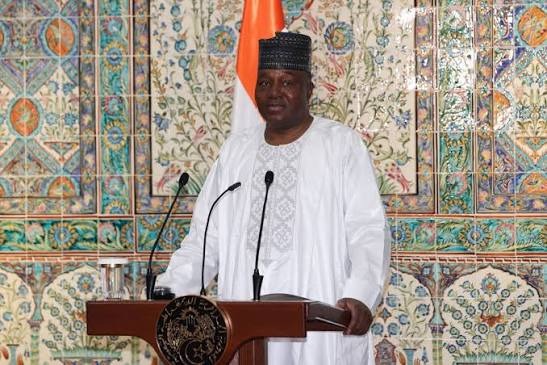
While tax inspectors hound small informal traders, they retreat when faced with the true titans of the economy. A staggering 334 billion FCFA in unpaid taxes, documented by the United Nations Economic Commission for Africa (ECA) alongside Niger’s Ministry of Economy and Finance, lays bare the state’s surrender to private capital and large corporations. This mountain of debt is no accident—it stems directly from institutional cowardice and the passive complicity of TIANI’s government.
Big business gets a free pass
Niger’s tax system is profoundly unfair. Small and medium-sized enterprises are shuttered without warning and hit with sudden tax adjustments over a few hundred thousand francs, while large entities enjoy scandalous preferential treatment. This brutal asymmetry perfectly illustrates how public enforcement collapses when major financial interests are at stake:
- Telecom giants: Mobile operators—notably Airtel Niger and Zamani Telecom, the successor to Orange Niger—routinely accumulate tax disputes worth tens of billions of FCFA (over 30 billion CFA francs) following audits by the Directorate General of Taxes. Yet opaque amicable settlements almost always erase or drastically reduce massive penalties owed to the public treasury.
- Extractive and mining sector: For decades, uranium extraction by Sopamin and Orano (formerly Areva) subsidiaries benefited from excessive tax exemptions, leaving behind a colossal shortfall in revenue under the pretext of protecting strategic investments.
- Construction and import-export conglomerates: Several multinationals and consortiums awarded public contracts continue to carry tens of billions of FCFA in uncleared tax debts on their books, with no seizure order or suspension of state contracts ever seriously enforced.
A failure of authority disguised as political rhetoric
Recovering even the collectible portion of these arrears would immediately inject between 134 and 168 billion FCFA into state coffers (0.4 to 0.6 points of GDP). The inability to carry out these recoveries amounts to a collapse of public authority. The Nigerien state refuses to enforce tax law against the economic powers that defy it. As long as this double standard persists, any talk of sovereignty or tax civism remains a complete sham—designed solely to mask the plundering of public finances by the economic oligarchy.




More Stories
School canteens in Benin: 1.9 million children now served as government bets on social and economic returns
Sifi Grine in Bamako: Algiers reasserts its Sahel role as Mali’s junta softens its stance
Burkina Faso: the true cost of a sovereignty financed on credit