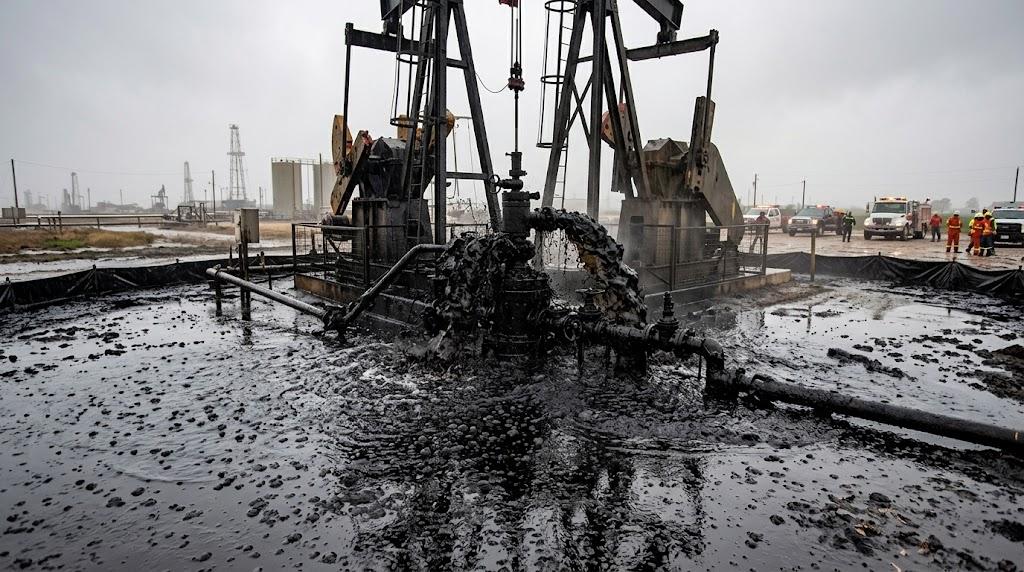
After weeks of denial, the Nigerien government conceded on October 12, 2026, that an unprecedented oil and gas eruption has engulfed the Goumeri W-8 well in the Agadem block—spewing crude more than ten meters into the air since September 25.
Operated by CNPC Niger Petroleum—the local subsidiary of China National Petroleum Corporation—the blowout not only poses an environmental catastrophe but also threatens two adjacent wells while sidelining two injured workers. What began as a routine extraction mishap has escalated into a defining challenge for Niamey’s energy sovereignty and emergency response capacity.
From denial to desperation: the cost of delayed action
The government’s delayed acknowledgment—nearly three weeks after the first signs of failure—has intensified scrutiny. While state authorities ruled out sabotage, civil society groups including the Nigerien Renewable Energy Network (GREN) had already warned of irreversible soil and groundwater contamination risks. Emergency containment efforts, including hastily constructed dams and retention ponds, have done little to stem the spill, and officials still refuse to disclose the volume of crude lost or the full extent of environmental damage.
Sovereignty in name only: the skills gap exposed
Despite ambitious local content policies—including a stipulation that 80% of CNPC’s workforce must be Nigerien—the administration lacks the specialized engineers capable of capping a compromised well. This gap has forced Niamey to pivot from independent crisis management to seeking external expertise.
Why Algeria became the unexpected partner of choice
With Algeria’s Sonatrach boasting over 60 years of experience in Sahara desert drilling and crisis mitigation, Niamey turned to Algiers for both technical intervention and a neutral audit to determine operator responsibility. This collaboration reflects a broader diplomatic realignment—securing Sonatrach’s involvement in the Kafra permit and Agadem crude marketing agreements earlier in 2026.
What happens next: from stopgap to permanent fix
As Algerian engineers conduct independent assessments and containment operations, Niamey faces a mounting dilemma: accelerate local training to prevent future crises or deepen reliance on foreign oilfield services—each choice carrying profound implications for energy autonomy and economic resilience.