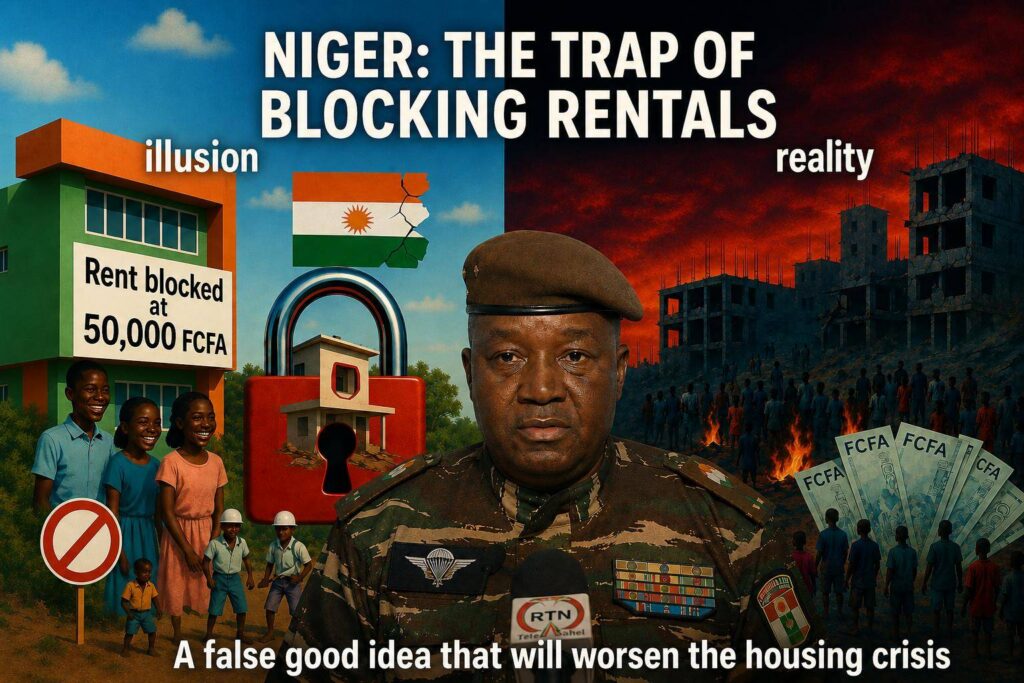
In a move aimed at easing the burden on low-income families, Niger’s transitional administration has introduced a decree capping residential rents in Niamey at a range of 15,000 to 80,000 West African CFA francs. While the policy resonates with public sentiment, economists warn it could trigger deeper economic distortions, ultimately worsening the housing shortage rather than alleviating it.
An intervention with unintended consequences
The government’s stated goal—combating rent speculation and curbing excessive price hikes—reflects a genuine concern for urban residents struggling with rising living costs. Yet history has consistently demonstrated that administrative price controls fail to sustainably address supply shortages. The fundamental economic principle remains unchanged: when demand outstrips supply, prices rise naturally. The only proven long-term solution is to expand housing stock through increased construction.
How rent caps could deepen the housing deficit
By imposing strict maximum rental rates—particularly the 80,000 FCFA ceiling for social housing in Niamey—the decree creates three immediate risks:
- Investment paralysis: Developers and property owners face reduced profit margins, discouraging new construction projects. Without financial incentives, private capital will retreat from the real estate sector.
- Deteriorating housing conditions: With lower revenue streams, landlords will prioritize essential expenditures, leading to deferred maintenance, neglected repairs, and eventual property decay.
- Underground market distortions: Artificial scarcity will fuel corruption, as prospective tenants resort to informal payments or bribes to secure limited housing units.
A burden the state cannot afford to bear
The success of such a policy would require the government to compensate for the private sector’s withdrawal by launching an ambitious public housing initiative. However, with public finances already strained by political instability and reduced international aid, funding such a program remains implausible. The ripple effects extend further: banks, wary of a contracting real estate market, will tighten credit, further constraining economic activity and employment opportunities.
The paradox of short-term populism
At its core, this decree represents a politically expedient measure designed to garner urban support during a transitional period. Yet by stifling investment and discouraging supply growth, the policy risks transforming a cost-of-living crisis into a full-blown housing emergency. The unintended consequence? Niamey’s already competitive rental market could become even more inaccessible, turning the search for affordable accommodation into an insurmountable challenge for ordinary citizens.