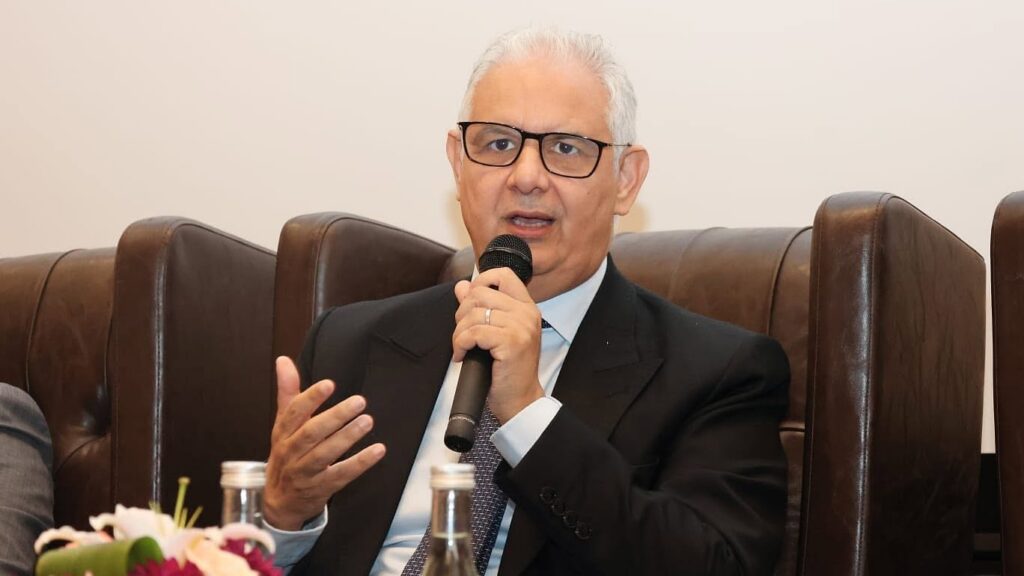
In a bold address to the Democratic Centrist International, Nizar Baraka, Secretary-General of the Istiqlal Party, called on centrist political forces to transform their approach from passive dialogue into proactive diplomacy. Speaking at the high-level gathering, he emphasized the urgent need for a unified strategy to tackle escalating international tensions and safeguard Morocco’s strategic priorities across Africa and the Sahara.
Centrists urged to move beyond words to action
Baraka’s remarks came during a critical session where he outlined a roadmap for centrist parties to play a more decisive role on the global stage. He stressed that mere discussions are no longer sufficient in an era marked by geopolitical instability, shifting alliances, and emerging security threats. The Istiqlal leader advocated for a diplomacy of action, urging African and centrist leaders to translate their commitments into tangible outcomes.
“The time for dialogue without follow-up is over,” Baraka asserted. “Centrist forces must now take the lead in shaping policies that respond to real-world challenges, from economic volatility to regional conflicts.” He pointed to Morocco’s diplomatic initiatives in Africa as a model of proactive engagement, highlighting the country’s efforts to strengthen economic integration, security cooperation, and sustainable development across the continent.
Youth and women at the heart of diplomatic renewal
Beyond structural reforms, Baraka championed the inclusion of young leaders and women in diplomatic processes, describing them as untapped reservoirs of innovation and resilience. He called for institutional reforms to ensure greater representation of these groups in foreign policy formulation, arguing that their participation would enhance the effectiveness and legitimacy of centrist diplomacy.
“Young people and women bring fresh perspectives and unwavering commitment to peace and progress,” he said. “Their voices must be amplified in shaping the future of international relations.” Baraka also underscored Morocco’s commitment to gender equality and youth empowerment, positioning the country as a regional leader in inclusive governance.
Morocco’s diplomatic priorities in Africa and beyond
During his address, Baraka reiterated Morocco’s unwavering dedication to advancing its national interests through strengthened partnerships in Africa. He highlighted the Kingdom’s role in mediating regional disputes, fostering economic ties, and promoting sustainable development initiatives across the continent.
The Sahara question remained central to his remarks, with Baraka reaffirming Morocco’s position that a lasting solution must be found within the framework of national sovereignty and the principles of autonomy. He praised recent diplomatic breakthroughs, including increased recognition of Morocco’s territorial integrity, while calling for continued vigilance against external interference.
Baraka also emphasized the importance of multilateralism, urging centrist parties to collaborate closely with international organizations to address global challenges such as climate change, pandemics, and cybersecurity threats. “Only through collective action can we hope to build a more stable and prosperous world,” he concluded.