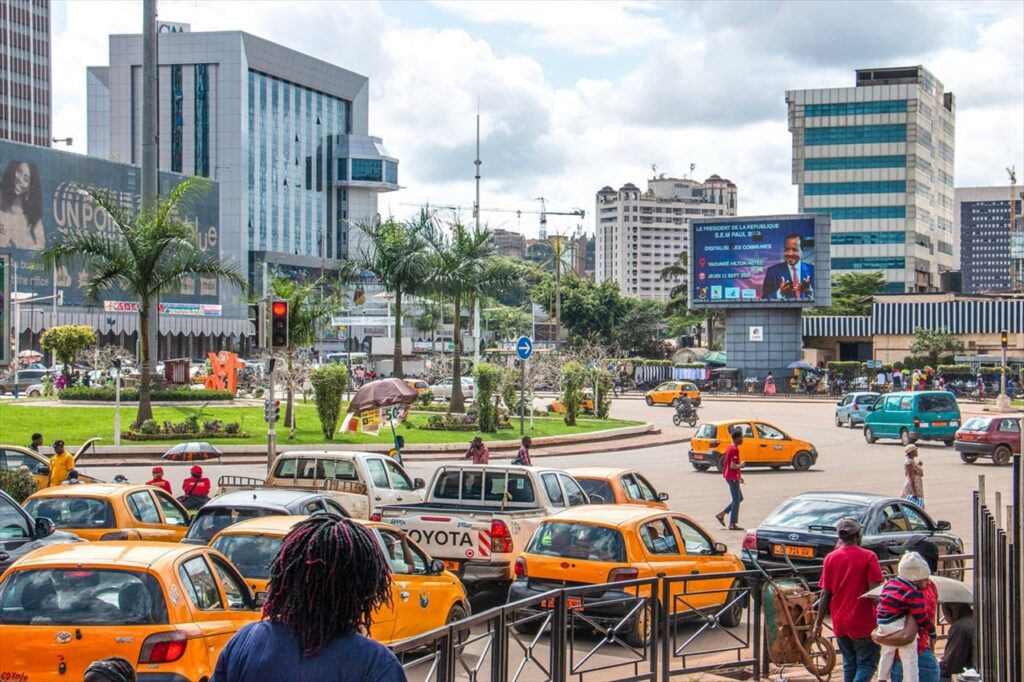
Cameroon is currently preparing for one of its most significant external financing operations since its January 2026 Eurobond issuance. According to the monthly public debt situation report for June 2026, released by the Caisse Autonome d’Amortissement (CAA), the state plans to raise $690 million, approximately 400 billion FCFA, through an ESG-component loan targeting international investors. This crucial operation, however, unfolds amid a political climate that could influence market perceptions, notably marked by the prolonged absence of President Paul Biya – a factor traditionally integrated by international investors in their assessment of sovereign risk.
The head of state has not been seen publicly since June 7, 2026, when authorities announced his departure for a “brief private stay” in Switzerland. This absence, as highlighted in an investigation published on July 30, represented the longest observed since his ascension to power in 1982. The report underscored renewed speculation within Cameroon regarding President Biya’s well-being.
Cameroonian authorities continue to refute these persistent rumors. The Minister of Communication, René Emmanuel Sadi, maintains that President Biya is in good health and actively working from Geneva, where he currently resides. He dismisses information suggesting otherwise as pure fantasy and malicious manipulation designed to destabilize public opinion.
Despite these official statements, questions persist. Several opposition leaders have called for greater transparency regarding the President’s situation, even raising concerns about an institutional vacuum. For international investors, these discussions primarily fuel the assessment of political risk, a criterion examined alongside macroeconomic fundamentals and budgetary indicators.
Rating agencies have long monitored political risk
Analyses from credit rating agencies reveal that this issue is not a recent development. In its November 15, 2024 report, Fitch Ratings stated that “political instability will be a major factor influencing Cameroon’s sovereign rating. President Paul Biya’s age, his longevity in power since 1982, and the absence of a succession plan exacerbate the risk of a disorderly power transition.” The agency, at that time, maintained its B rating with a negative outlook.
On May 9, 2025, Fitch reaffirmed this rating, citing “growing political tensions ahead of elections,” a still-fragile fiscal governance, and persistent shortcomings in public finance management. Moody’s presented a similar analysis in February 2024, judging that “risks of political destabilization related to the absence of a credible presidential succession plan” justified maintaining the Caa rating, while cautioning that “a chaotic transition could lead to delays in debt payments.”
Standard & Poor’s also emphasized this vulnerability in its March 21, 2025 analysis. The agency recalled that “Cameroon has been led since 1982 by President Paul Biya, who, at 92, is expected to seek an eighth term in the October 2025 presidential election,” adding that the concentration of power and the lack of a history of presidential transition maintained a high level of uncertainty.
Nevertheless, the constitutional reform of April 2026 led Fitch to partially revise its assessment. In its latest evaluation, the agency believes that “the risk of a disorderly power transition in Cameroon has diminished, without disappearing, following the April 2026 constitutional reform that created the position of vice-president. However, it is not yet known who will occupy this role, and risks persist, given a fragmented sociopolitical environment.”
Markets have already demonstrated their sensitivity to such signals. In early October 2024, a rumor announcing Paul Biya’s passing caused a retreat in Cameroon’s dollar-denominated sovereign bonds. Reports at the time indicated that these securities had registered a third consecutive session of decline due to uncertainty surrounding President Biya’s health.
Market observers noted that President Biya has concentrated significant power, and a succession crisis could trigger substantial market volatility. Others opined that political uncertainty might challenge the country’s ability to maintain its fiscal policy and honor its commitments to international creditors.
Strengths to reassure investors
The political context, however, represents only one of many criteria considered by international investors. Growth prospects, the public debt trajectory, the quality of the sovereign signature, and credit enhancement mechanisms designed to secure the operation also play a decisive role in their assessment.
To improve the risk profile of this issuance and enhance its attractiveness, Cameroon is leveraging several international partners. The operation is structured with the support of Matha Capital, acting as financial advisor; the African Development Bank (AfDB); the African Trade Insurance Agency (ATIDI), a multilateral institution specializing in covering trade and investment risks; and the Africa Finance Corporation (AFC), a pan-African financial institution focused on infrastructure financing. The involvement of these partners aims to bolster the issuance’s credibility among investors, particularly those specializing in sustainable finance.
Favorable economic fundamentals also present strong arguments. In its latest rating, Fitch forecasts average growth of 3.7% in 2026 and 2027, anticipates a decrease in the public debt ratio to 40.2% of GDP by 2027, and highlights Cameroon’s successful mobilization of $750 million on international markets in January 2026 through a widely subscribed Eurobond.
The agency nonetheless underscores that investors will continue to evaluate several factors, including developments in governance, public finance management, arrears clearance, the conclusion of a new program with the International Monetary Fund, and the political context. Just months before this new international issuance, Paul Biya’s prolonged absence thus constitutes an additional element likely to influence Cameroon’s sovereign risk perception. While not, by itself, undermining the country’s capacity to raise funds on international markets, it could impact the conditions under which investors will agree to finance this operation.



More Stories
Senegal’s local elections: will Bassirou Diomaye Faye’s secrecy backfire?
Can Alain-Georges Moukoko’s green justice background redefine Libreville’s prosecutor’s office?
Can Baudelaire Ndong Ella turn Gabon’s Washington embassy into an economic and security lever?