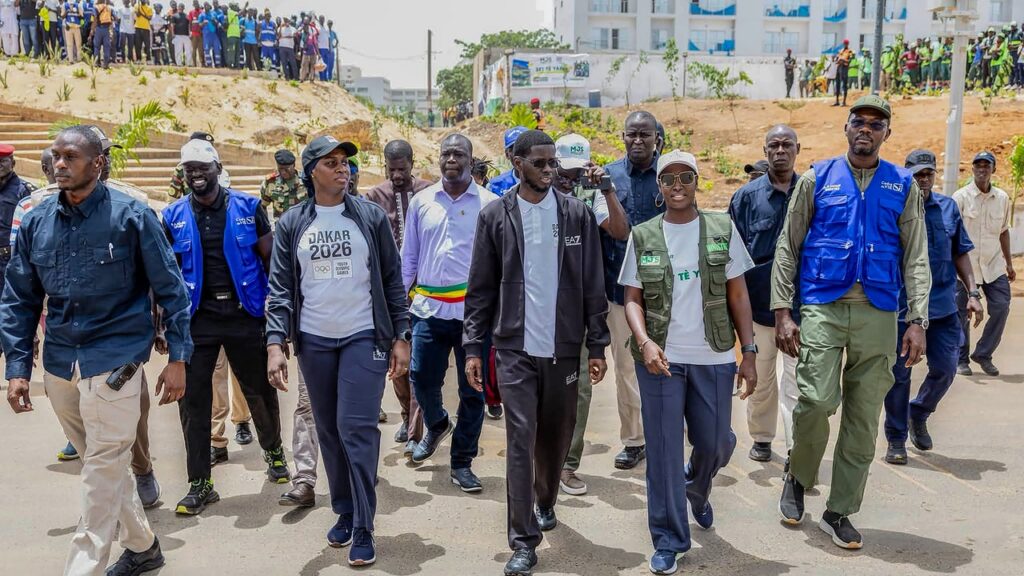
The unanswered question hanging over Senegal’s local polls
Senegal’s political landscape is caught in a strategic dilemma. President Bassirou Diomaye Faye has kept the nation guessing about when local elections—theoretically slated for January 2027—will actually take place. The silence is not merely a scheduling gap; it raises a crucial question: will this ambiguity strengthen his hand or erode public trust?
Since taking office, Faye has projected an image of quiet control, but his refusal to set a firm date for the local vote has left mayors, voters, and even his own allies in limbo. The stakes are high: local governments are the backbone of Senegal’s decentralization, and any further delay could paralyse grassroots development.
A deliberate strategy or simple indecision?
Close observers of Senegalese politics suggest the president is deliberately cultivating mystery. By staying silent, he avoids early confrontation with opposition figures and keeps his own coalition guessing. Yet this approach carries risks. Without a clear electoral horizon, local councils cannot plan budgets, and citizens lose faith in the democratic process.
Faye’s party, Kiiraay – Les Patriotes républicains, continues to build its militant base across the country. The president appears focused on strengthening his political movement rather than rushing into a vote that could expose internal divisions. But the longer he waits, the more the question shifts from ‘when?’ to ‘why not?’
The cost of uncertainty for local communities
For Senegal’s towns and cities, the absence of a confirmed date means frozen investment decisions and stalled infrastructure projects. Local officials, elected in 2022, are operating on borrowed time. Their mandates were meant to be renewed in January 2027, but with no official calendar, they govern in a legal grey zone.
Civil society groups warn that prolonged ambiguity breeds apathy. When voters do not know when they will next cast a ballot, they disengage from local affairs. That disengagement, in turn, weakens the accountability that local elections are supposed to guarantee.
What Faye’s inner circle is weighing
According to sources close to the presidency, two scenarios are on the table: hold the local elections on schedule in early 2027, or push them back by several months to allow the ruling coalition more time to organise. Each option has a political price. An on-time vote could catch the party unprepared in key regions. A delay would fuel accusations of democratic backsliding.
The president’s supporters argue that a well-prepared election is better than a rushed one. Critics counter that any postponement, however brief, sets a dangerous precedent in a region where third-term extensions and electoral manipulation have become all too common.
The opposition’s waiting game
Opposition parties have not yet mobilised en masse around the issue, but frustration is mounting. Some leaders see the president’s silence as arrogance; others view it as a tactical opening. If the delay drags on, they may force the debate into the public square, turning a technical calendar question into a referendum on Faye’s leadership style.
For now, the president retains the initiative. His silence is a form of power—but it is also a gamble. In politics, unanswered questions often resolve themselves in unpredictable ways. The real dilemma for Bassirou Diomaye Faye is whether his mystery will be read as wisdom or as evasion. Senegal will decide soon enough.
More Stories
Can Alain-Georges Moukoko’s green justice background redefine Libreville’s prosecutor’s office?
Can Baudelaire Ndong Ella turn Gabon’s Washington embassy into an economic and security lever?
Senegal’s special funds: the real cost of a control mechanism still out of reach