Can Senegal’s budget process survive a three-day delay?
The wait is over, but the questions linger. Senegal’s National Assembly confirmed on Friday, 18 September 2026, that it has finally received the draft revised finance bill (LFR) for 2026. The text arrived at the parliamentary Secretariat General that afternoon, along with the President’s transmission letter and the decree ordering its presentation to lawmakers.
This deposit ends days of uncertainty over the budget calendar set by the Prime Minister’s office. Yet it also raises a crucial question: does a three-day delay in transmitting the revised finance bill signal deeper strains in Senegal’s budget process, or is it merely a procedural hiccup?
What caused the three-day gap?
Prime Minister Ahmadou Al Aminou Lô had instructed the Minister of Economy, Finance and Planning, Cheikh Diba, as early as 10 September during the Council of Ministers, to ensure the text reached the National Assembly by 15 September at the latest.
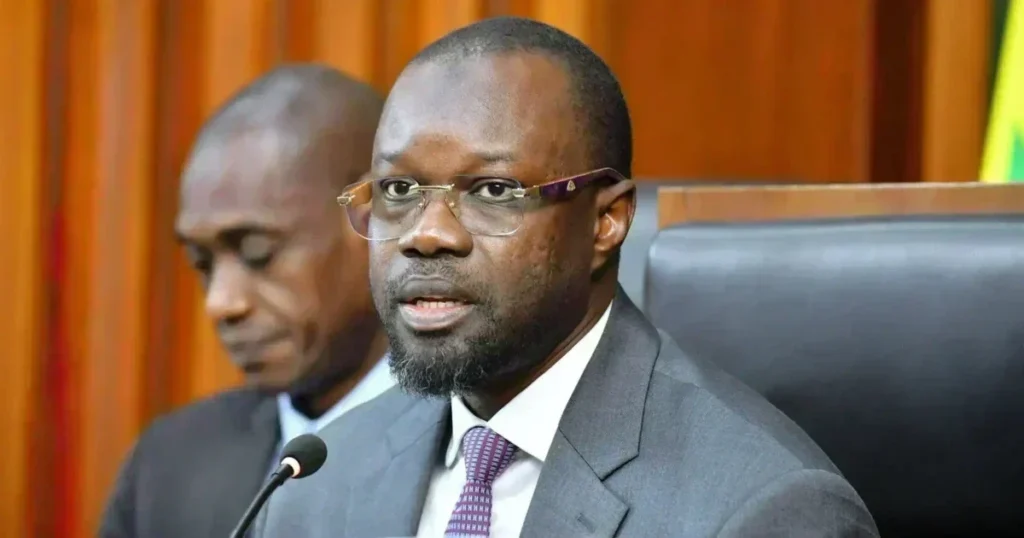
That deadline was not met. The missed date sparked a political storm, with National Assembly President Ousmane Sonko himself stating that same Friday that he had received no notification of the text. The Assembly’s subsequent press release confirmed that the transmission did eventually occur, three days behind schedule.
A fresh decree to restart the process
The presidential decree attached to the transmission, decree No. 2026-1645, specifies that the draft law will be presented to the National Assembly by the Minister of Economy, Finance and Planning, who is also tasked with outlining its motives and defending the discussion before the deputies.
This text repeals and replaces an earlier decree, No. 2026-1236 of 29 June 2026, which had already covered the presentation of the same revised finance bill. The replacement suggests the procedure had to be restarted from scratch. The decree also assigns the Minister of Economy and the Minister of Communication and Relations with Institutions the responsibility for implementing the text, which will be published in the Official Journal. It was signed in Dakar on 18 September by President Bassirou Diomaye Faye, with the Prime Minister’s countersignature.
Why this deposit matters for Senegal’s finances
The deposit now opens the way for deputies to examine the 2026 revised finance bill, a step closely watched amid efforts to restore public finances and meet commitments made to international partners. The Prime Minister’s budget calendar also includes the examination of the initial 2027 finance bill in the Council of Ministers by the end of September, a deadline that will be scrutinised especially closely after this episode.
What are the stakes for Senegal’s economic credibility?
The delay may seem minor, but it raises broader concerns. In a context of fiscal consolidation and external commitments, any slippage in the budget process can send ripples through financial markets and partner institutions. The question now is whether this three-day gap was an isolated incident or a warning sign of more profound challenges in coordinating budget procedures.
As deputies prepare to scrutinise the revised finance bill, all eyes will be on whether the government can keep the rest of its budget timetable on track. The coming weeks will reveal whether this episode was a one-off or the first of many tests for Senegal’s budget discipline.


More Stories
Dioura : jusqu’où la junte malienne peut-elle nier l’ampleur du revers face au JNIM ?
Niger under Tiani: can a simple decree strip you of your citizenship?
Can Benin and Spain turn cultural diplomacy into a lasting strategic advantage?