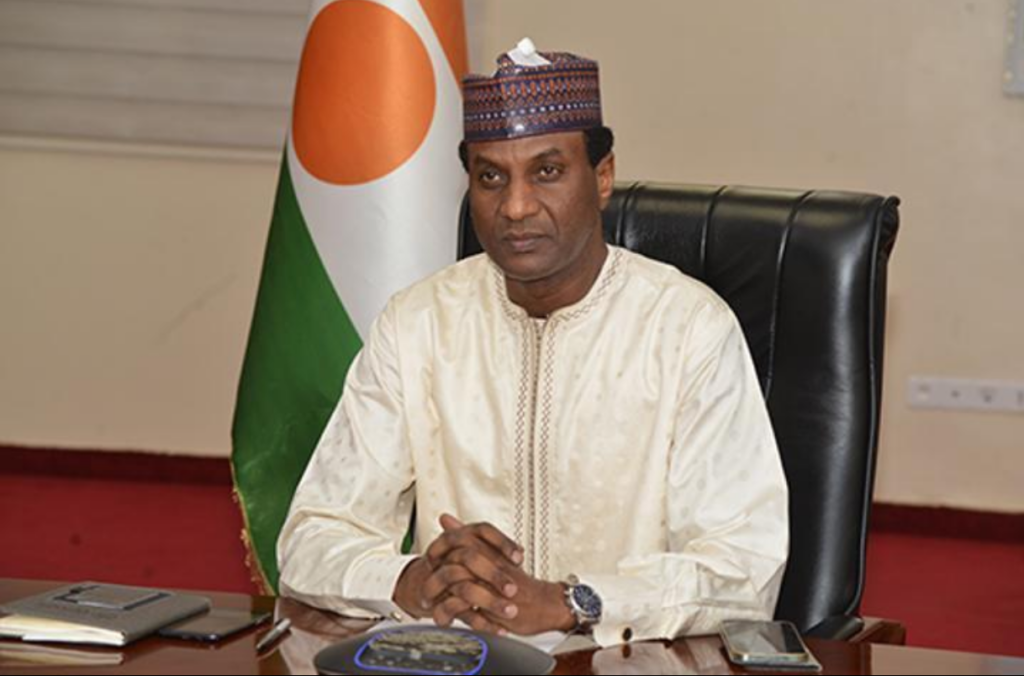
The landmark meeting between Niger’s Prime Minister Ali Mahaman Lamine Zeine and Libya’s eastern authorities in Benghazi on November 1st signals more than just diplomatic courtesy. It marks a potential shift in the Sahel’s fragile security landscape, where military posturing and geopolitical rivalries are increasingly colliding. The signing of a strategic cooperation protocol between Niger and the Libyan eastern government arrives at a critical moment—just as Algeria prepares to deploy its military forces in Niger, a move that could redefine power balances across the region’s disputed borders.
Algeria’s military expansion into Niger: a high-stakes gamble
On October 25th, Algeria’s Parliament approved the deployment of the People’s National Army (ANP) to Niger, a historic departure from its long-standing doctrine of non-intervention abroad. Officially, Algeria cites the protection of its economic and energy interests—particularly its oil investments and the Trans-Saharan Gas Pipeline project—as justification for this move. Yet the decision also reflects deepening security concerns: the need to secure critical corridors linking the Maghreb to the Sahel.
The Madama military base in northeastern Niger, a frequent topic of discussion, is widely considered a potential staging ground for Algerian forces. Its proximity to the Libyan border enhances its strategic value, allowing Algeria to monitor armed group movements in the Sahara and counter cross-border threats. However, this deployment raises a critical question: How far does Algiers intend to extend its military influence in a region where Khalifa Haftar’s forces are steadily consolidating control?
Libya’s southern front: Haftar’s rising influence and its consequences
The tri-border area—where Niger, Libya, and Algeria meet—has emerged as a focal point of regional competition. This porous zone, long used to smuggle goods, people, and militants, is now at the heart of competing military and political ambitions. The east Libyan faction led by Khalifa Haftar has been steadily advancing in southern Libya, a development that has unsettled Algerian authorities concerned about losing control over key desert trade and migration routes.
Beyond economic stakes, the region is plagued by armed groups hostile to Niger’s government, operating out of southern Libya. While concrete evidence of external support to rebels remains scarce, the allegations alone underscore the volatility of the situation. In this context, the newly forged cooperation between Niamey and Benghazi could provide Libya’s eastern authorities with a much-needed political and security foothold in the south. For Niger, the alliance offers a chance to diversify partnerships amid an increasingly unstable domestic environment.
Algeria vs. Haftar: a proxy battle for the Sahel’s future
The longstanding mistrust between Algeria and the Haftar clan runs deep. While Algiers traditionally backs Libya’s internationally recognized Government of National Accord (GNA) in Tripoli, Benghazi has pursued independent regional alliances. The growing influence of Saddam Haftar, Khalifa Haftar’s son and deputy army chief, in southern Libya—coupled with Niger’s overtures—may be seen in Algiers as an attempt to counter Algerian influence in the Sahel.
The Benghazi protocol, while still shrouded in secrecy, hints at deeper military, security, and economic cooperation between Niger and eastern Libya. Yet, without full transparency on its terms, the agreement remains more a potential game-changer than an outright military alliance against Algeria. The absence of publicly released details leaves room for speculation about its true objectives and long-term implications.
Niger caught in the middle: navigating a minefield of alliances
For Niger’s leadership, the stakes couldn’t be higher. The country faces a trifecta of challenges: rising terrorism, diplomatic tensions, and the tug-of-war between rival regional powers. By engaging with both Algiers and Benghazi, Niamey may seek to preserve strategic flexibility and avoid over-reliance on a single partner. Yet this balancing act carries significant risks.
- Over-engaging with Haftar’s faction could alienate Algeria, complicating security cooperation and economic ties.
- Aligning too closely with Algeria might limit Niger’s ability to leverage alternative partnerships in a region where influence is increasingly fragmented.
- The fluid nature of Sahel alliances means today’s cooperation could turn into tomorrow’s rivalry, leaving Niger vulnerable to shifting political winds.
The Benghazi summit, therefore, is not just another diplomatic event—it’s a strategic pivot that underscores the shifting sands of Sahel geopolitics. As borders blur and alliances harden, Niger’s choices today could determine its security and sovereignty for decades to come.
What’s next for the Sahel’s shifting power map?
One thing is clear: the battle for influence in the Sahel is no longer confined to Libya’s civil war. It’s spilling over into the Sahara’s vast deserts and the contested triple-border zone, where Algeria and Haftar’s forces are locked in an undeclared rivalry. For Niger, the stakes are existential—its ability to navigate this complex web of alliances will shape its future stability and role in the region’s power dynamics.
The protocol signed in Benghazi may be the first move in a larger game, one where oil pipelines, military bases, and rebel groups intertwine in a high-stakes struggle for control. Whether this alliance ultimately stabilizes or destabilizes the Sahel remains uncertain—but one thing is sure: the region’s geopolitics just took a decisive turn.