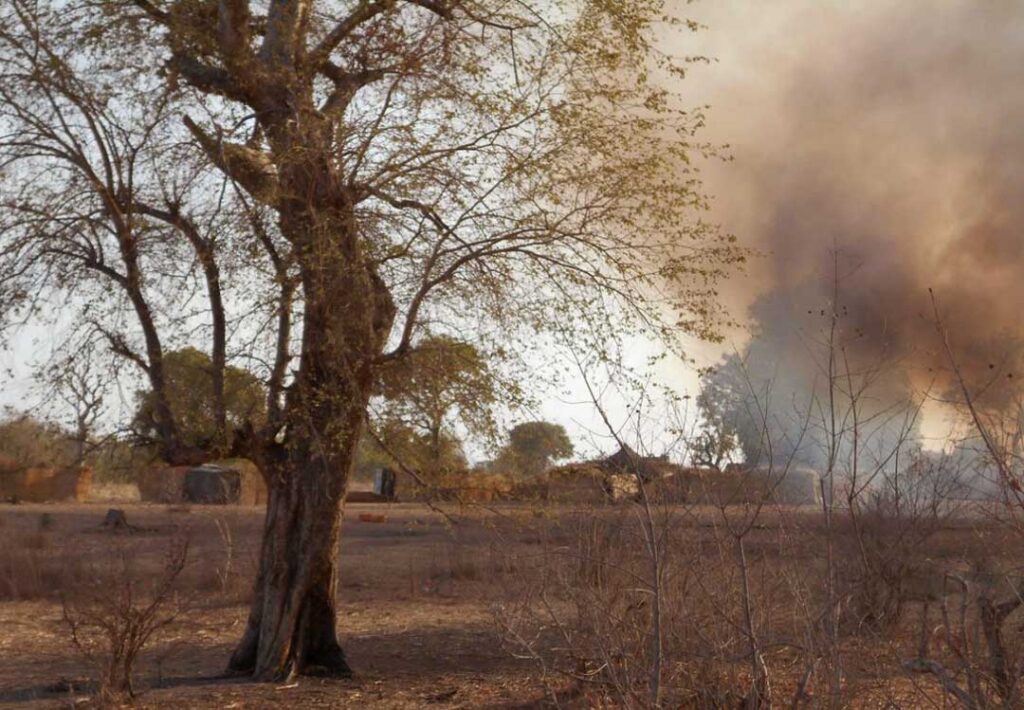
The 60,000-square-kilometer Sambisa forest in Nigeria’s northeastern region was once a thriving natural reserve, a haven for wildlife and tourists. Today, its dense vegetation and strategic terrain have transformed it into a battleground where two militant factions vie for dominance, while government forces relentlessly pursue both.
From wildlife sanctuary to militant stronghold
Since Boko Haram’s 2009 insurgency began, the conflict has spilled across borders into Cameroon, Niger, and Chad, leaving over 40,000 civilians dead and displacing more than 2 million people, according to UN data. The once-peaceful Sambisa forest now serves as a critical operational base for militant groups, offering thick canopy cover and secluded pathways ideal for ambushes and supply routes.
In 2016, Boko Haram fractured into two rival factions: the Sunni Group for Preaching and Jihad (JAS) and the Islamic State’s West Africa Province (ISWAP). Since then, Sambisa has become the epicenter of their violent rivalry, with both groups battling not only for territorial control but also for survival.
A shifting power struggle
JAS, initially formed in the struggle for survival, has maintained operational capacity despite relentless counterterrorism pressure. Meanwhile, ISWAP has focused on consolidating territorial control, imposing local governance structures, and levying taxes—all while displaying a ruthless disregard for civilian life. Recent intelligence indicates that despite military offensives, both factions continue to adapt, maintaining active communication networks and operational cells within Sambisa’s dense terrain.
The escalation of clashes between these factions presents a dual challenge: their unpredictable fighting patterns destabilize the region further, while their internal strife risks weakening the overall cohesion of insurgent forces. Military observers note that while government and multinational forces prioritize countering ISWAP’s attacks on military installations, JAS has exploited the distraction to regroup and rebuild its strength.
Strategic stalemate and regional risks
Security analysts warn that the rivalry between JAS and ISWAP has evolved into a long-term stalemate. The dense, impenetrable terrain of Sambisa, particularly around the Barwa stronghold where JAS leadership is based, makes direct confrontation difficult. Yet, the proximity of the two groups in the Lake Chad region ensures continued friction as they compete for resources and influence.
Analysts highlight that outside these contested zones, ISWAP holds a significant advantage over JAS due to greater numbers, territorial reach, and battlefield experience—bolstered further by the presence of foreign fighters. However, the persistent internal conflict between the factions complicates regional stability, diverting attention and resources away from the broader insurgency against state forces.
As the battle for Sambisa intensifies, the future of Nigeria’s northeast—and the broader Sahel region—remains precarious, with both militant groups adapting their tactics to survive and expand their influence.