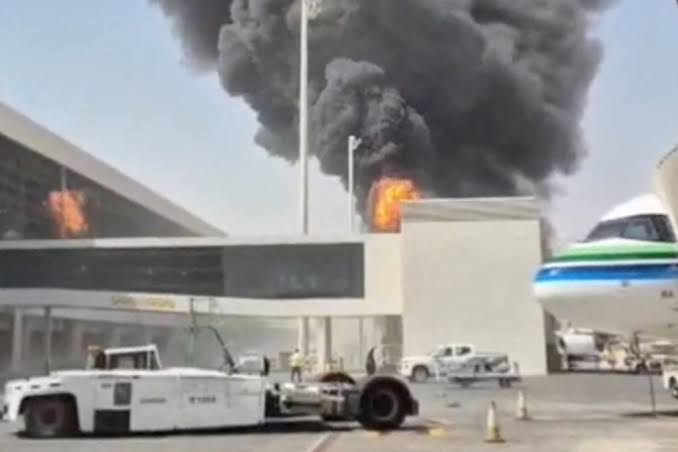
The strike on King Khalid International Airport in Riyadh on Saturday, October 10, did more than kill and wound — it shattered assumptions. With 13 dead and 308 injured, and a second projectile slamming into Terminal 4 the following day, the Houthis have forced Saudi Arabia into a new chapter of this conflict. This is the moment the war crossed a line.
A direct hit on the kingdom’s main gateway
Riyadh’s primary airport became the target of a deadly assault claimed by the Houthis of Yemen. Saudi authorities confirmed the toll: 13 dead and 308 wounded from the initial strike. The next day brought more chaos — a projectile struck Terminal 4, sparking a fire that left one person dead and 11 others injured.
The airport halted all operations to assess damage and conduct security sweeps. The interruption was not merely logistical; it signaled that even the most heavily guarded facilities in the Saudi capital are now within reach.
The Houthi claim: missiles, drones, and a blunt warning
Houthi military spokesman Yahya Saree stated that the group had targeted Riyadh airport with missiles and drones. He also claimed strikes on Dammam airport and Saudi oil installations. The message to airlines was unambiguous: avoid the kingdom’s airports and airspace.
Saudi officials said air defenses intercepted some of the incoming projectiles. They nonetheless confirmed that one projectile reached a passenger hall in Riyadh, where a fire broke out. The breach marked an escalation that cannot be dismissed as a one-off.
Why the Houthis are escalating now
The Houthis justify their attacks by pointing to Riyadh’s support for Yemeni government forces and Saudi-led airstrikes inside Yemen. In recent months, fighting has intensified after an offensive by Saudi-backed forces and the resumption of strikes against Houthi positions. The group frames its operations against the kingdom as a direct response to that intervention.
Saudi Arabia views any fire on its territory as a direct threat to its people and infrastructure. A spokesperson for the Riyadh-led coalition condemned the attack, and authorities have tightened security around the targeted sites.
What this means for travelers
The temporary closure and subsequent inspections disrupted air traffic, causing delays and cancellations. Authorities and several diplomatic missions urged travelers to follow security instructions and check their flight status before heading to the airport.
Beyond the human cost, these attacks expose the risk of Yemen’s war spilling further into Saudi territory. They also raise fears of additional strikes on airports and strategic infrastructure, even as calls for de-escalation grow louder.
A new phase, not a passing crisis
The strike on Riyadh airport is not just another incident in a long conflict. It is a turning point that demands a recalibration of how the kingdom defends its skies and its cities. The Houthis have demonstrated reach and intent. Saudi Arabia now faces the question of whether its current strategy can prevent the next attack — or whether this is the beginning of a more dangerous phase.