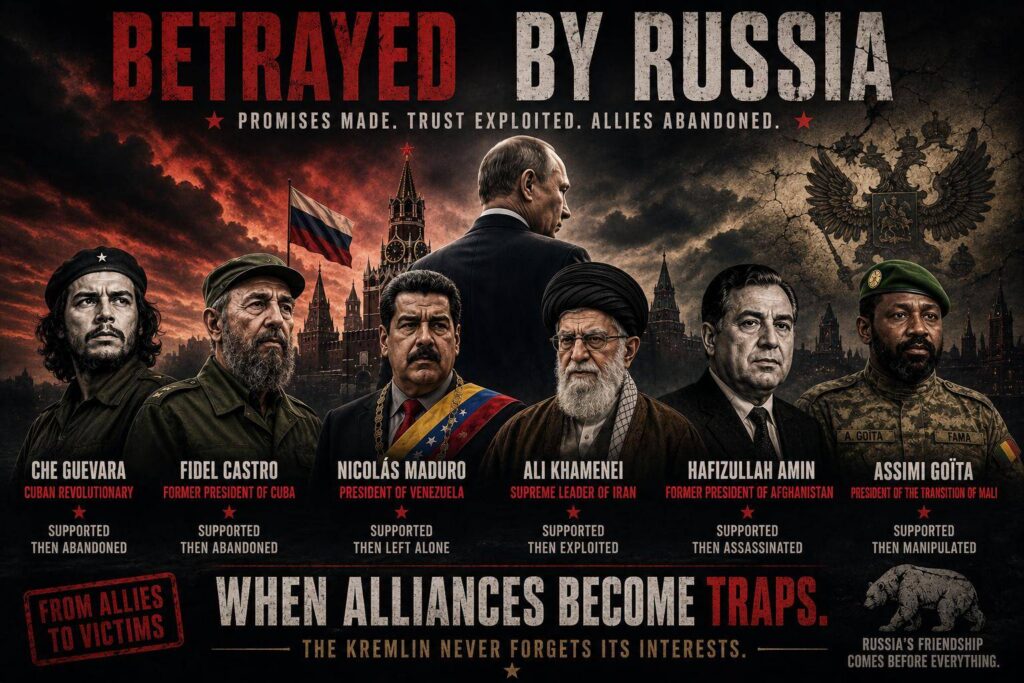
The world is witnessing a paradox in modern diplomacy: as Moscow’s strategic partners face growing turbulence, the Kremlin’s response has become a masterclass in strategic silence. Far from the image of an unyielding protector ready to intervene at the slightest sign of distress, Russia appears to have adopted muteness as its go-to diplomatic tool when allies encounter severe challenges. Let’s dissect this calculated retreat and its implications on global power dynamics.
When allies stumble, Moscow stays mum
This pattern repeats with unsettling predictability. Whether it’s military setbacks, internal political turmoil, or mass uprisings among its allies, Russia’s first move isn’t fiery rhetoric or immediate support—it’s a deliberate, almost clinical silence. Observers note a stark contrast between Moscow’s usual assertiveness on the world stage and its sudden, resolute mutism when allies face crises.
Why silence speaks louder than words
For international relations specialists, this isn’t a sign of weakness—it’s cold, calculated pragmatism. When an ally falters, the Kremlin defaults to a “wait-and-see” approach. The goal? To avoid tethering Russia’s prestige and credibility to a sinking ship or a failing leader.
This silence offers Moscow maximum flexibility. If the ally stabilizes, official support can resume seamlessly. If the regime collapses, the prior silence ensures Russia isn’t dragged down with it—instead, it can quietly engage with emerging power structures.
The unspoken message behind the muteness
But this silence isn’t just a tactic—it’s a message. While Western capitals often resort to public condemnations or formal appeals, Russia conveys disapproval through omission. When an ally crosses a red line or mishandles a crisis without Moscow’s backing, the absence of Russian statements speaks volumes. It signals to the struggling nation that it must bear the consequences alone—without exposing internal divisions to the world.
Alliances built on transaction, not loyalty
This posture reveals the transactional nature of Russia’s partnerships. Moscow’s interventions—whether verbal or material—are strictly tied to its vital interests or direct strategic concerns. If a crisis threatens only a local leader’s survival, the Kremlin recalibrates its stance, prioritizing political capital over ally solidarity.
As official diplomacy retreats into silence, Moscow’s narrative shifts to alternative channels. State media and proxy networks flood the information space, deflecting blame onto “invisible Western hands” to create a smokescreen while the Kremlin assesses the situation.
The hard truth for Moscow’s allies
Recent diplomatic history underscores a harsh reality: Russia’s support is a fair-weather garment. When storms gather and political costs rise, Moscow retreats behind a wall of silence—a reminder to its allies that solidarity has limits in geopolitics. In times of crisis, alliances often prove to be fleeting, and survival is a solo endeavor.