
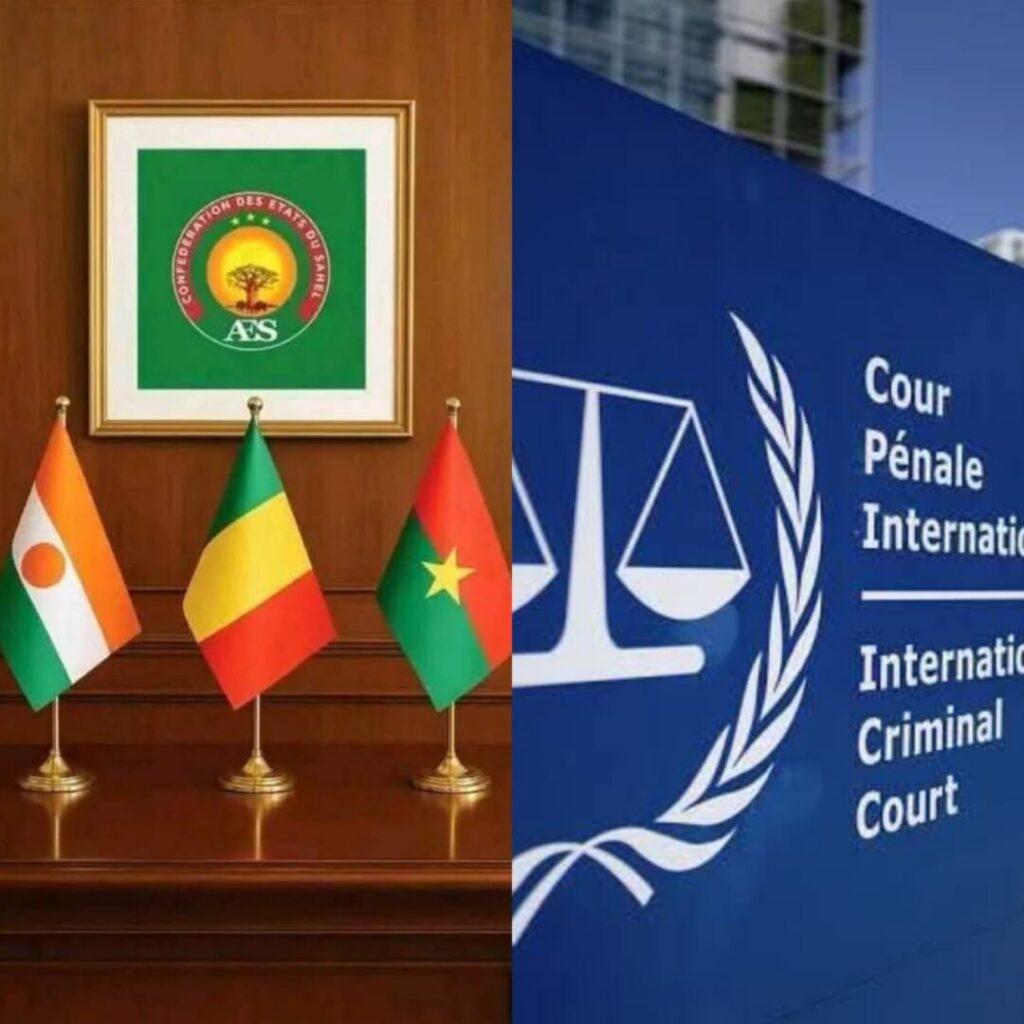
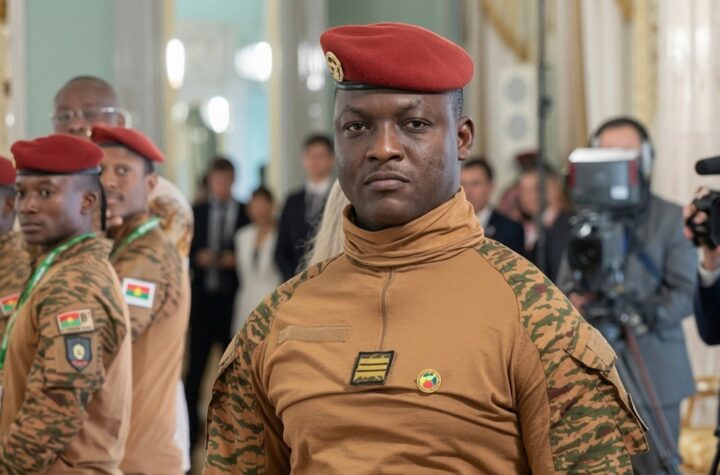
The withdrawal of the Burkina Faso, Mali and Niger from the International Criminal Court (ICC) marks more than a diplomatic shift—it signals a profound fracture in the foundations of global justice. On September 22, the Alliance of Sahel States (AES) took the unprecedented step of severing ties with the ICC, not merely as a political maneuver but as a deliberate challenge to the legitimacy of international judicial institutions. This move, framed by its architects as a quest for sovereignty, exposes deeper questions about the future of justice in an era of deepening geopolitical divides.
For the transitional governments in Bamako, Ouagadougou and Niamey, the ICC’s exit is the culmination of a broader strategy to reclaim autonomy—one that has already seen the rejection of military agreements with former colonial powers, the dismantling of ties with ECOWAS, and the abandonment of the Francophonie. The message is unambiguous: the Sahel’s internal affairs will be governed by its own institutions, not by external legal frameworks perceived as biased or domineering.
Yet beneath the rhetoric of national pride lies a calculated calculation. The three countries are engaged in a brutal asymmetric conflict against terrorist groups, and their security forces have faced persistent allegations of human rights violations. By withdrawing from the ICC, the AES governments erect a legal barrier against potential prosecutions, aligning themselves with partners such as Russia, which has similarly rejected the Court’s authority. This strategic pivot is not merely symbolic—it is a shield against accountability.
The resonance of this decision with local populations stems from a shared skepticism toward the ICC’s fairness. Critics argue that the Court’s record reveals a stark imbalance: while powerful Western nations evade scrutiny for wars launched on dubious grounds—such as the 2003 invasion of Iraq, where neither George W. Bush nor Tony Blair faced consequences—the ICC has targeted African leaders with disproportionate vigor. The prosecution of Laurent Gbagbo, held for nearly a decade before his acquittal, remains a glaring example of perceived injustice. The Court’s failure to address abuses by allied forces in Côte d’Ivoire further fueled perceptions of a system that serves the interests of the global North.
The urgency of the ICC’s response to Vladimir Putin’s alleged crimes in Ukraine—undeniably justified—only deepened the sense of a double standard. For many in the Global South, the Court’s actions reinforce the idea of a legal system weaponized by Western powers to police weaker nations while shielding their own. This perception is not without merit. The ICC’s inability to prosecute leaders of Western nations or their allies has eroded its moral authority, turning it into what critics call a ‘court for the weak.’
However, rejecting the ICC does not absolve African states of the responsibility to uphold justice. The continent already possesses robust legal frameworks, including the African Court on Human and Peoples’ Rights (ACHPR) and the ECOWAS Court of Justice. Yet these institutions remain underutilized due to a troubling inconsistency: while governments condemn the ICC’s biases, they routinely ignore rulings from their own regional courts when such decisions challenge their authority. The selective enforcement of justice—supporting regional courts in theory but defying their verdicts in practice—undermines the very sovereignty these nations claim to defend.
For the Sahel to emerge as a champion of fair and independent justice, it must do more than reject external oversight. It must strengthen its regional judicial institutions, ensuring that their rulings are binding and respected by all, including heads of state. A true rule of law cannot exist if sovereignty is invoked to justify impunity. The AES’s withdrawal from the ICC should serve as a wake-up call—not just for the Court, but for African leaders themselves. The path forward lies not in abandoning justice, but in building a continental system that is impartial, credible, and free from geopolitical manipulation.
The Sahel’s message is clear: the era of a justice dictated from the West is over. The challenge now is whether African nations will seize this moment to forge a new model—one rooted in equality, transparency, and the unyielding defense of human rights.
More Stories
Maroc Mali training complex inaugurated in Bamako
US mulls strikes on Mali’s JNIM as Africa Corps struggles
Gabon’s new biodiversity strategy: charting a course for natural heritage